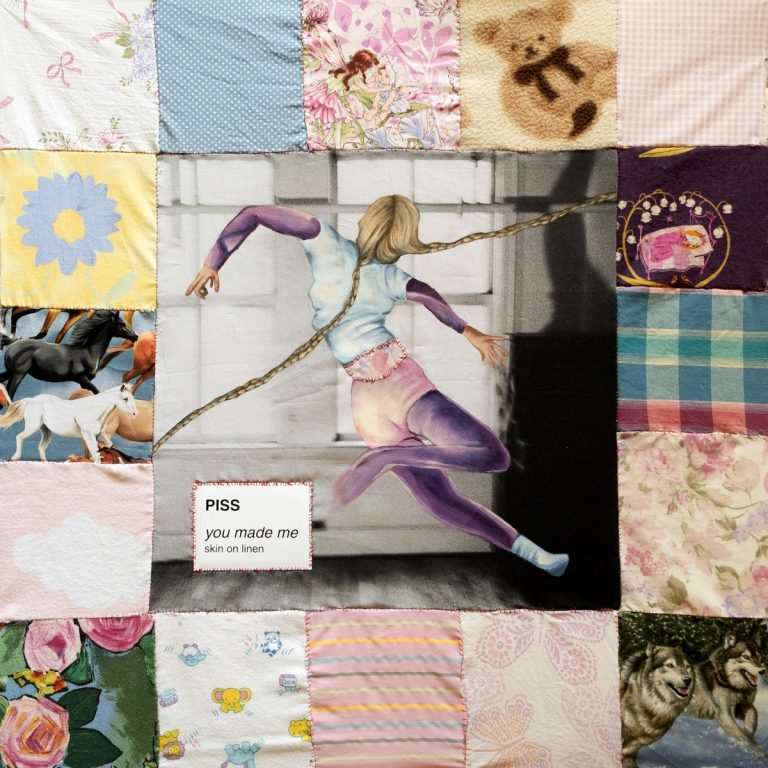

The rise of the so-called manosphere: platforms sputtering with demeaning vents and demented propaganda. Harassment of women in digital spaces and physical locales. Incel culture, featuring the vilification and dehumanization of women. Proposed legislation that erodes established rights and equality measures that took years to manifest. The history of bias and violence against women (by men) is indeed a long and harrowing saga; that said, much of the 21st Century has been and is characterized by a spike in public and unchagrined misogyny.
From this toxic social cauldron, however, a number of milestone works have emerged, including this year’s URGH from Mandy, Indiana, prompted in part by Valentine Caulfield’s experience of being sexually assaulted; 2025’s Who Let the Dogs Out from Lambrini Girls, an anti-corporate, anti-patriarchal rant that uses satire as much as invective; and Lingua Ignota’s Sinner Get Ready, released in 2021, which reflects on trauma, evangelism, and how autonomy in women is frequently regarded as a heresy.
Add to the list a blistering debut, you made me / skin on linen, from Vancouver-based PISS. Over the course of 15 punk-soused and hardcore-infused tracks, vocalist and poet Taylor Zantingh explores the plight of women historically and in the contemporary world. Built around entrancing and often devastating narratives, imagery, dreamscapes, rants, and oblique analyses, you made me / skin on linen stands as an unflinching manifesto on rape culture and its nightmarish impact.
The sequence is a visceral yet intellectually and literarily charged project. “I wanted to be a singer” launches with shimmery arpeggios but soon segues into crushing, distortion-drenched chords. Zantingh addresses the relationship between suffering and art: “I spend my life trying to turn my life into something beautiful”. As the song progresses, her voice grows urgent, frantic, until she reaches an apoplectic timbre, refusing to edit or tamp down her intensity.
“I was 10 years old and learning blow jobs on a glue stick”, Zantingh snarls on “time loop at hot slit”. Breathless, she connects past abuse to women’s dissociation when it comes to sex and orgasm. She repeats “women don’t come” numerous times, each delivery more confrontive and accusatory than the last. Musically, Tyler Paterson on guitar, Gavin Moya on bass, and drummer Garreth Roberts wrap Zantingh in a sheath of precise frenzy. At other times, they batter and club Zantingh with abrasive sonic whirlwinds, as if to illustrate the way in which the world mistreats women, and particularly women who express their anger or attempt to confront their abuser.
Throughout you made me / skin on linen, various writers and activists are strategically excerpted. Andrea Dworkin analyzes the entrenched nature of misogyny, and a woman’s need to defend herself: “There are different ways of [keeping the rapists off the streets] … I myself favor violence … the reason that I favor it is that the law isn’t working.” Manon Garcia, on “manon on the trial of gisèle pelicot”, probes the brokenness of male sexuality, how a man who described his libidinal drives as normal or suburban could in turn “[rape] a semi-dead body of a woman [he didn’t] know”. Vikki Reynolds examines the systemic nature of sexual violence, how men and women alike are negativized by pervasive and intergenerational conditioning. Providing contrast, Toni Morrison speaks to the possibility of self-forgiveness and earning grace, no matter what you’ve perpetrated (provided you’re willing to go “through the fire first”). By inserting these quotes into the sequence, PISS tie themselves to sociolegal and academic contexts, the relatively studious nature of these texts and the equanimous tone with which they’re communicated highlighting PISS’s rawer and primal qualities.
“a little girl’s horse craze betrays her” captures Zantingh’s unexpurgated rage and deeply seated feeling that her flesh, pheromones, and menstrual blood are a liability, given the way they attract predators: “I wanted a way out of my body / to disguise the scent that drew them out”. The band matches the singer’s ferocity, spewing a conflagration of beats and distortion. On the noisy and feedback-doused “there was a door”, a listener can’t help but be mesmerized by Zantingh’s fusing of exasperation and vulnerability, as she navigates images that might’ve been plucked from an interview on Soft White Underbelly: “I lived stuck in a corpse stuck in your bathtub”, “I learned to bleed myself to feel the warmth”.
On the spellbinding “blocking a scene you can’t remember”, Zantingh seems to be rehearsing a scene that she can’t quite embody, playing actor and director. The piece resonates as a therapeutic psychodrama, but also conjures a pornographic setting or fragmented ritual constructed by a serial killer (as in the Saw franchise). The band moves between echoey slowcore segments and cacophonic eruptions. Zantingh pivots from a drawly, almost narcotized delivery to a Kali-like mania, doing her best to reconcile self-loathing and catharsis. Lines such as “each night you waited for me to leave so you could be alone with my body” and “I sunk into the dark and woke with different limbs” speak to violation, amputation, disassembly – being attacked, lied to, then put back together (by society, teachers, social workers, perhaps family) in ways that feel profoundly unnatural. The track ends with the image of someone alone, trying to make sense of what she can’t pinpoint but knows on an energetic level, the horror she can’t quite grasp: “a girl lies on her back in the dark / staring at the ceiling / something has been weighing on her for a long time.”
“I keep trying to change the ending” is similarly epic in its vision and sonic range. Written in the past tense, the piece occurs as a suicide note or missive dispatched from the afterworld. Midway, the band dive into a darkly ambient segment, serrated fusillades collapsing into tense silences, labile constructions that point to the mazes of memory or a labyrinth in the underworld. Then again, Zantingh may be maneuvering a nightmare or the emo-cognitive tortuosities of an ayahuasca-inspired vision quest.
It would be a stretch to say that the project ends on a hopeful note, but the spaciousness of the closing chords and slightly promising tilt of Zantingh’s final phrases (“trying I won’t bleed forever horses soft hands singing bodies”) suggest a reduction of suffering, that a hellish realm has been exited, a somewhat brighter realm accessed or at least glimpsed.
Zantingh speaks for those contemporary women who have been victimized by socially and politically endorsed vitriol, abuse, and violence. At the same time, mythic figures such as Persephone, Medusa, and Philomela; poets such as Plath, Sexton, Lynn Melnick, and Tarfia Faizullah; and a host of modern-day characters, including Lisbeth Salander and Catherine Grace, lurk within these tracks, serving as a council or chorus of sorts. PISS are an aesthetic force, an undeniable juggernaut blending punk, hardcore, and trauma-soaked yet beguiling lyricism to forge one of rock’s stellar debuts.
88%