
In 2000, Malcolm Gladwell described “the tipping point” as “that magic moment when an idea, trend, or social behavior crosses a threshold, tips, and spreads like wildfire”. Tipping points occur in all domains, including politics, science, medicine, and, of course, the arts. In the 2020s, tipping-point dynamics seem compressed. The arc between obscurity and hyper-visibility and, in turn, back to relative obscurity is more quickly completed. This is partly due to the fact that we live amidst constantly swelling streams of information – panaceas, viewpoints, media campaigns, booksbooksbooks, filmsfilmsfilms, albumsalbumsalbums. Even if a “product” benefits from a tipping point, the “wildfire” stage is fleeting, before some other object or person demands our attention.
That doesn’t mean that we don’t witness curious flashpoints, inflections, and coronations. Cameron Winter is certainly enjoying some version of a tipping-point ascent. Essentially based on three albums – his band Geese’s last two LPs, 2023’s 3D Country and 2025’s Getting Killed, and his own 2024 solo album, Heavy Metal – Winter’s laurels point to him as one of the “voices of the times”, even if, to echo the above point, it’s rare these days for anyone to possess sufficiently diverse appeal or the staying power to be considered generational.
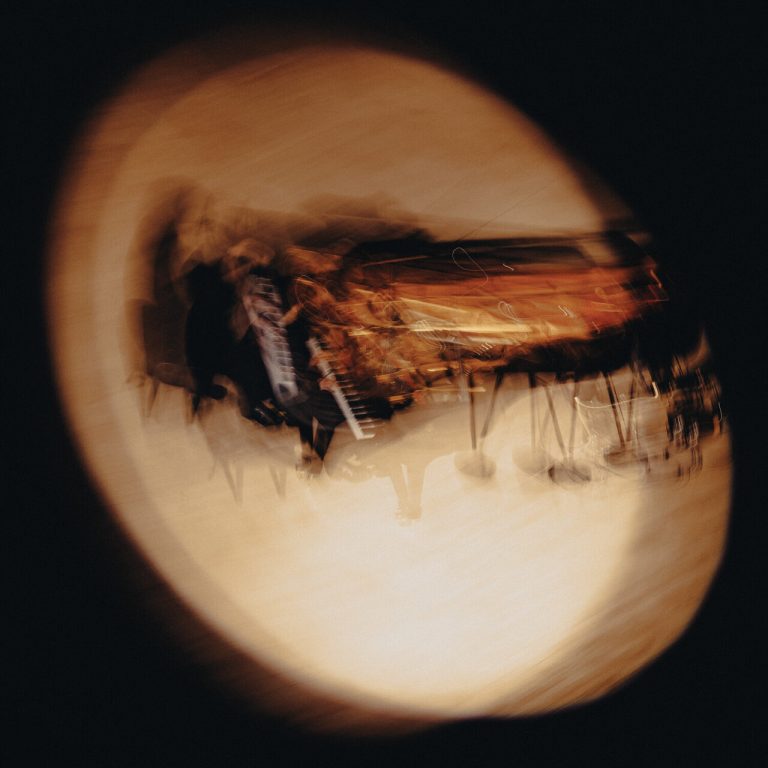
At any rate, if anyone doubted Winter’s ability to pull off an hour-plus solo show, those reservations can now be hurled into the dumpster. The solo space works well, perhaps ideally, for Winter, allowing him to demonstrate the emotional range of his voice, the melodic sensibilities around which his songs are constructed, and his poetic acumen. While his work with Geese and on Heavy Metal was enchanting, it’s entirely arguable that with Live at Carnegie Hall he’s at his best.
Over the course of 12 songs played entirely on piano, Winter exudes an alluring energy and gravitas. Opener “It All Fell in the River”, one of three new tracks, reconfigures the field song, the protest song, and the gospel-infused testament to surrender. One can hear hints of Leadbelly and Pete Seeger, the confrontive yet detached lucidity of Nina Simone. Winter’s voice is resonant, clear yet warbly, as he moves between sustained notes and rapidly delivered lyrics. He integrates suffering and transcendence, loss and love, a sense of being burdened and experiencing profound insight (whether secular, religious, or spiritual).
The epic “Emperor XIII”, also previously unreleased, mixes modernistic portraiture and historical reflection, lowbrow and highbrow language, the figure of Jesus juxtaposed with every-day, mundane life. Lyrics such as the quippy “It’s too bad what happened to Jesus / But Friday was all right” and the image-packed “The beach ball cathedral swam like a sea-fly swarming” recall pre-Born to Run Springsteen, the sinewy wordage of a song such as “Incident on 57th Street”. Winter’s voice is drawly, drone-y, then quietly explosive, as the singer reconciles restraint and intensity, eschewing faux exhaustion and cheap catharsis.
On the third new track, “If You Turn Back Now”, Winter articulates the ambivalences that can pervade a romantic connection. “I might love you again if you leave me alone”, Winter declares. He then invokes the devil – “the devil is real and he’s living in heaven / The devil’s gonna love you to death if you let him” – as a way to metaphorize the self-doubt and suspicion of others we carry into our relationships. The song pivots between concrete and abstract imagery, pointing to an emo-cognitive space with which many of us are familiar: what we yearn for, we resist; what we love feels like a trap. We construct and sabotage our lives. And often, by the time our profoundest wounds are at least somewhat healed, these cycles and syndromes addressed, the losses have mounted. Still, as we’re taught, better late than never.
Most of the songs on Carnegie are stripped-down versions of pieces that appeared initially on Heavy Metal (the elegiac “Take It with You” and heartbreaking yet stoic “Vines” are from the EP, Singles). A standout is “Cancer of the Skull”. On Heavy Metal, the track is somewhat buoyant and unquestionably busier, Winter’s voice framed by guitars, bass, programmed drums, keyboards, and intermittent backing vocals. Here Winter’s pacing and cadence take center stage, as he contrasts his quotidian life (“I have work in the morning / I have two bags over each hand”) with archetypal references and allusions to trauma (“I was beat with ukeleles / Songs are a hundred ugly babies / I can’t feed”). Provocative lines such as “You’d like to keep my salesman’s teeth, wouldn’t you baby?” have a searing effect, conjuring The Future-era Leonard Cohen. “I came up the stairs / I came to meet your cigarettes” lands as cool, droll, Lou Reed-ish on Heavy Metal; here the phrasing is reminiscent of The New York Poets – a blend of the abstract John Ashbery and conversational Frank O-Hara – though there’s a darker, less tongue-in-cheek timbre that recalls a surreal-leaning Robert Lowell or Ann Sexton (or possibly Bob Dylan circa Blood on the Tracks).
A piano, a voice, a song. Throughout Winter’s one-hour-and-fifteen-minute performance, we’re frequently riveted by his confessions and deflections, the way his lyrics compel and confound. His voice is nuanced and deceptively supple. As effective as Winter may be when it comes to playing frontman – for Geese or some other ensemble – he’s equally effective, if not more so, by himself, alone under the proverbial spotlight, his songs brimming with mystery, grief, and flashes of humor.
85%