
How does a classical music composer become a pop star in these modern times (let us leave Mozart and other ‘old’ classics aside)? To give an answer to such a seemingly contradictory question you could ask either Italian composer Ludovico Einaudi or German-British one that is Max Richter.
Maybe we should stick to Richter, as Einaudi has slowly switched from classical (modern or otherwise) into other musical waters like new age and even pop with retaining his classical base. Richter has stuck to his guns, as he never really left the realms of classical music but throughout his work incorporated elements of other musical forms, particularly electronics, permeating all of his work, from the 19 albums he lists on his official web page to almost countless film and TV scores, all recorded from 2002 on.
All of the above have struck a nerve not only with the critics and the film industry that are daily tugging at his sleeve, but also with the widest audience possible, and billions, not millions of streams of his works are enough to confirm that fact.
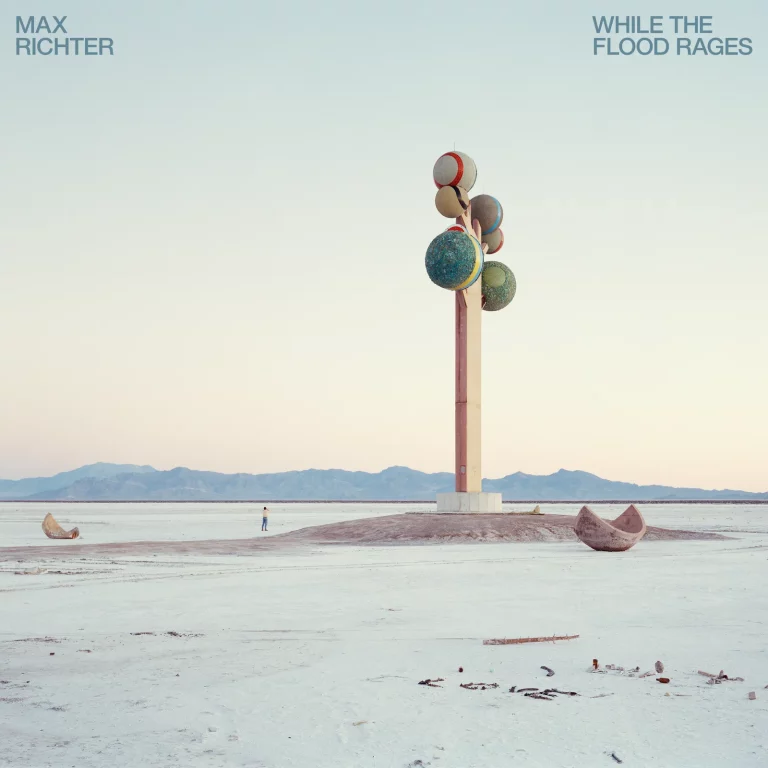
Richter is obviously a prolific composer, as he seems to be releasing new music practically every year since he began, and While The Flood Rages is the latest in his expanding cannon. Essentially, it is an adaptation of the ballet score MaddAdam he co-created with choreographer Wayne McGregor, both the score and the ballet inspired by Margaret Atwood’s trilogy of the same name. Additionally, the album has a 15 and a 19 track version, possibly depending on the listener’s preferences.
Those a bit more familiar with Atwood’s writing would know that there is a dystopian theme flowing through her work, something Richter himself seems to have a strong connection to, evidenced throughout his opus so far, whether you consider The Blue Notebooks, (2004) or his most renowned and popular work or his score for the sci-fi TV series Leftovers.
So it is no surprise that Atwood’s work seems to have struck the right chord (or note) with Richter here, where he employs all the best elements of his previous work, such as the orchestration of the introductory “Wave to Wave”, or the ‘real’ modern classics of “The City Was A Chaos”. He also brings in elements he might not used too much previously as in “Tell The Bees”, while his mastery of electronics is quite evident in “Data Ballistics” that follows. Of course, his intricate use of the vocal choir is present too on “Oh Let Me Not Be Proud”.
Essentially, it is yet another musical gem from Richter’s canon, pieces of which, or all of it will just keep adding to his quite deserved popularity.