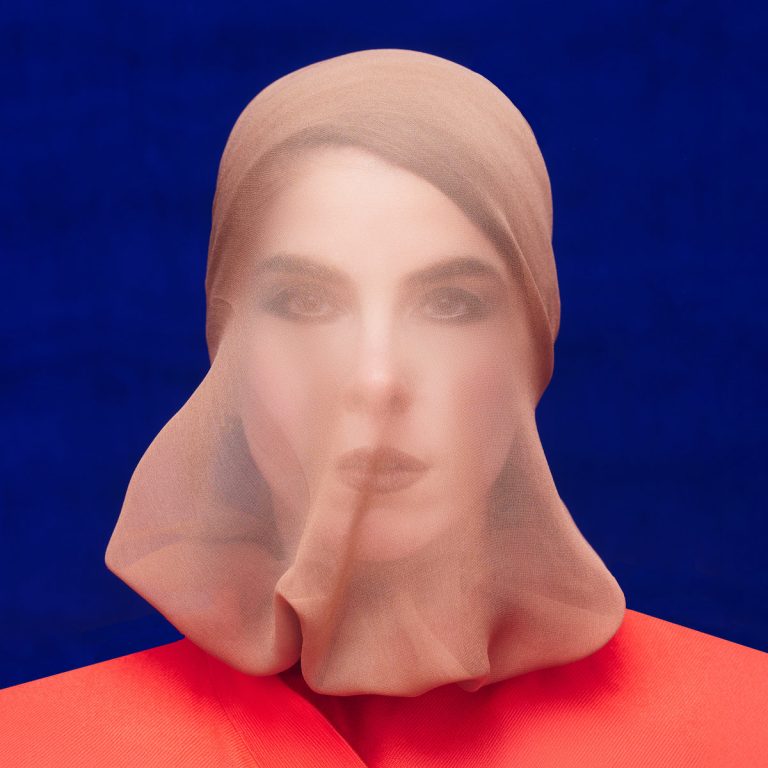

Everything is connected, and everything overlaps. That’s the thread of meaning that runs through the fifth album by Ziemba, the moniker of singer-songwriter, pianist, producer, and journalist René Kladzyk. Life weaves strange paths, long-winded tales, and close ties, but it all comes from the same source and to the same end. The Braid then is fittingly titled: Kladzyk uses the album to let her mind wander across landscapes and to the bottom of an emptied wine glass. It’s an album of itchy feet, looking for answers somewhere else.
It’s also perhaps Kladzyk’s boldest album to date, a bulging folk-rock record that veers into rock opera-like grandeur during the middle. Some almost six years in the making and recorded bi-coastally at Tonal Park in Washington, D.C. and Tropico Beauty in Los Angeles, The Braid shows its working in how detailed it is. It’s replete with players and orchestration, often adding impressive and deepening effects: the pillowy bob of brass, the handsome strings, and gospel-like backing vocals on “Utopia” build to a lush conclusion; the slow march of drums on “All Of It” paves the way for Mega Bog’s Will Segerstrom to unleash a frilly, theatrical guitar solo. There’s little shortage on drama (especially on “Winter Of My Heart”, which comes complete with audible gasps) but Kladzyk knows to not overfill her cup.
If there’s one moment when Kladzyk truly lets her whims take the wheel then it’s on album centrepiece “The Perfect Rose”. Stretching to nearly seven minutes and moving in blocks as Kladzyk shifts between state lines and headspaces, it tracks the cyclical nature of inspiration, of doing what we need to do to get inspired (escape, drive away, dye your hair). Inevitably she ends up exactly where she started, but that’s not necessarily a bad thing. “Guess I’ll just keep following the way the wind blows / Guess I’ll just keep hoping to find the perfect rose,” she muses. It’s a track to inspire the ever-onward journey of creation, to keep on keeping on. It might not be as slick as it needs to be at every juncture, but’s a bold creative moment.
Like her previous album – 2021’s bleak Christmas-inspired Unsubtle Magic – the main gripe to be had about The Braid is a pacing one. The one-two punch of opening track “The Pleasure Seekers” into the peppy indie pop of “We Implode”builds up momentum, but this then dissipates all too quickly. It comes back on other tracks like the aforementioned “Winter Of My Heart” but the album would do better to not shy away from some more uptempo tracks. The slower tempos aren’t by any means bad either: the tender “Open Up” and pretty orchestration of “Utopia” evokes Weyes Blood, while the swaying singing out to the universe of “Bone Flute” sounds like Kladzyk’s own particular brand of chilly, wintry balladeering. There’s definitely carrying on of the frostier tone from Unsubtle Magic, which, again, is no bad thing. You can even hear a hint of a note of “O Holy Night” in the beginning of final track “The Only Forever” before the warped guitar notes crystallise like icicles.
Similar to Unsubtle Magic, The Braid was written and recorded with bleakness on Kladzyk’s mind. Created while she was working full-time as a reporter covering the U.S. immigration system and Department of Defense, the dourness of reality finds its way in too. “Chill in the east, fire in the west,” she intones at the album’s centre, a brief allusion to the state of the world. Kladzyk doesn’t pretend to have the answer, but she does have her escape. “Now I’m drinking coffee in my bathrobe with my philosophy in pen / It’s the same kind of song I’ll probably write again,” she offers during the same track, accepting her place in it all while also poking fun at herself. Her work, like the titular braid, is all connected, all stemming from the same source and overlapping with every facet of her surroundings. The world keeps turning and Kladzyk keeps writing, continually growing and interlacing those strands.