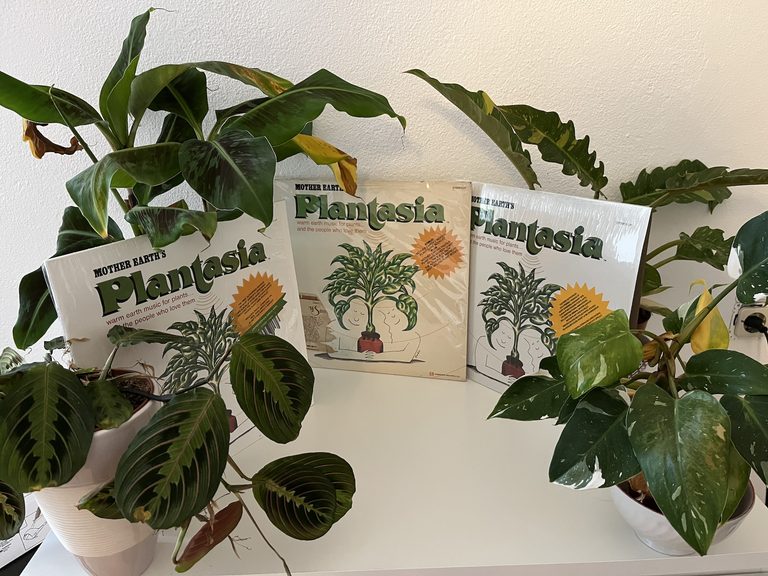

Plantasia at 50: How Sacred Bones’ new recycled material reissue compares holds up against the 1976 original and the first needle-drop edition
There is something immensely comforting about the realisation that there’s still cult records manifesting in our current age. With the advent of blog culture two decades ago, the equalisation of niche spaces into mainstream music discourse and streaming services dominating listening experiences, it could be assumed that the conditions for cult albums to gather a following are just no longer met. Listeners are over-stimulated, writers no longer hold the status of nurturing archivists and platforms are flooded.
Yet still, an album like Mort Garson‘s Mother Earth’s Plantasia has managed to gather not just thousands, but millions of fans worldwide, turning from a 50-cent-bin oddity to a canonic standout of 70s easy listening that people pay hundreds of bucks for.
Now, Sacred Bones has released what could be considered a particular standout in their sprawling reissue campaign of Mort Garson’s standout record. But before we get into this, let’s explore what Plantasia actually is…
Mort Garson, born in 1924, spent most of his early career as a versatile session musician and work-for-hire composer. Harkening back to the 50s, he orchestrated, conducted, wrote and arranged songs for others – among them contemporary hits of Brenda Lee, Cliff Richard and Ruby & The Romantics. His versatility here seems especially notable, as his output included anything from classical to bossa nova, soul and variants of rock’n’roll. During the mid 60s, his output spiked significantly, with him working pretty much constantly with collaborators like Doris Day, Nancy Williams, The Lettermen, Joanie Summers and Paul Revere and the Raiders – whatever fits the glove.
In 1967, Garson met Robert Moog at a music engineer convention, which let to him acquiring one of the early synthesisers of the same name. The revelation of the instrument fell parallel to Garson working on a conceptual solo venture about the 12 Zodiac signs – one per record, so a person could pick and choose their own. Reportedly, the material is the first West Coast releases that make use of a Moog.
Garson would go on to experiment with the instrument for a whole truckload of progressive easy listening releases, often under varying monickers The Wozard of Iz is a psychedelic and political venture, Z a raunchy project with sexy moaning and both Ataraxia and Lucifer aimed at dark, occult progressive electronica.
It’s a riveting journey to explore these whimsical albums, rich in compelling melodies and hints of a future avant-garde: Ataraxia and Lucifer even seem to predict Warp Records in certain moments. It’s notable to point out that Garson’s perspective had a seeming interest in the counter cultural scenes that bled from the mid 60s into the 70s: hippies, esotericists, mystics. While Garson himself seems a quite settled person, his fascination for these outsiders and their alternative lifestyles permeates all these albums.
And so in 1976, Garson found himself inspired by his wife’s floral dedication (she was growing potted vegetation all over their home) to compose music that would benefit the growth of plants. Adapting the monicker Mother Earth in reference to his friends Lynn and Joel Rapp, who had authored plant care books, Garson composed bright, bubbly, joyful songs – entirely on a Moog.
But by that time, the popularity of easy listening had long waned. Hard rock, heavy metal, punk, prog and disco were happening to varying degrees, taking over the underground and dominating airwaves. Garson’s space age pop modernism seemed to come from a different era. Included for free with purchases at Melrose Avenue’s “Mother Earth” plant store and Simmons mattresses from Sears outlets, Plantasia was pretty much a novelty. You’d find it in dollar bins in Los Angeles, or got it passed on as gift from somebody that relocated to another area and didn’t find a use for it.
Given the growing interest in easy listening within American counter culture and music nerd circles, the album did pick up some modest interest in the following decades – one of these ‘buried treasures in the trash pile’ you might see in magazine articles: hey, here’s a smart, fun record you can pick up for next to nothing to fill your collection.
But it wasn’t until roughly a decade ago that the album suddenly slipped into the YouTube algorithm, being suggested to thousands of people. While the original upload that spawned this popularity is now gone, multiple videos from around that time have collected hundreds of thousands of views.
Eventually, the Sacred Bones label picked up the rights to Garson’s catalogue in 2019, leading to multiple reissues, archival releases, t-shirts, bags… you got it: Plantasia became a worldwide phenomenon that overtook offline spaces. One minor roadblock was the absence of the album’s master-tapes, which made an early reissue a needledrop, rendering the intricate stereo dynamics of the album a little muted. Since that original release, the original tapes have been recovered and all subsequent releases have recreated the original dynamics.
So for the 50th anniversary of Plantasia, the fine folks at Sacred Bones have been so kind to award me a review copy of this latest edition, which is an especially eco-friendly release: from the vinyl to the cover and booklet, every single element of it crafted on the basis of recycled paper, plastic and cardboard – even the foil is bio-shrink-wrap! And what fan would I be if I would not take my time to actually do a thing and – well, see below:
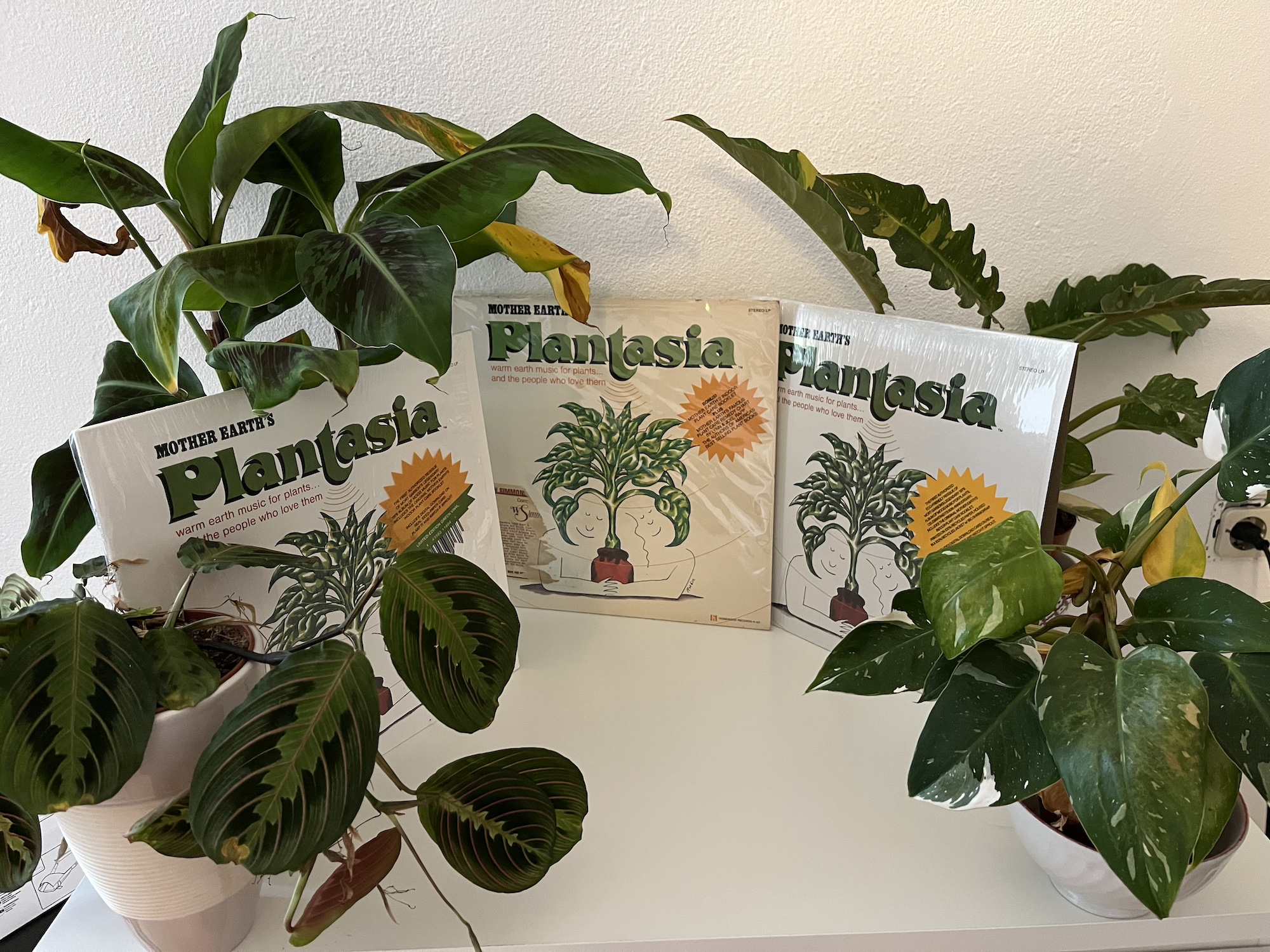
That’s right: I am going to provide a thorough and direct comparison between the original pressing, the first reissue and this new all eco-friendly one. Let’s dive into it…
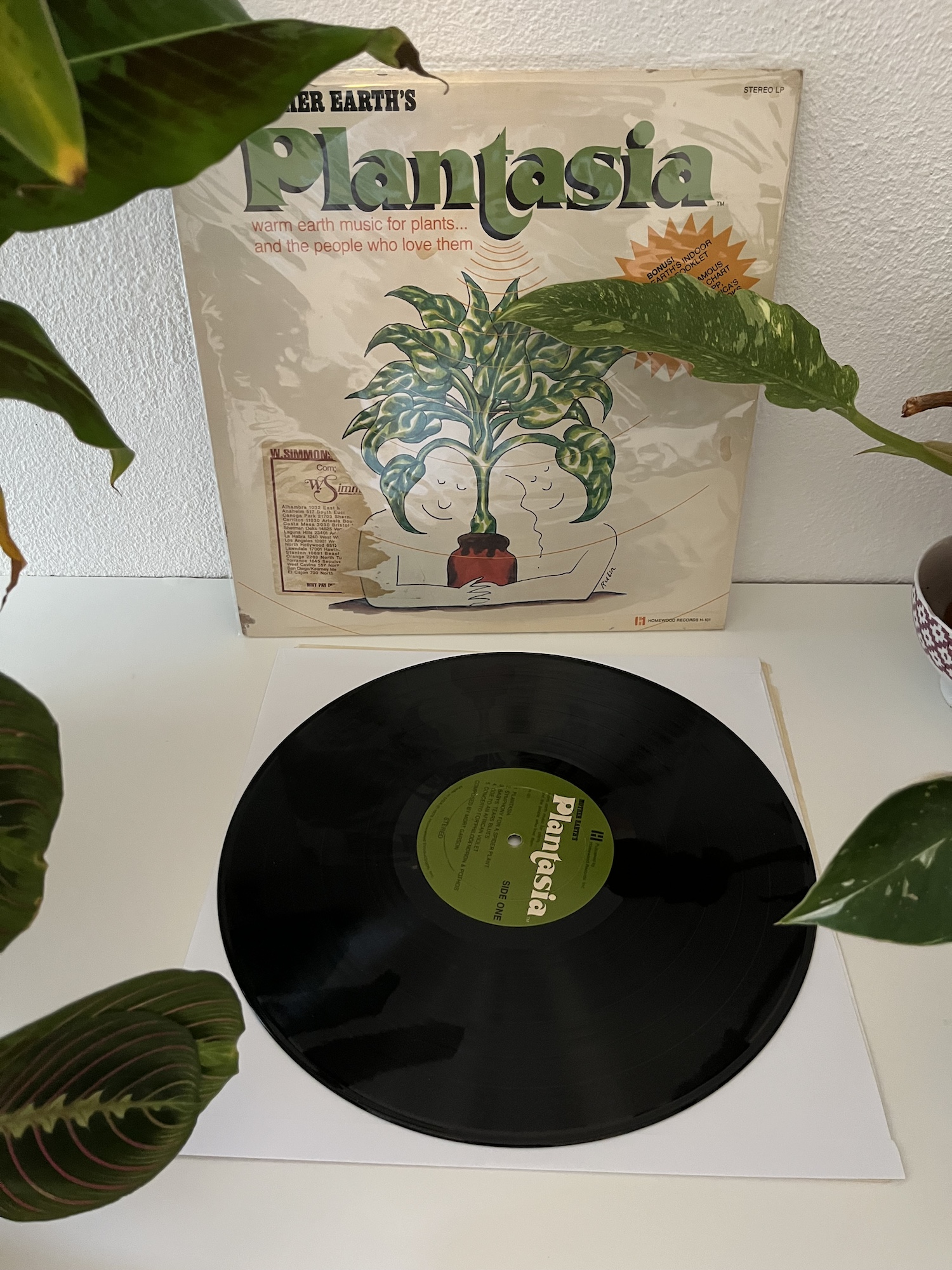
The original copies of Plantasia, which were given away for free with plants and mattresses, were mostly regarded as novelties, thus it’s quite hard to find a copy that is without scratches, still holds the booklet and comes with an intact sticker. As you can guess and see, my copy definitely had a long journey behind it – and it sounds that way, too. But beyond the, let’s say, uneven surface and slight issues, the dynamics of the album are rich, lively and genuinely euphoria inducing!
There’s many moments where the synth tones sound so sharp and clear, the impression that Garson is sitting right beside you playing the instrument becomes incredibly vivid! There is also a hint of 3D sound effects that are quite palpable – I wonder how somebody with a bigger budget hi-fi setup would hear the album, and if those nuances come out even more. Either way, this is a very fair reference to start this comparison with, even if my copy is far from the coveted Very Good Plus Discogs score.
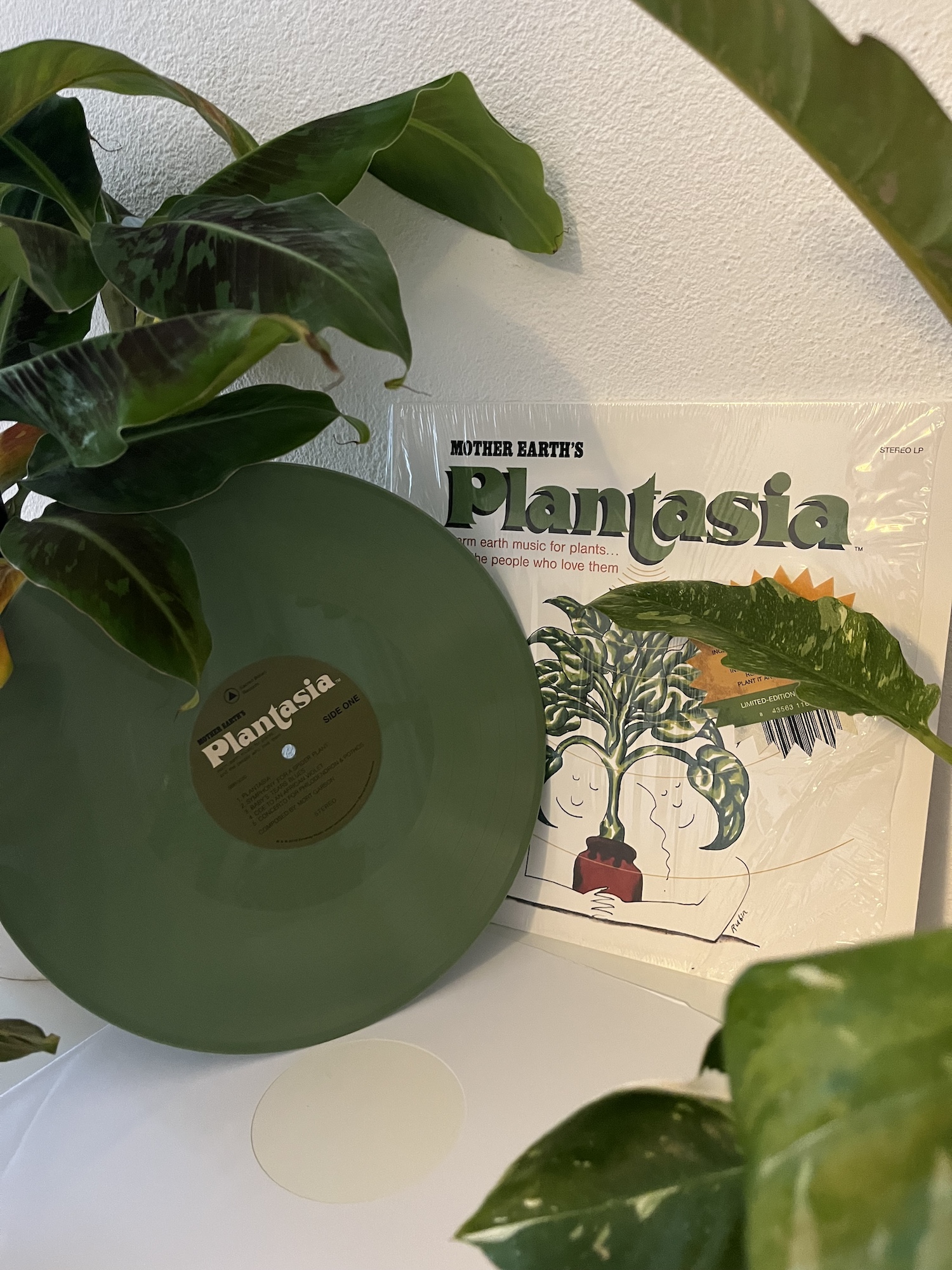
Moving on to the Sacred Bones’ first reissue on light olive-green vinyl, what comes into focus immediately is how much quieter this version sounds. Remember: this edition reportedly stems from a needle drop of an archive copy, as the tapes weren’t accessible back then – and it shows. There’s a little bit surface noise, which might be attributed to the particular source, or even the tricky translation process from one record to another – I’m no expert here. There’s a slightly muffled, somewhat muted quality to the instrumentation, which limits the full dynamic range and sharpness the original pressing brought to the table.
I also notice that the vibrant “room sound”, the aforementioned 3D effect, is not wholly present. It’s a fine reissue – especially as back then, it clearly was the best and most affordable way to listen to and own Plantasia on vinyl. But it’s the unfortunate ‘first-draft’ type release many niche records go through. This is in no fault of Sacred Bones, and just the harsh realities of bringing back a widely beloved record that has fallen into obscurity, with elements lost.
Which brings us to the main part of this comparison: the 50th anniversary edition is already interesting before the record even comes out of the sleeve. First of all, the packaging of it is truly charming: where the original edition came in the heavy cardboard sleeve with glued-on backside often found in US 60s and jazz pressings, and the prior reissue was housed in a variety of sleeves (from a re-created, impressive glue-on to a fairly standard, slightly flimsy variant), the 50th anniversary issue is a glossy recycle cardboard with subtle imperfections – it’s very beautiful and gives the outside an almost vintage feel. The advertised bio shrink-wrap also actually feels somewhat funny when you test it – does that dissolve in water? I don’t dare test it, but it gives off a slightly goofy feeling to the touch.
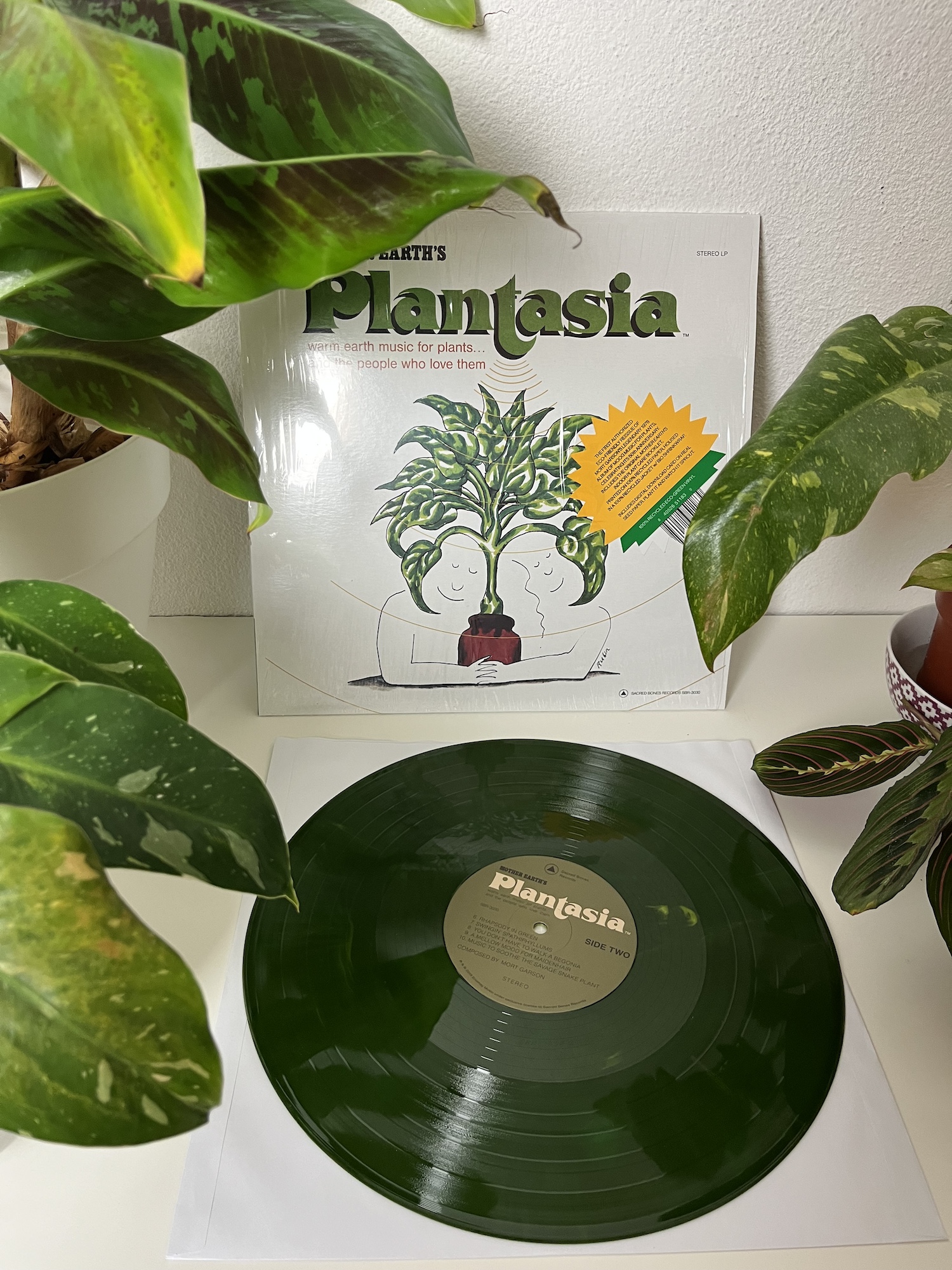
Equally charming is the recreation of the booklet: where the prior reissue was printed on slick, glossy paper, the recycled variant is coarse and feels more genuine to flip through. On the haptic side of the reissue, this concept is absolutely a massive win: not only does it fit with the plant-friendly concept of the album, it also adds genuine excitement while handling it. It doesn’t just feel like any reissue you can buy on the market, but a more personal and worn item.
What all Sacred Bones issues have in common tho is a plantable seed-card for the download code. If you don’t care much for digital, or you choose to scribble the code down, you can just plant the card and see what flowers sprout. I have not done so myself – and to my understanding there is no proper documented evidence what sprouts from the cards – but by all accounts, the cards do produce seedlings.
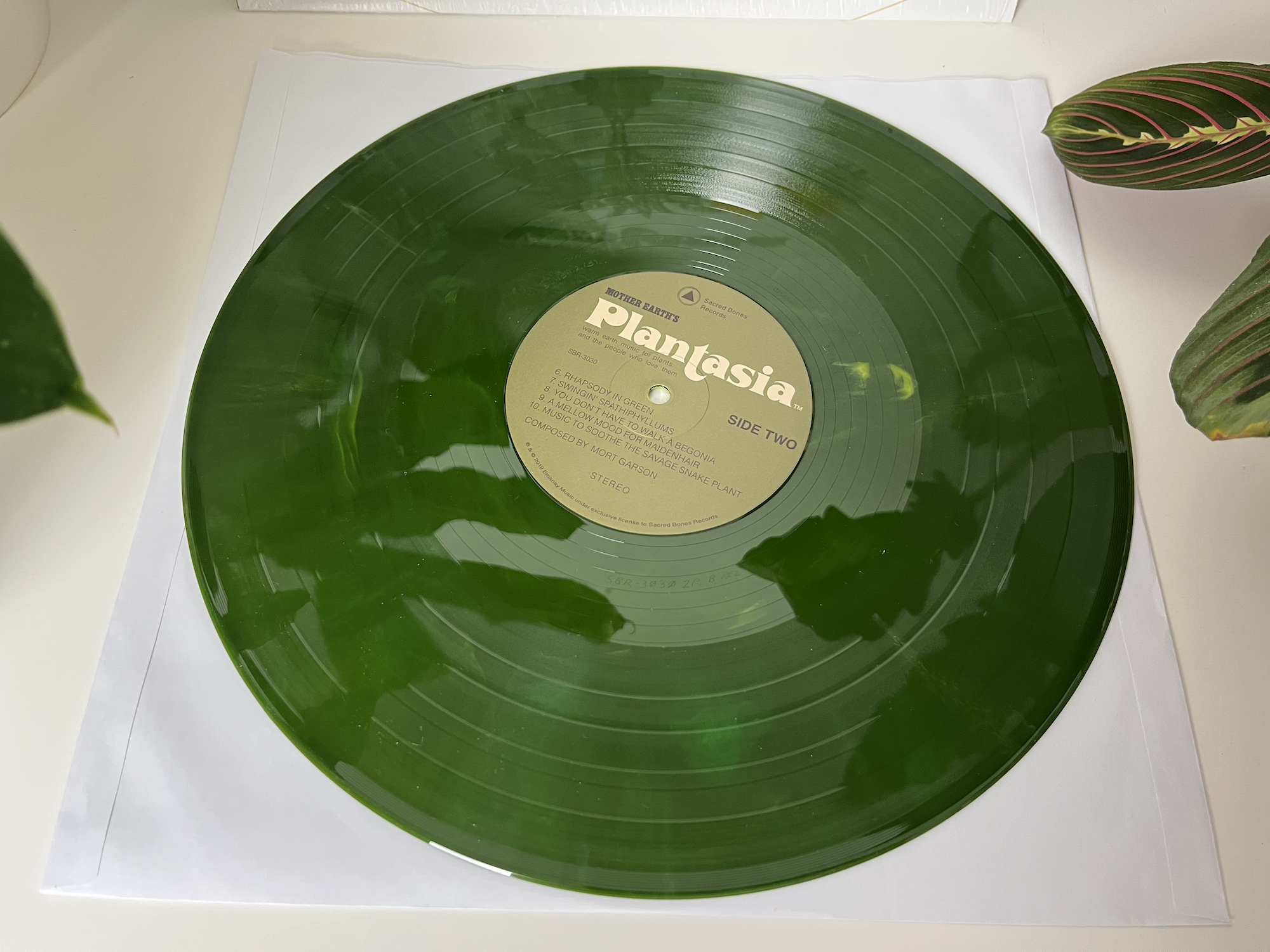
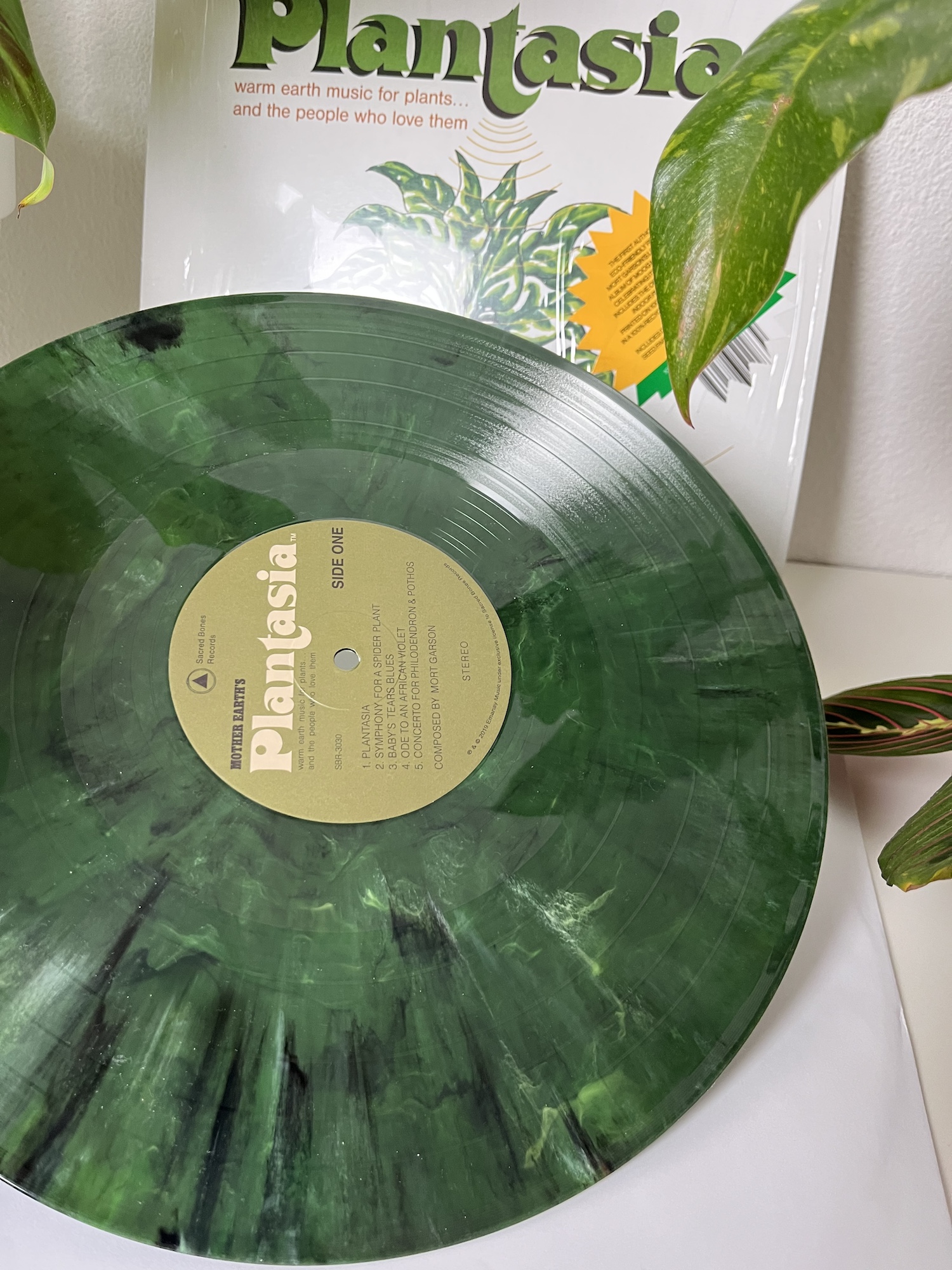
So let’s move from the packaging to the sensory factor of the pressing, which is also especially unique: as the 50th anniversary issue is sourced from recycled vinyl, it’s basically different variants of green thrown into a mix. That means: each copy is totally unique.
But, is that really true? In my quest of providing readers with the most in-depth conclusion, I ended up calling an acquaintance who also had gotten a copy of the pressing, to compare. Lo and behold: the two are indeed utterly and significantly different! While my pressing comes in a lovely “swirl” mixture of translucent cactus green and solid pine nuances, with random flashes of white, my acquaintance’s copy comes in what I deem ‘Resident-Evil-Hunter-style’: A barely translucent crocodile hue with black and white splatter nuances and some surprise silver metallic glitter on top. As I presume there are more variants, I invite collectors to send in their pressings – maybe some of them will be included in a revision of this piece, who knows. I figure collecting this issue will make for some welcome surprises on that front.
Which brings us to the sound of the pressing. As mentioned above, all recent pressings of Plantasia that Sacred Bones issues come from the re-discovered master tapes – and in comparison to the original pressing, I have to say that this latest issue really does not sound far off in terms of the dynamics. Bright, vivid and clear, this latest pressing is maybe 93-96% to the sound of the 1976 issue. The room dynamics and 3D nuances are beautiful and shine, the bubbly synth tones on point and the overall sound quality absolutely astonishing!
The slight differences that I hear are a lack of total sharpness of certain synth tones, which – in the ’76 version – seem to come directly from an instrument, whereas the reissue feels slightly more focused, mixed. It’s pretty much inaudible to anyone who isn’t going in with the intention of microscopic critique, so there’s no actual loss here. I can also see this difference stemming from restorative work, which actually cut out some sharp frequencies to allow for a more balanced tone overall, or the physical effects my original copy underwent, having been played many times.
In more certain terms: this 50th anniversary reprint sounds pretty much as close to the original as you will ever get!
But there’s some more interesting nuances to keep in mind. Playing the second copy from my acquaintance back, I note that it slightly, for lack of better term, ‘warmer’ sounding – just a hint. As the pressing comes from recycled vinyl that has all kinds of different sources – solids, translucents, glitter – it’s evident to me that these types of vinyl might have different impact on the sound. If you are a collector and acquire multiple copies, you too might notice very, very subtle differences in the mids and surface ambience, which must stem from the material variants. This is by no means a critique, but should be noted still in case customers wonder while comparing.
All in all, this reissue truly is magnificent! Not only does the concept work, but the actual feel of owning, touching, looking at and listening to Plantasia in this variant adds to its charm and quality! It actually comes across as a unique piece that holds personal value, as opposed to just another re-issue of a much more pristine original version. It’s the kind of item to gift to a beloved person or family member, a record associated with future memories and immediate nostalgia, any slight variant and imperfection included. It returns an item some recently considered a capital investment to its rightful status of cult obscure art piece, easily accessible and meant to be engaged with.
So I won’t just recommend to buy with confidence, but endorse to handle, marvel and listen to this re-issue as often as your time allows – trust me, your plants will thank you!