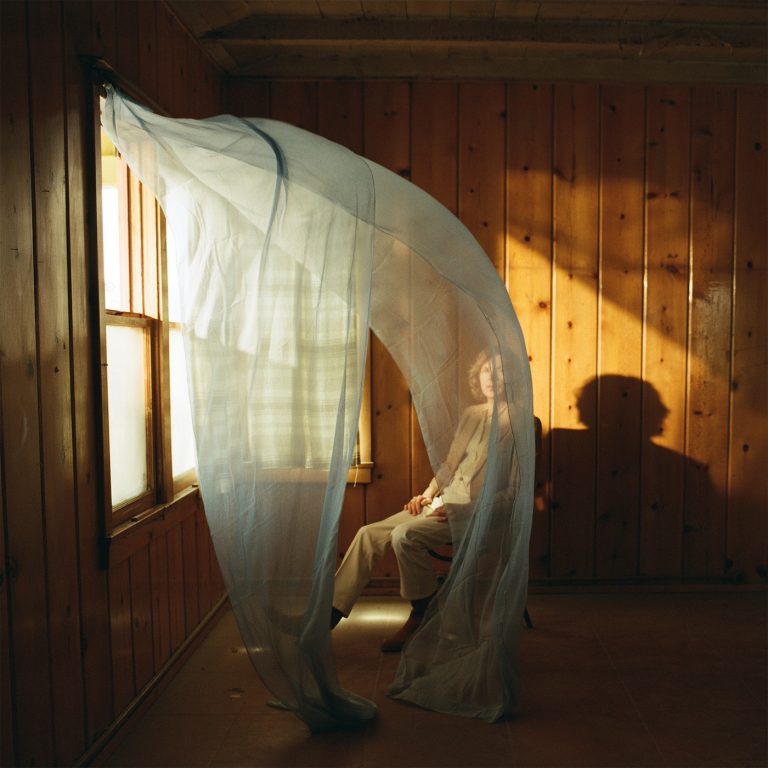

To say that Beck‘s career has been impacted by cataclysmic shifts seems a bit of an understatement. Where his 90s releases were marked by a bratty urge to experiment and defy audience expectations, his millennial output had become more personal, introspective and reflective. From the breakup-analysis on Sea Change to the autobiographical Guero and quasi-political The Information, Beck proposed a grounded variant on his psychedelic inclinations – not so much middle aged and far more naked than his previous chameleonic work. Sadly, the brilliant Modern Guilt – possibly the climax of this phase – marked a cut in Beck’s career. The last of his albums under a Geffen contract, it was always going to be meaningful, but observing Beck’s private life following its recording resembles a list of challenges: a dangerous spinal injury, familial strife, the total dissolution of his nebulous but oft-cited ties to Scientology.
Two albums cited as being in development seemingly got shelved (one – an experimental work – was divided and eventually released three lengthy singles). After six years, Morning Phase – a thematic and aesthetic sequel to Sea Change – was released to wide praise and surprise mainstream approval, winning the Grammy for album of the year over a host of mainstream blockbuster releases.
Beck was at his career peak, one of those moments where anything was possible, any road forward accessible; but much to the chagrin of many fans, the unpredictable musician chose the safest. Colors was not the anticipated whacky pop extravaganza, but a fairly straightforward and neutered affair, while follow-up Hyperspace blended singer-songwriter aesthetics with chart-R&B vibes. Both records existed in the vacuum of Hollywood luxury villas: background music for warm mornings by the pool, cute in every way and just artistic enough to be respectable. It’s not puzzling that these albums exist, as Beck had always been interested in pop-culture and easy listening – but he usually would defy and subvert these clichés through meta commentary. Now, he had reached the phase where he had morphed into the subjects he once lovingly satirised.
Maybe Beck felt the pressure: between Hyperspace and Ride Lonesome are seven years in the wilderness and Beck’s eternally youthful frame has noticeably aged. Now 56, the musician has reunited with former collaborators to present what could be seen as a thematic continuation of Sea Change and Morning Phase: an orchestral, ponderous, melancholia-tinged songwriter album, that does not so much shift gears from where Hyperspace left off as it circles back to 25 years ago. If the melodies here remind of “Wild Horses” by the Stones, “Whiter Shade of Pale” by Procol Harum, or “Easy” by The Commodores, you are not wrong: Beck’s newest seems intentionally referential of the 70s canon, of adult oriented radio station programming, of garage sale selections.
This doesn’t mean there’s no mysticism here: “In the Night” fits Beck’s occasional darker sensibilities quite well, thanks to the beckoning vocal melody and ominous strings, while the longing “Disappearing Act” has links to the often sinister aura of formerly obscure, LSD-tinged christian folk in the vein of Major Arcana or Dave Bixby. “For Your Love” even cuts the band dynamics completely, concentrating on Beck’s strong vocal presence, strings raking the space of the aural room into cosmic configurations. “Slow Canyon” brings a hint of country to a mysterious verse – there’s hints of George Harrison’s solo work in the spiritual qualities hidden within the track, from the subtle organ backdrop to the romantic lyricism. These are some of Beck’s strongest compositions in 18 years, likely rooted in his appreciation of songwriters who chronicled the death of the hippie dream.
Still, these seem like outsiders on the album: it’s the more outwardly pleasant and familiar tunes that dominate Ride Lonesome. The opening title track feels like a lost 1974 radio song, fit between Fleetwood Mac and Wings. “It Ends Right Here” hints at Big Star, especially with its rousing build-up during the second half, and “If You Don’t Know What Love Is” owes quite a bit to “Wild Horses” and Dylan’s “Dirge”.
Speaking of Dylan, “Falling Through My Hands” could be on Dylan’s New Morning, with its quasi-southern guitars and wistful vocals. “Failed Words” rushes even deeper into deep 70s soft-rock territory, scratching on the pseudo-Beatles-ballads by Cheap Trick. The most curious tonal reference on the album comes in “Bleed”: the charming folk song borrows the lead melody of Pink Floyd’s “Breathe” for its bookends, switching gears for the middle section for what resembles a John Lennon composition.
But with all this beauty and cozy porch-light atmosphere also comes a hint of kitsch. Closer “Beyond the Light” seems all too comfortable in its country-twang, retreading ground other tracks on the album already explored. “Run Away” rushes into a territory reserved for the Eagles, which – while undoubtedly having a nice melody – comes across as just too saccharine and pre-ordained to middle aged yoga classes.
Ride Lonesome comes at the right time for Beck: at 56, after two widely maudit flukes and seven years without an album, there surely must have been an urge of proving to critics not only that he still had it, but that his musical capacities were beyond that of a legacy act. Releasing a mature, emotionally complex singer-songwriter album definitely was the right step. But it’s also notable – at times painfully so – that this comes a the expense of a more unwieldy, courageous and experimental Beck. From the musicians he chose to the singer-songwriter angle, all the way to the 70s referential writing, Ride Lonesome is more about familiarity and comfort than nostalgia and melancholia, the two anchors of Sea Change and Morning Phase. The gentle experimentation and clever textures of those two albums are absent on this new work, mostly substituted with stark delay and homogenous production. Where Morning Phase had learned to adapt Neil Young through the millennial gaze of Sufjan Stevens and Ryan Adams, and Sea Change was reflecting on The Beatles through the contemporaneous lens of Björk and Radiohead, Ride Lonesome lacks this anchor within its construct.
The instrumentation might alternate, but Beck often sounds captured in the same environment, rarely stepping out of what sounds a large classical music hall: no confined spaces, no porches, no dry irony that singing in a closet brings. It’s all too expected. Had he embraced a more fervent desire to alternate this, pushed for a more diverse sound or textural depth between songs, then this good album could have easily been a very good album. But still, Ride Lonesome puts Beck firmly into the saddle – let’s hope he’s defying expectations next time.