
Throughout their oeuvre, finding the perfect paradox has been Deafheaven’s driving impulse. Rage and shimmering texture. The fluorescent ugliness of the world contrasted with a celestial beauty. Their debut, 2011’s Roads to Judah, brimmed with aggressive shrieks and growls, blowtorch riffs, and sledgehammer drums, though many tracks included dialed-back segments, passages that tilted toward shoegaze and/or a darkly psychedelic sound.
With 2013’s Sunbather, 2015’s New Bermuda, and 2018’s Ordinary Corrupt Human Love, the band forged a grabby triptych. Guitars shimmered and sliced; drums slightly lurched, then slightly dragged, prompting a sense of instability; bellicose vocals were backgrounded and dashed with reverb, conveying swagger and uncertainty. The result was an elegant navigation of anger, longing, and grief – the sets grounded in the metal playbook but also significantly expanding the genre, stylistically and emotionally.
With 2021’s Infinite Granite, guitars spiraled and swirled, washing over a listener like an opiate mixed with a sprinkle of amphetamine. The album, true to the shoegaze canon, was melancholic, ethereal, even ghostly. The crunch effect on the guitars was looser, the fuzz more diffuse or diluted. Also, and perhaps most notably, the album was ostensibly song-oriented, George Clarke working, surprisingly well, with melodies and relatively clean vocals.
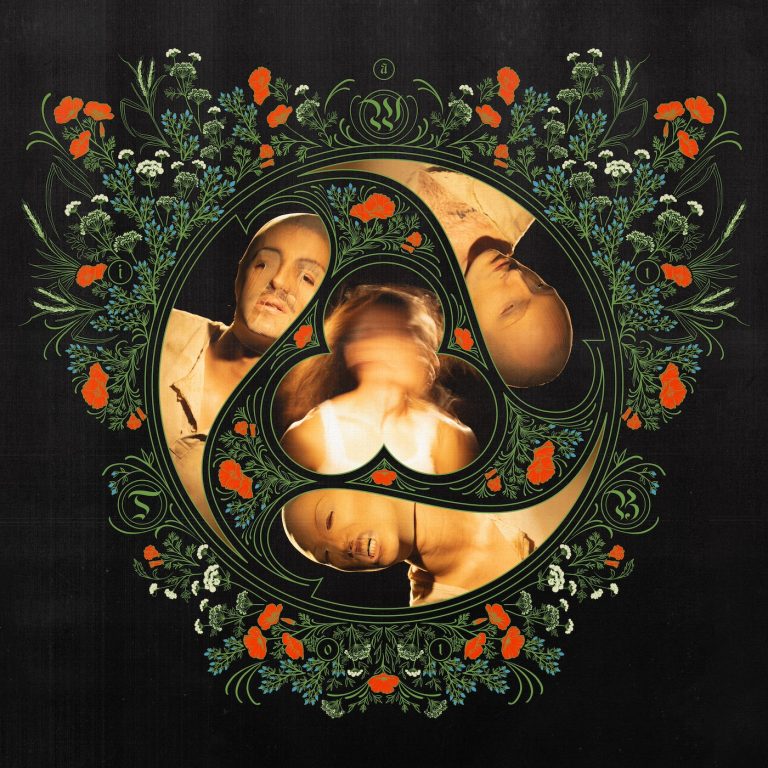
Last year’s Lonely People with Power showed the band “correcting” it’s shoegaze veer and adopting a decidedly black-metal stance. It’s this album that serves as the foundation for their new EP, the three-track At Work in the Fields of the Bomb (title taken from Robert Del Tredici’s 1987 book). Adeptly produced by Arthur Rizk, the 23 minute project captures the band as they experiment committedly with harshness, brittleness, and volatility – a recipe that hearkens back to their debut. That said, the Bomb also includes some of Deafheaven’s most elegant, theatrical, and jaggedly moving work.
Fifteen years into their career, Deafheaven are still seeking that grail, that moving target: the living paradox. “Hunter”, on the surface, is blistering and fast-paced. Steely guitars and icy synths, on the other hand, facilitate a space-y removal, a gothy distance that points at least casually to recent Swans (Michael Gira proclaiming truths from a boreal mountaintop, buoyed by a dream-like welter). Daniel Tracy’s drums are mostly relentless, juggernaut-ish. In the song’s mid-stretch, however, his shift to a melodic and accentual style suggests a bow to late-70s-era Neil Peart. Clarke is back to his lycanthropic comfort zone, sounding like a killer cum demon cum desperate Cain hoping for redemption, all the while screaming fuck you! at the sky (and, at the same time, punching himself for doing so).
Following a succinct, ambient palate cleanser (the wistful, three-minute “Three Princes”), a listener is treated to the approximately 13-minute “Sorry Laid the Hearth”. Rizk opts for a HUGE and panoramic sound. The guitars are LOUD but soaked in compression, radiating density and containment. Tracy is a wizard (or madman), shoving the song forward like someone forcing a sprinter to run faster by tagging them with a cattle prod. At the same time, the track oozes coolness, a vibe created mostly through an overlaying of glacial voices (that resembles a cold-wave synth sound). This is a soundscape that would be appropriate for a horror movie involving a VERY steep descent into hell (As Above, So Below?). Clarke, again, is vicious, insidious, spewing as the band leap between thrashy segments and sublime riffs.
Deafheaven’s tracks on the Bomb are as urgent, weighty, and persuasive as ever, but they also evoke a subtler sensibility: that there’s an emptiness or void at the heart of self, that every snarl, like every mumble, is swallowed by time and space. Sure, make a big noise, as Queen and AC/DC said, though your clamor, no different from the innocuous whisper, is fated for oblivion. With their latest, Deafheaven and the intuitive Rizk explore intriguing reorientations, micro-shifts that, hopefully, will be further developed in the future.