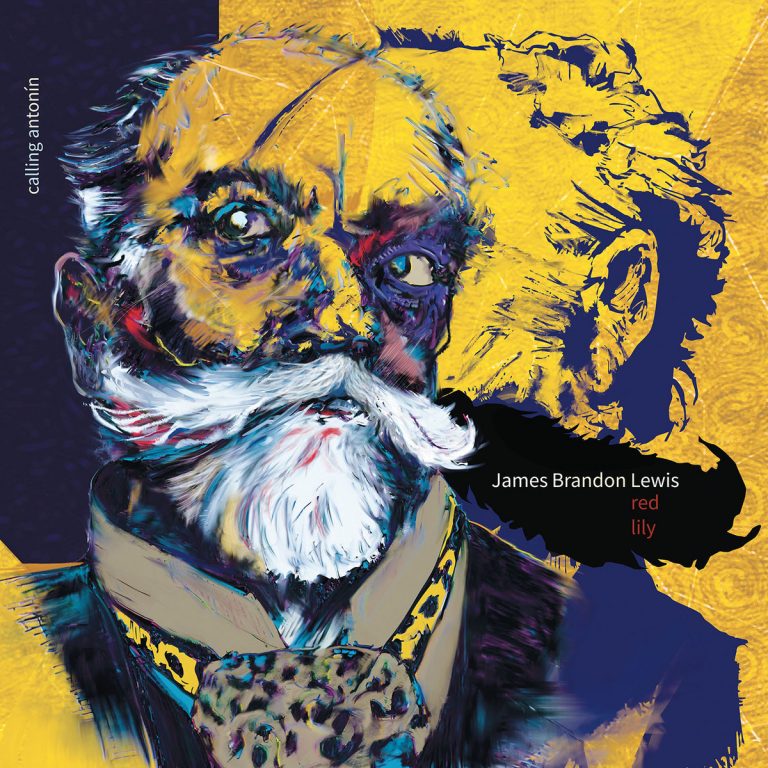

For some 15 years or so, since relocating to New York City, James Brandon Lewis has become one of the spearheads of modern jazz, a prolific one at that with some 20 releases under his own name or as co-leader, and not counting a series of collaborations.
At the same time, quite a few critics have named him a thinking man’s jazz musician, not solely for the audience and listeners he attracts but because of the fact he has conquered the three mains steps in academia – university graduation, and MFA and a PhD (the latter in Creativity)
Throughout his musical career so far he has been practically all over the place, venturing into hip-hop, soul and R&B, but as well as int more rock connected territory with his two collaboration albums with Fugazi-connected trio The Messthetics.
Yet, throughout all the music he has created so far, there is a connecting line to one of the key strains of African American music – gospel and, consequentially, spiritual jazz, with traces of influences there from some of the key artists from John Coltrane and Albert Ayler to Pharoah Sanders and Sun Ra, among others.
So how does Calling Antonin, the latest release under his own name (but also as leader of the Red Lily jazz ensemble) fit into this, having in mind that the album is in one aspect devoted to Czech classical music composer Antonin Dvořák?
Well, it turns out and simply put, like a glove. When Lewis was called up to collaborate with the Czech-American Marionette Theatre (CAMT) on a project devoted to about Dvořák’s life, as an academic head, Lewis took a research dive into the composer’s work and found out that the Czech spent time in the US where, like Lewis he immersed himself into African American spirituals along with Native American music.
At the same time, Lewis obviously went through Dvořák’s music and compositional style in detail, noting that the composer used other folk music forms, particularly those close to his native background, as all of those intersect and connect through the nine compositions on this album.
The opening “Spirit of the Living God” is a sort of a personal outlook on Dvořák’s opus as such, with “Lento” that follows is like a note about where Lewis himself comes from, with traces of Albert Ayler throughout.
With “Ode to P.L.D.”, Lewis makes a connection between Dvořák and Paul Laurence Dunbar, one of America’s great poets. “Dvořák and Dunbar both attended the 1893 Chicago World’s fair, maybe Dvořák heard him recite some poems,” muses Lewis.
“I Want Jesus to Walk With Me” is Lewis at his best, taking inspiration and reworking a gospel song, and here thematically connecting it to his subject of musical observation. With the closer “O’ Rebicku”, a Czech folk song, Lewis on one hand pays tribute to Dvořák, and on the other, imagines himself in a position the classical composer was with his work in the U.S. – being somewhere in Czech Republic, immersing himself in local folklore.
With all that, it another exemplary, brilliant release from James Brandon Lewis and all other artists that collaborated with him on this project.