
Every now and then, an act comes along that strikes a captivating blend between the retro and modish, the vintage and contemporary, occurring as elusively derivative and commandingly original. The act serves as a cultural or aesthetic bridge – simultaneously part of a lineage and decidedly next-gen, breaking new ground even as they mine mapped territories.
The Beatles’ work prior to Revolver (or at least Sgt. Pepper’s) illustrates an energetic reinvigoration of templates forged by The Everly Brothers, Buddy Holly, and Chuck Berry, among others. Dylan’s early songs, through 1963/as late as 1965, illustrated a reworking of the proto-Americana playbook, including traditionals and Woody Guthrie’s oeuvre. One might argue that his lyricism post-1965 reflects a cosmopolitan recontextualization of T.S. Eliot (The Wasteland), Ezra Pound (The Cantos), and Alan Ginsberg circa “Howl”, rendering modernist/Beat poetry, for the most part fringy, hyper-cool. Other acts that recast their influences in seminal ways: Nirvana, The Strokes, MJ Lenderman, Cindy Lee, and various postpunk/art-rock bands, including The Murder Capital and recent Fontaines, D.C.
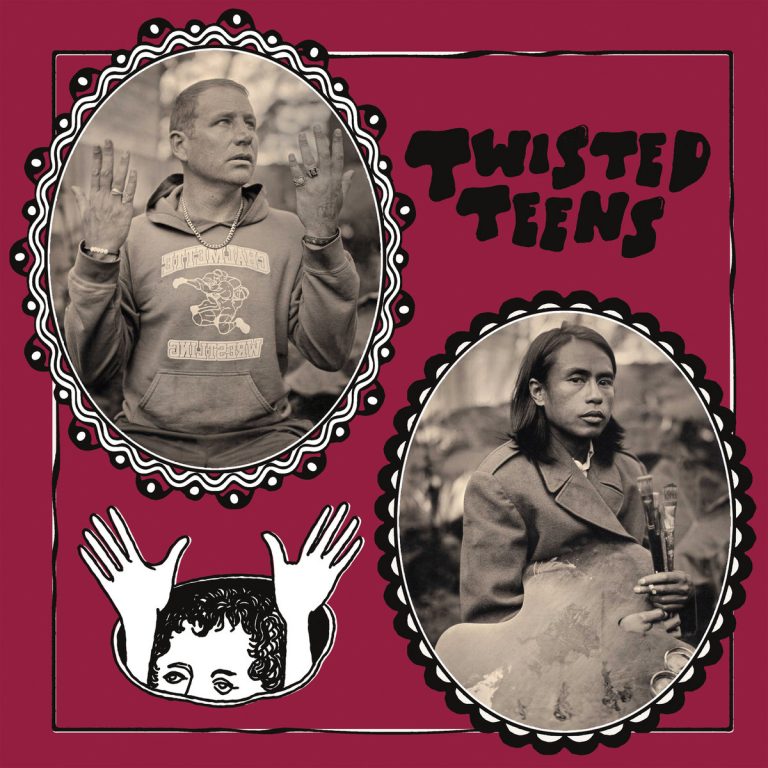
The latest derivatively original or originally derivative darlings are Twisted Teens. Releasing their third album of 2026, the prolific New Orleans-based band navigate another rangy and voguish blend of sources. Singer Caspian Hollywell refines a swagger that, congruent with the current zeitgeist, is ironically composed of humility as much as confidence. Immediate comparisons might be made to the abovementioned Strokes – singalong melodies, frayed guitars, punkish attitude.
Twisted Teens’ songs, though, are more loosely and eclectically composed. Hollywell’s voice is more Sunday morning than Saturday night. Additionally, the guitar parts draw as much from 1950s blues and rockabilly templates as the garage/warehouse canon. If Blame the Clown (released in February) captured the band tilting toward the manic, and Florida Water Blues (released in July) leaned in a melancholic, opaque direction, The Holy Cross Tigers is a synthesis album, the band diving into and integrating pop, punk, swampy rock, and muddy blues. Hollywell effortlessly embodies the ebullient and the downcast, as well as various in-between states, his persona a fusing of the rambling raconteur and the backyard philosopher.
If Twisted Teens occasionally tripped on their influences with previous albums, occurring as slightly distracted or spread a bit thin, here they streamline their multifacetedness while honing a signature overlay or imprint. “Stalks” recalls Link Wray or early Kinks, paying homage to the “pawnshop guitar”. Hollywell’s vocal evades immediate comparisons, though its gruff vulnerability conjures Ryan Davis recording in a Nashville basement at the end of a tour while nursing a sore throat. “When We First Met” is Hollywell’s take on the love song, a messy, prickly, country-fried testament to the highs of new romance and the lows of loss. RJ Santos’ pedal steel moans in the background. Both songs exude a familiar gestalt – punk, country, DIY, the singer-songwriter open mic – yet also land as eccentrically fresh and uniquely exhilarating.
“Blue Rose” is an off-kilter mix of crunchy guitars, Howe Pearson’s janky drums, and Hollywell’s mournful yet stoic vocal. One can imagine Geese exploring this MO – recording in a stairwell or a cubicle with hard surfaces, Cameron Winter running his voice through a cheap amplifier. “You know I’m not drinking for pleasure”, Hollywell bellows on “I Spend My Time Crying”. Guitars, pedal steel, and loose drums converge. The welter is initially jammy and primitivistic, though it grows cumulatively sublime, even transcendent. Hollywell has absorbed the hungover side of Elvis, Hank Williams’ pensiveness, and the seductive undertones of Roy Orbison. That said, Twisted Teens could easily share the stage with Charley Crockett or Sturgill Simpson. Or any number of postpunk acts. The band are probably overjoyed to have signed with Sub Pop, though depending on the details, it wouldn’t be surprising to see Jack White and Third Man Records knocking on their door.
Throughout The Holy Cross Tigers, Twiasted Teens make ample room for alluring pop sounds. “Look in the Mirror” is raucous yet ruminative, built around details that might be magnified during a psychedelic experience – light trails, the way water reflects, how your own face can be simultaneously fascinating and repugnant. Hollywell’s vocal is intentionally rushed, tugging the tempo, his melody catchy in an unflashy way. “Lock and Key” is similarly melodic, instrumentally and vocally. Santos’s pedal steel winds around Hollywell’s vocal, which is alternately strained and relaxed.
On the folksier “Figure It Out”, Pearson’s frenetic drums drive the song, invoking some Frankensteinian hybridization of The Clash and Neutral Milk Hotel. Is the mood buoyant? Regretful? Anxious? All of the above? Closer “Darker the Night Is the Brighter I See” features a melody and vocal delivery reminiscent of debut-era Bon Iver, though Twisted Teens’ vibe is the clamorous storage unit rather than a quiet cabin in the country. The track and project end ambiguously, Hollywell speaking to the importance of resilience while radiating a palpable forlornness.
With The Holy Cross Tigers, Twisted Teens complete an impressive trilogy, reconciling their encyclopedic proclivities and iconoclastic impulses. The set is anchored in recognizable sounds and stances, though it’s clear that Hollywell et al. are ambitious artists with important things to say. They revamp the work of their progenitors while at the same time transcending it. Never wandering too far from the music that inspires them, Twisted Teens occupy a space that is distinctly theirs.