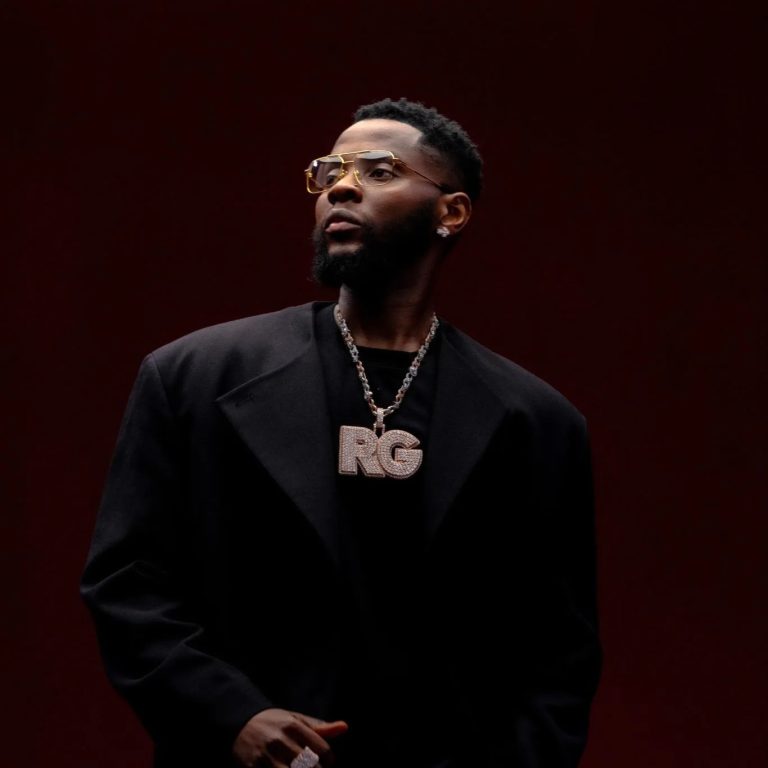

The man who made “Buga” now wants to talk about where it came from.
Kizz Daniel‘s “Owo Oluwa” is a gratitude record, which is the most predictable move in Nigerian pop. What makes it land is who it is for, and who the video refuses to point the camera at.*
Four years ago Daniel released “Buga”, a song whose entire argument was that you should enjoy your winnings in public. It racked up 57.9 million streams in a calendar year, the highest a Nigerian artist had ever recorded, and became the first track to hit a million Boomplay streams inside a day.
“Owo Oluwa”, which came out in mid-September through FlyBoy INC and EMPIRE, is the same man asking who gave him the winnings.
The gratitude single is close to a rite of passage in Afrobeats, and Daniel has been circling it for years, most obviously on “RTID” in 2023. Owo Oluwa is Yoruba for the hand of God, and appropriately the song’s lyrics turn on moving through life carefully and leaning on divine favour, and his own explanation is that he has seen God work in ways he cannot account for. All of which could describe a dozen records.
Two things separate it. The first is that he dedicates it to the memory of his late parents, which turns the abstraction into something with a cost attached. The second is the video, co-directed by Perliks Definition with Asherkine, the Nigerian content creator known for giving things away on camera. It opens with Daniel on a raised circular stage in an oversized black blazer, and then it leaves him there. The rest is Asherkine on the street handing a sewing machine to a young fashion designer and a motorised tricycle to a commercial driver. For a song about generosity, declining to spend four minutes on the famous person singing it is the right call, and a rarer one than it should be.
There is a neat piece of foreshadowing in there too. An elder appears tuning a battered boombox, which is the first visual hint of Radio Gidi, the album this leads into and the first of twoDaniel has promised for 2026. Gidi is Lagos. The record is apparently built around radio culture and the sounds that raised him, and the old receiver is the album cover before there is an album cover.
The music is the least remarkable part. It opens on a house-leaning figure that is genuinely interesting and then more or less abandons it, settling into the mid-tempo Afropop Daniel could write in his sleep. Krizbeatz thickens the drums as it goes, and the Wave Choir arrive behind the hook with a rolling refrain that gives the thing lift. But the press framing calls this an Afro-gospel pivot, and that overstates it considerably. A choir is not a genre change. Young Jonn, meanwhile, is barely there, which is a waste of one of the most distinctive voices in Nigerian pop right now.
So: a sincere record, carefully presented, musically conventional. What stays with you is not the song but the sewing machine, and the fact that the artist stepped out of his own frame to let you see it. Kizz Daniel has spent a decade telling people to celebrate what they have. This is the first time he has spent the same energy on what they might give away.