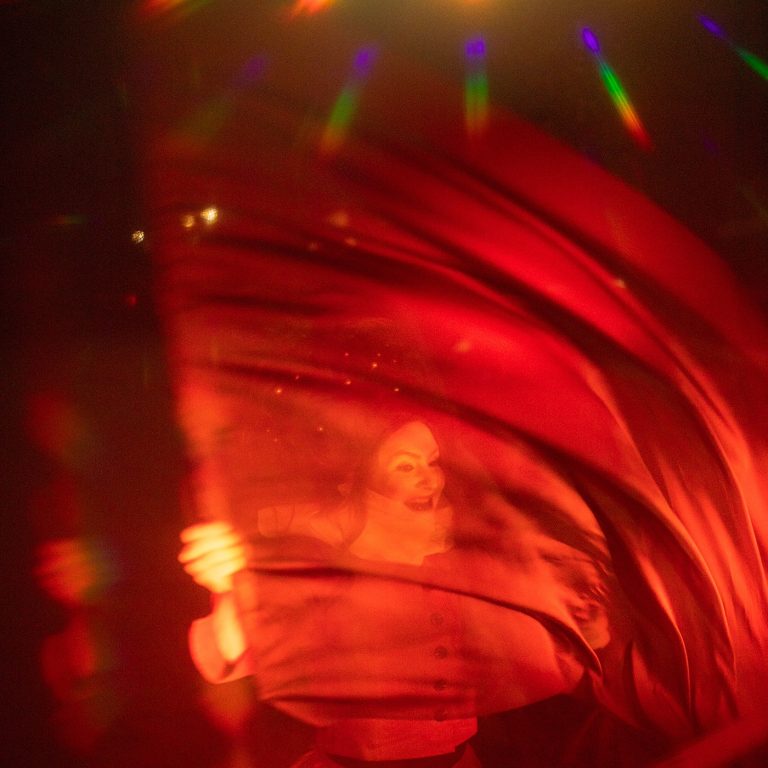

Rarely is an artist allowed space to grow organically without bowing to audience expectations and genre patterns. In an industry so indebted to financial gain and the creation of throwaway goods aimed at carefully targeted and easily satiated demographics seeking instant gratification, it should be seen as a pleasure to watch some musicians grow, to develop, and to feel comfortable in the musical space they’ve created for themselves.
Emma Ruth Rundle has been in a state of nuanced artistic evolution since her 2011 debut Electric Guitar: One. Her goth-centric fusion of folk, ambient, and metal has produced work that’s consistently been marked by lyrics that are brutally honest, openly confessional, and more often than not touching on the darkest parts of life. Rundle’s albums, including a gloriously raucous collaboration with Thou and her stripped back and beautifully vulnerable Engine of Hell, may move between blistering noise and quiet introspection, but they are connected by a worldview that often feels isolationist, confessional, and dour. There is, however, beauty in the darkness.
On her new self-released record, These Killing Times, Rundle returns to the scale and physicality of a full band, but the intimacy of her recent work remains deeply embedded in the songs. There is a delicacy at the core of the record which is poignant but never overplayed. The heaviness is no longer simply something imposed by volume, but is built here around tense sonic textures.
“Powerless” establishes that tension immediately. Rundle’s voice has always possessed a peculiar combination of fragility and authority, but here it sits within a larger frame without being swallowed by it. The guitars can become enormous, yet the songwriting remains recognisably hers: melodic, severe and emotionally direct without resorting to easy catharsis. The soaring chorus elevates the track and you’re left to ask whether it’s the best opening track to an album this year – it sounds like it to these ears. It uses the tried and tested quiet-loud-quiet arrangement without being trite, and the interweaving melodies towards the end lets you find something new on each listen.
“God’s Picture” follows and is a much more restrained, confined song. The presence of Patrick Shiroishi’s saxophone introduces another colour into Rundle’s increasingly expansive palette, while the arrangement retains the sense of pressure and tension that runs throughout the record. It’s a slow build – arguably what Rundle does best – and to put such a song second on an album is a bold statement of intent. These Killing Times isn’t going to do what you expect.
Elsewhere, “Anvil” brings strings into the equation, adding weight without softening the music’s edges, the descending notes of the gorgeous vocal refrain adding a sense of despair to a quietly beautiful song. It’s hard to ignore the fret buzz of the acoustic guitar on this track and you’ll either love it or hate it. It’s a connection to the authenticity of the raw nature of the instrument – and music in general – rather than the recording process which often tries to sanitise such things and takes away the humanity in music.
“Catherine Wheel” is a serpentine song which twists and turns in on itself over time, creating a claustrophobic feeling. The sense of entrapment echoes the song’s narrative of the bewilderment at the global rise of fascism. “Sometimes I just can’t take this place / The cruelty of its flesh, of its pith, of its peel / You know I will not take this hate” she sings in defiant manner, before being more worn down by the song’s end. The triumph of the record is how deeply felt each track is, and how heartbreak – romantic or existential – can make you feel alive.
The despairing subject matter of “Catherine Wheel” and the sad inevitability of the current political landscape shifts to “Don’t Delay Heaven”, which is about as plain a love song as Rundle has ever written. There’s an element of the Cocteau Twins here, but with a sparseness which is beguiling. These Killing Times is less interested in genre synthesis than in emotional continuity, even when two partnered songs seem at first so thematically disparate. There’s a pleasing sonic looseness to the record and Rundle has spoken about becoming more willing to invite other musicians into her writing process. The contributions from players such as Nick Reinhart and Gina Gleason don’t merely reinforce an established sound; they introduce points of friction and colour.
The eight minutes of “Human Kindness” start with despondent, distorted guitar chords and crashing drums that give way to leave a solitary guitar and Rundle’s exposed voice. It’s a quietly devastating song, finding beauty in compassion, resilience, and the imperfect ways that we reach for one another. It’s somehow reminiscent of the aesthetic of Smashing Pumpkins’ “Porcelina of the Vast Oceans” without really sounding all that much like it.
“Oceans of Time” brings proceedings to a close and it’s a song that wouldn’t be out of place at all on Engine of Hell. The plaintive and imperfect piano fails to resolve musically, and Rundle finishes the album by fading into an ethereal hole of ambient noise rather than bringing things to a musical denouement. The album’s rigidity is undone, the tension inherent in the record is let go. If you’re seeking emotional closure then you’re looking in the wrong place, pal.
These Killing Times doesn’t make the darkness that’s so central to Emma Ruth Rundle’s work disappear. It doesn’t reach for easy solutions, nor does it dwell too long on the negative (though there is plenty of it here). It’s a beautiful album from an artist at their absolute peak who understands that acceptance of the darkness is good enough.
86%