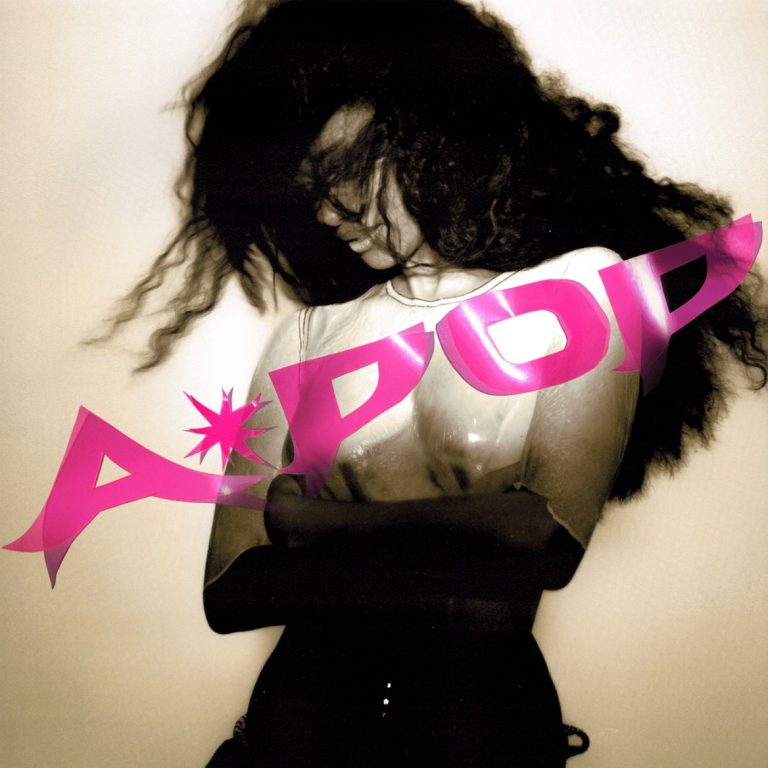
For two years, South African singer Tyla heard she wasn’t African enough. Her second album answers by handing the microphone to the people she grew up listening to.
The title is an argument, which is unusual. Most pop albums arrive carrying a mood; this one arrives carrying a claim. Tyla explained it plainly in the weeks before release: she brings the A to pop, African pop is pop, African music is pop music. She has also said she hates being polished, hates following rules, and spent a long time believing she had to become something other than herself to qualify as a pop star. So A*POP is not really a title. It is a position she is taking, and the 14 songs behind it have to hold it up.
The position was earned the hard way. Tyla Laura Seethal was born in Edenvale, outside Johannesburg, in 2002, and was 21 when “Water” broke on TikTok and then broke everywhere else. It won the first Grammy ever given for Best African Music Performance in 2024, over Davido and Burna Boy, and her self-titled debut arrived that March and entered the Billboard 200 at No. 24. This February she won the category a second time, for “Push 2 Start”, becoming the only artist to do it twice, and announced this album’s title backstage the same night.
What came with all of that was a complaint from home that never quite went away. Her amapiano was tidied up for radio, the argument ran; the log drums were there but the sprawl and the producer’s hand were gone; the whole thing was built for export. Underneath it sat a blunter charge, which she has quoted herself and clearly found ridiculous: that she is not African enough. Her reply, when she gives one, is a question about who sets that standard.
A*POP answers it structurally, before a note plays. The debut reached outward and stacked the guest list with American and Nigerian stars. This one reverses the direction almost completely. Liquideep, MaWhoo and Babalwa M are the collaborators here, all South African, and Zara Larsson is the single exception. That is the album’s real thesis, and it sits in the credits rather than the lyrics.
The clearest expression of it is “Fairytale”. Liquideep were a Johannesburg deep-house duo whose 2009 single of that name was on every radio station in the country, won MTV Africa’s Song of the Year and took a nomination for Song of the Year at the South African Music Awards. They split in 2014 and only reunited last September, after 11 years. Tyla was seven when the original was inescapable, and she has said she went back through her childhood favorites while making this record. Rebuilt here as a bright uptempo pop song, with her doing the offering for once instead of the demanding, it is the one moment where the album’s argument and its feeling are the same thing.
Everywhere else, the subject is proof. This is a record about love as something that has to be demonstrated rather than announced, and it is unusually consistent about it. “Is It Love” opens the album, sets warm amapiano log drums against a guitar line and carries what may be her most controlled vocal to date. She tells a man that compliments stopped meaning anything to her a long time ago and names the evidence she will accept, which is tears, because tears are the hardest thing to fake.
“Chanel” simply prices the question out and finds him an unreliable investment. On “That Girl”, she stops waiting and buys the diamonds herself. “She Did It Again” is a warning delivered over dancehall percussion; Larsson matches her menace for a verse, and Tyla returns meaner, having worked out that nothing between them is mutual. “Mr. Nonchalant” is the same posture at a lower temperature, and probably the funniest thing here, with Tyla cast as management and the man as a recent hire.
The best writing on the album is a song that is already more than a year old. “Is It” first appeared on the WWP EP last July, but its inclusion on this album is justified within about 30 seconds. Here the interrogation turns inward. She runs through everything that might explain her own behavior on a given night, the men she does not miss, the dress, the drink, the company she keeps, and settles on none of it, then admits she cannot tell whether she wants the man or the idea of him. The woman who demanded evidence from everybody else has none to offer about herself. That it remains the sharpest thing on a 14-track album is a compliment to her instincts and a question about the newer material.
Because some of it is thin. The album runs about 44 minutes, which is disciplined, but the middle stretch gives back much of what the opening earns. “Feel Something”, “Double Blind”, “Right Now” and “Hot Tubs” are competently made and quickly gone. One is mostly compliance, another mostly a shrug about a mistake she is not going to apologize for at length. Nothing here embarrasses her. Nothing here needed to be here either, and on a record this compact, four passengers is a lot.
There is also a gap between the album and its presentation. The rollout was enormous: song titles spray-painted across a blacklight-lit room, the album name in neon on her body in front of 40,000 people at Afro Nation, listening sessions in London, Atlanta and New York, a network television slot the morning of release. All of it promised a spectacle. What actually arrived is more careful than that, a refinement of the sound she already had rather than the reinvention the campaign implied. She is not chasing “Water” a second time, which is the correct instinct and probably the reason the record holds together at all. But an album titled like a manifesto could stand to sound more like one.
Still, the thing she set out to do, she did. She took the biggest platform of her career and filled it with people from home, including two men whose best song came out when she was in primary school and who had not worked together in more than a decade. The title says African music is pop music. The most persuasive evidence is not in the singles. It is in the fact that a 2009 Johannesburg house record is now on a global pop album, and sounds like it belongs there.