Detroit-based Protomartyr are no stranger to the bleak depiction. 2020’s Ultimate Success Today stands out for its anxious laments regarding climate crisis, problems related to egoic clinging, and the ineluctability of death. The band’s last album, 2023’s Formal Growth in the Desert, likewise captured states of bleakness, or to be precise, aridness, though the sequence felt personal, even diaristic, as singer Joe Casey dealt with challenges related to the Covid pandemic/quarantine and accessing optimism during a time of dislocation.
With their new album, the Dave Fridmann-produced Hotel Usona, the band offer another dim vision of contemporary existence, as well as their most unflinching study of impermanence. Throughout, they forge gritty snapshots of a forlorn limbo – metaphorized by a dilapidated hotel. Their vision of “boys … [who] are slovenly drunk”; “Spiders crawling across the ceiling”; and some entity “waiting in the walls with manacle and chain” point to a nation in decline and, more pressingly, to a certain deadness that pervades the human interior. That said, despite their grim observations, the band flirt with but – as with Ultimate Success and Formal Growth – never fully collapse into convenient nihilism.
On “The Old Hotel”, Casey sounds initially like he’s on opiates. He then lurches into a frisson, as if some mad orderly has injected him with adrenaline. So the song goes, unfurling bipolarly. “The feeling is forever as time flows backwards”, he moans, voice bolstered by the usual drums, guitar, and bass. With the addition of trumpet, trombone, and flugelhorn (courtesy of Jon Fridmann, who appears throughout the project), the song drifts into an intriguing blend of post-punk and noir jazz. While Ultimate Success featured saxist Jemeel Moondoc (and multi-instrumentalist Izaak Mills) on various tracks, the horn use here (and across Usona) is less ornamental, more intrinsic to the song’s (and album’s) complex emotionality.
The project is built around the theme of limbos, in-betweens, purgatories. “Sounds We Cannot Hear” is sonically disorienting, experimenting with the arrhythmic. Scott Davidson’s bass thumps along while mock-classical strings unfurl. A trumpet line shoots through the soundscape. Casey’s voice on the alluring chorus recalls Matt Berlinger, at least tonally, though Berlinger is typically invested in confessional narratives. Casey, on the other hand, weaves metaphysically tilted tableaux that point to psychic mazes, spiritual hallways that dead-end or lead to sudden drop-offs. Think the Winchester Mystery House fused with a fleshed-out Hotel California.
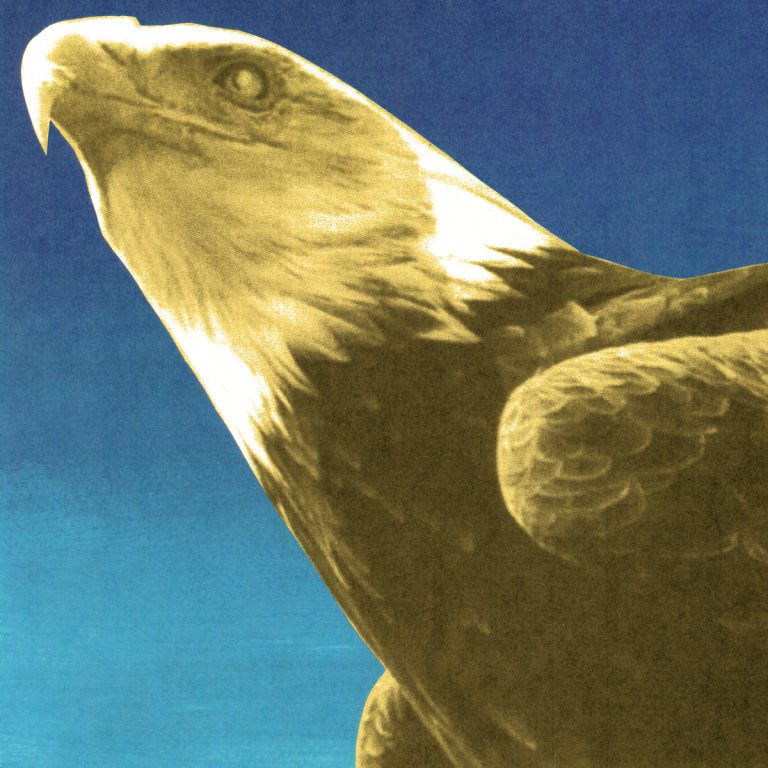
“Exalted Eagles” similarly invokes a middle world where the disembodied stamp their feet to no avail. Casey inches toward sociopolitical commentary. “Hail, white god, that’s the policy / Male supremacy, that’s the policy”, he bellows, approaching Raygun Busch territory (though Busch would probably never be that direct). Dry but ringing guitars encircle him. The atmosphere is grating yet reverb-y, crushing yet melodic, rock-centric yet symphonic, even operatic.
“The Knife Dream” captures Protomartyr at their most liminal. “What haunts him stands upright with a face towards the door / … as he convulses on the floor”, Casey moans, voice surrounded by shifting accents, a gossamer trumpet line, and forceful percussion. The mix is at once narcotizing and agitating, precisely composed yet creeping toward cacophony. Order is precariously in place – cosmically and existentially – though chaos is visible, palpable, impending. “Lavender – Gospel”, too, moves between sparseness and density, Casey alternately perplexed and resigned to whatever fate is unfolding. Alan Leonard’s drums are at their brightest, Davidson’s bass dissolving into machine-like drones. Greg Ahee’s synth and harmonium flourishes remind one of a church service morphing into something sinister.
While quick references to the punk-centric and abrasive palettes of 2015’s The Agent Intellect and 2017’s Relatives in Descent flash throughout the sequence, the most sustained example is “Feed the Sewer”. The sandpaper roil and pound-and-slice MO make for a palette cleanser of sorts. Casey is reminiscent of Michael Gira at his most irascible, the overall gestalt slightly jarring. But then, that’s the point: if we’ve been in a trance of sorts, it’s time to wake up and see reality for what it is.
On Usona’s closer, “Checking Out”, Fridmann’s trumpet, French horn, and trombone smack of vintage lost-weekend films, cheap rooms with a neon sign flickering outside the window. “I’m checking out”, Casey repeats. The wordplay is appropriate: checking out, as in leaving? Or checking out, as in distracting myself, going back into the trance? Casey seems to lean toward the latter, but possibly not, given his conclusion: “We are all out in the fog, reaching / Stumbling between immensities”. In other words, we don’t exactly get an optimistic ending – not that we’d expect that from Protomartyr – but at least we’re reminded that if life has us feeling overwrought or downright paralyzed, we don’t have to suffer alone.
Protomartyr continue to mine a guitar-bass-drums foundation. With Hotel Usona, however, they make maximal use of other sounds and instruments, decidedly more so than with Ultimate Success Today. Ahee’s Rhodes, synths, and bells (in addition to his guitar sounds), along with Fridmann’s myriad contributions, are integral to the project. Over these nine songs, Protomartyr again nudge the sonic boundaries of post-punk, all the while confronting sublime emotional states and urgent sociocultural issues.