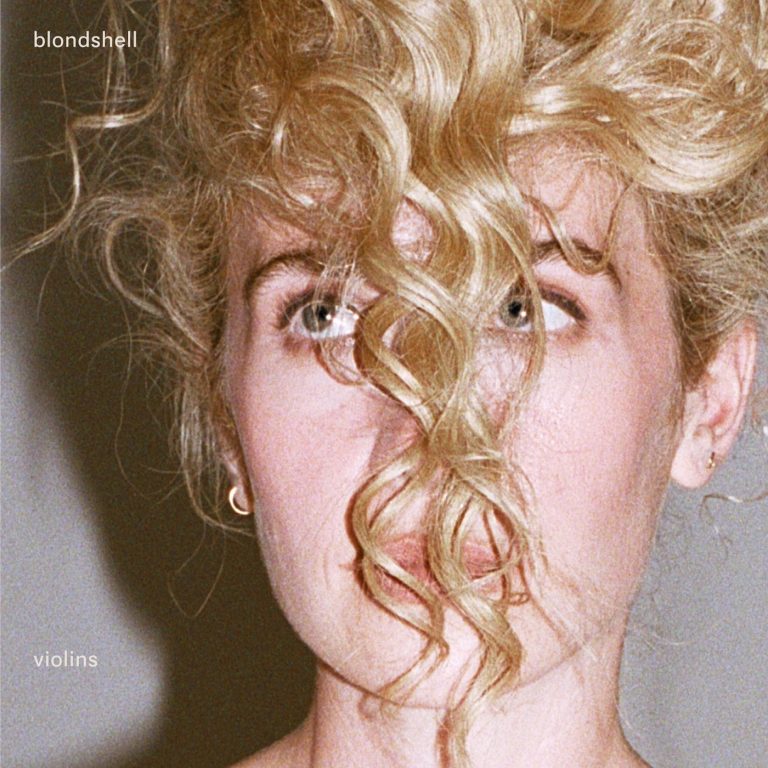

If Sabrina Teitelbaum were offered the chance to be a young, rock musician in 1990s America a couple years ago, the words “snap” and “hand” would enter the conversation. It wasn’t so much that she eschewed modernity – during interviews she has an influencer-like inclination toward the words “I’m obsessed” – but if there was a job for a grungey, 4/4 beat and a limit of two strummy chords per bar then she was your man.
A month before releasing her 2023 debut, Blondshell released a cover of The Cranberries’ “Disappointment”. At the time, it seemed like an in-joke about low expectations for the album while it also cemented the idea she was locked into 90s aesthetics. Looking back, her version seems like a 20-something rant about life not delivering on expectations. Absent Dolores O’Riordan’s lilt, the original’s philosophical bent got buried by Teitelbaum howling into the wind.
Today, on the edge of turning 30, those expectations have transformed into the weary cynicism of someone who has looked behind the curtain. “Give me some good news”, opens “Heart Has To Work”, “Tell me something that I do right”. Throughout Violins, her vocals warrant a little more melodic imagination and variance but here they work. She sounds like she’s on the phone with someone with whom she speaks routinely about routine.
“New Age Trojan Horse” treats a supposedly progressive male with contempt, which is maybe a legacy of the revenge fantasy of “Salad” from her debut. Teitelbaum even finds herself prone to patriarchal beauty standards while looking herself over; the title “Two Fried” is a searing indictment of her own bosom. She takes it a step farther on the closer, “Fur Elise”, which laconically illuminates a daydream about walking down the aisle in a traditional wedding.
What emerges is that her bread-and-butter grunge revival forms the album’s weaker selections – places she’s revisiting that should be in the rearview. Out the windshield, the ironically light “Lucky” and quasi-Cocteau “Sea Legs” draw her out of the dark ages. Her sarcasm and wit during the grittier cuts can feel forced and awkward; given air and conversationality, her inventive wordplay plays ad hoc.
The sequencing leaves something to be desired. Halfway in, Violins slows to a crawl and there’s barely enough momentum to salvage the pace by “Fur Elise”. It probably should have presented a linear evolution as opposed to something scattergun, even if the latter was closer to how it really developed.
Violins’ press materials credit Teitelbaum’s new approach to songwriting as the key to its defining characteristics. From this vantage, it seems more like she was no longer convinced that living in the 90s was for her or anybody else.