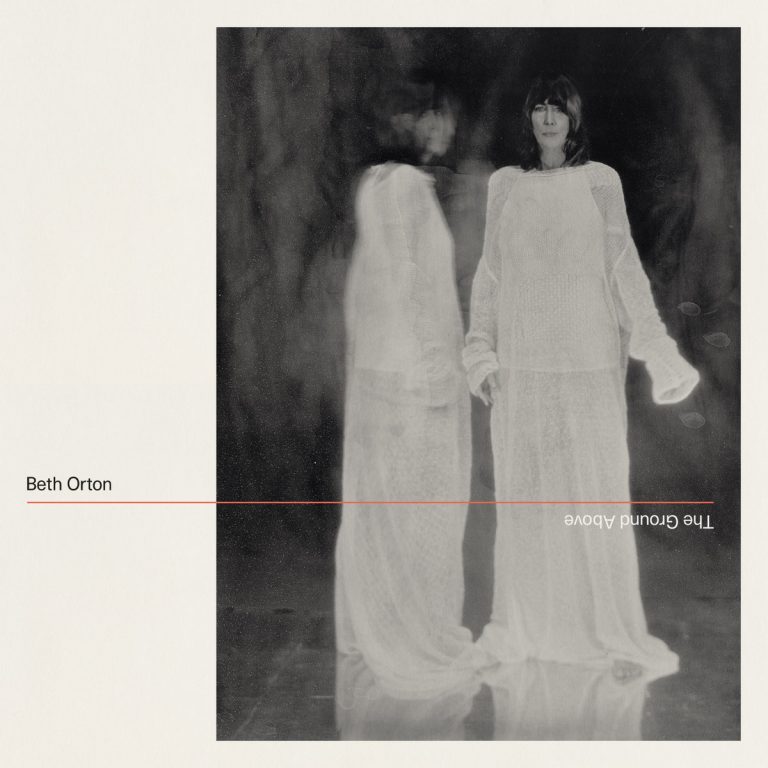

It encroaches on us all. It’s somewhat astonishing how the time has flown since 1996’s Trailer Park. Those that have followed Beth Orton since then, through thick and thin, have witnessed her trudge ever-forward with them along the way, dropping off albums, typically, every several years or so, as if markers of time and space covered. Markers both to aid those listeners in the following of her trail, and as reminders for herself. Indeed, with the deeply personal, diverse nature of her work, a Beth Orton album feels as if it’s marking the occasion. Proof that she, after all, had been there, occupying that moment, and here at all.
So, then, when she sings, “I’ve been here before I knew how,” on The Ground Above’s second track, it feels particularly prescient.
After the submerged nature of 2022’s Weather Alive, her latest very much lives up to its title. This feels like music of erosion. After the playful nature of 2016’s (underloved and delightful!) Kidsticks and the musical ambition of its followup, The Ground Above teems with organic life.
It’s not particularly showy, nor does it need to be. With an often jazzy backdrop, frequently subdued, but always immediate, Orton’s weathered, windswept voice is always central. With her informal band of collaborators in perfect lockstep with her self-produced vision, each song seems to come together just as it’s meant to, precisely at the right time.
Take “Cigarette Curls” which opens with only the encircling power of Orton’s voice, piano, and percussion, gradually joined by barroom-like guitar licks and distant horns, with the piano growing more insistent. These are songs that she seems to let find themselves as they build, arriving precisely where they’re meant to be, at just the right time.
“Waiting”, on the other hand, seems to tap into the sounds of the Destroyer of yesteryear, namely, Kaputt. Through its distant trumpet, playful piano, dancing flutes, and gradual overall build to delightful grooving it feels like both a tribute and, thanks to her performance, something of Orton’s own, both her trying on a peer’s sound for size, and an organic, probing gesture towards the very nature of inherent creative expression.
In that sense, much as the album deals with aging with some sense of grace within an increasingly alienating, terrifying world, this feels like music of finding footing. Finding footing, mind you, without ceasing movement. The Ground Above is as much music of searching as it is discovery.
Indeed, while the state of the world inevitably encroached on Orton’s life and process of crafting the album, she resisted both a descent into pessimism and the obligation to direct such things in direct defiance. Instead, her sense of defiance comes from an insistence to continue. To continue developing, to continue that lifelong trudge, to continue adoring and yearning.
As fatigued as the space created by The Ground Above may be, it never gives into despair. To the contrary, it finds comfort in both motion and solitude. It feels akin to landing after a long flight, whether coming home or released onto some new, unknown realm, set adrift in the wee hours; tired, bleary-eyed, but full of fatigued curiosity and life. While in the limbo of passage, you exist in a place between memory and the potential of more of them. In that moment, you may be damn tired, but you can go anywhere: the world lies before you. It awaits.
82%