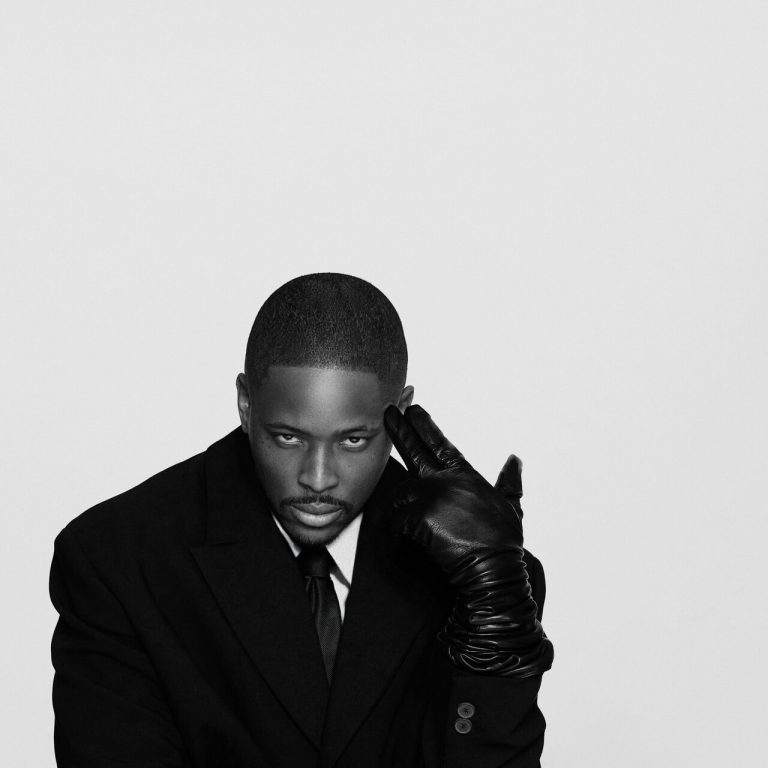

Time was, YG didn’t just seem destined to be one of the more prominent West Coast stars of his generation. No, it was more than that: he seemed like a potential rap auteur. After the party anthems of My Krazy Life cemented his potential (and name recognition), making the now-luminary Mustard a star in his own right in the process, he turned inward with his first proper magnum opus, Still Brazy.
That album bristled with tension and justifiable paranoia, with YG beginning to properly construct a (decidedly steely) cult of personality that tends to come hand-in-hand with developing true stardom within a Gangsta rap persona: he flipped the very real threat to his life at the time into the winking, yet biting, “Who Shot Me?”. He was capable of swinging between aggressive and humorously self-depracting, and back and forth, at the drop of a bar. What’s more, no record at the time – yes, Kendrick included – was more West Coast. California surged through that music. Sure, relying on Drake for buzz with each – not to mention letting him shamelessly crib essentially an entire Rappin’ 4-Tay verse to do it – only feels more distasteful with time, but the music more than holds up.
It was all within reach.
Then, well, then he drove off a cliff.
Let him tell it now, and he was putting out albums he didn’t care about (or for) to get out of a deal he didn’t like. That may well be true. It’s still hard to explain away such a drop off from an artist whose previously mentioned albums felt so lively and vital with any other explanation. However, that depressing drop began in 2018. Damn near 10 years of mid.
If nothing else, a damn sad waste. Whatever the reason, he seems to be back now.
Enter The Gentlemen’s Club. Addressing nearly a decade of squandered potential is near impassable challenge for any rapper – just see the way every Eminem album since 2010 has flailed as an at least partly unsuccessful course correction – let alone one who was only two albums in towards the legacy YG no doubt wishes he’d built now.
Nonetheless, this is an album attempting to reckon with just that in more ways than one. To that end, YG feels locked in, laser-focused and serious about making a mark across every track here. Even across the more standard ‘this is an eventful rap album’ cuts, he’s dashing to make an impression: “On the Low” finds him trying on the Ying Ying Twins’ ‘whisper flow’, “Kudos” presents a West Coast flip on Marshall Mathers LP classic “Criminal” (that, surprisingly, really works), and “OMG” centers itself around repeated use of its titular exclamation, leading to lyrical gymnastics squeezed betwixt them. Also notable is “We Know the Truth” which both dramatizes events and offers a very frank response to gossip and accusations that YG was involved in the murder of Drakeo the Ruler. It’s compelling and sure to be proverbial watercooler fodder among followers of the scene.
He digs into his rolodex to make sure the features helps these ideas hit: Pusha T feels all but meant for “OMG” (you just know he was waiting to finally get one entirely so he could fling out, “won a Grammy in the snow”) and Tyler, the Creator anchors “On the Low” by wisely dodging the whispering to offer a characteristically braggadocious guest verse.
Of course, beyond the focused nature of those songs, there’s The Gentlemen’s Club’s whole concept. Indeed, it is just that: it follows YG confronting all his past trauma, brought on by both his upbringing, surroundings, and choices. It’s inevitably giving “T.I. vs. T.I.P.” at times, but in his defense, YG digs into the whole “I v. I” thing with gusto.
Throughout the album, a mysterious, powerful man touts the value of the album’s titular club, and the sacrifices needed to join. Assumptions build as to just what that entails. The narrative is partially framed around two songs in which YG hiring a hitman to take out a lifelong foe. “Hitman” is the weaker of the pairing, but sets the stage well enough, concluding with the not altogether surprising revelation that he’s put out a hit on himself. “Ready to Die (Hitman Response)” is decidedly stronger, with YG’s thug persona going on the offensive against his current self, bringing uncomfortable truths with him (“You talk all this high power tough shit / With friends in the gym on some gettin’ buff shit / I question why you drink so much liquor / You probably dealin’ with some shit you can’t put up with”), all framed around the memorable hook, “I ain’t no Biggie, I ain’t read to die”. It’s all barreling to stark final self-confrontation.
Far more difficult to fully account for is “Tiffany”. I’ll just say this right off: I don’t have the tools to properly consider it. YG is fully flexing his storytelling skill, depicting a character by the name of Chris and a disastrous evening out at the clubs. However, it’s all framed around encountering a trans woman who “passes” and his ensuing rage at her revealing of that truth. The song does not, to my ears, feel intentionally hateful. It seems to want to deal with toxic masculinity, transphobia, and more. I generally imagine he was aiming for something with the impact of Kendrick’s “Auntie Diaries” and – while readily acknowledging that even that song was divisive – I’m simply not sure if YG ended up anywhere near where he hoped. It has powerful moments, particularly when framed around the narrator’s own hostile reaction – there is truth, however unfortunate, to cis individuals crashing out when they realize someone they’re pursuing is trans. But, to my ears, it stumbles when switching to the point of view of the battered trans character towards the end. It certainly rings true that they’d be pleading, but some of the way their apologetic speech is delivered had me cringing. I’ll let the internet, queer writers, and those in the community unpack it further, but it sounds to me like a perhaps well-intended, and certainly passionate, misfire.
Still, I’ll give YG more credit for these bold – if decidedly unwieldy – shots than I will for all that filler he’s been releasing. It’s encouraging to see a once great artist clearly care about getting on the mic again.
The penultimate track, “Insecure” finds itself somewhere between the two poles of The Gentlemen’s Club. For one thing, with its piano-driven beat and guest spots from J.I.D. and Ab-Soul it’s clearly meant to turn (hip hop) heads, but it’s also clearly trying to ‘say something’ about rappers’ toxic masculinity, hidden fears, and all that’s actually going on behind all that posturing. It hits with more of a glancing blow than the thud it surely intended, but it’s another well-intended, solid moment.
In fact, album closer “Mid Life Crisis” has a greater impact through its mournfully sluggish production, with YG, at last, fully barely every inch of his worn soul: “ I had thoughts about killin’ myself / But that would’ve killed my kids and killed my wealth”, speaking on the past two years being the lowest of his life, his reliance on alcoholism, missing his daughter, anxiety, it’s all there, and it’s a proper broadside to take in in under four minutes. As the album ends, he does pull that trigger, and it becomes clear that’s the club he’s been headed to this entire time.
All in all, The Gentlemen’s Club doesn’t seem to reach the distant shores it aimed for. But, this far in, still recovering from all that wasted time, they were likely always out of reach. What it does do is present a rapper many had likely entirely written off gasping deeply with life. It can be a bit frustrating that he’s so nearly there but still making missteps, but a YG album in 2026 that’s worth keeping in rotation for a bit to process fully is, frankly, a surprising thing. Certainly a welcome thing. There’s gas in that ride yet.