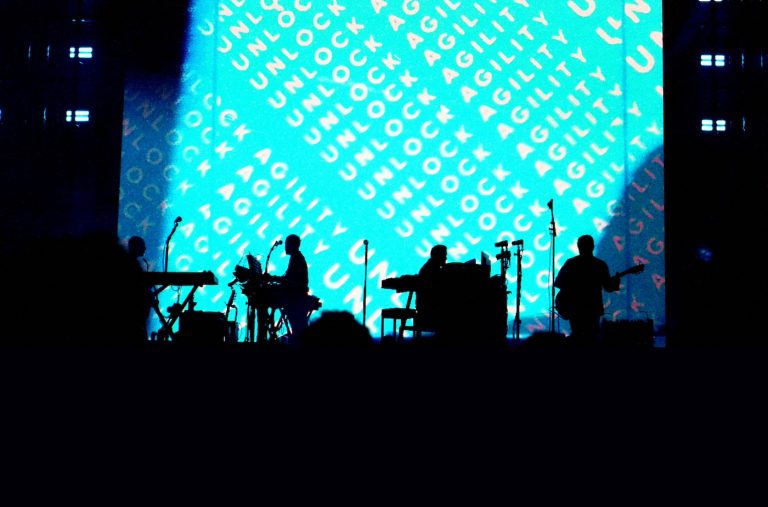

Things have felt strange lately, haven’t they? Are you sure this is real? The membrane between dream and waking has diminished. What voice do you hear inside of your head reading those lines?
In the 90s, Massive Attack perfected the liminal, oneiric tendencies of trip hop. Where Portishead – the only real competitors of their Bristol peers – were interested in aesthetics of nostalgia, the trio of 3D, Daddy G and Mushroom fashioned a futuristic and crystalline sonic surrealism. This impression was especially supported by their iconic music videos, which existed in confined spaces that seemed impossible to intrude: wombs, zero gravity apartment buildings, haunted houses.
Seeing them live at the Zitadelle Spandau seems almost like an extension of these spaces: the large, castle-like fortress is closed off by water – you can hear countless frogs greet the attendees as they shuffle in and out. The Citadel deems itself ‘Berlin’s most beautiful venue’, and while its architecture truly is sublime, it’s also notorious for somewhat quiet mixing over thundering bass – the inconveniences of outdoor concerts.
The bands are late. The start time is shifted back by almost an hour when 47Soul take the stage. Two rows in front, a tall man wearing a dark MAGA hat and pilot shades has already garnered quite a few raised eyebrows and chuckles by other attendees – as the first notes ring out, he turns around and sits down. The Jordanian-Palestinian group – today reduced from three to a duo – are playing a lean shamstep set, combining Dabke music with synth and guitar-led dance elements. Rich in political statements and folkloristic texture, their protest songs hold an immediate charm. Even the sitting man starts to slowly nod his head to the rhythms.
“These days, we don’t talk much about politicians anymore”, keyboarder and vocalist Ramzy Suleiman explains. “Instead, we are talking about our families and friends.” Calling for peace and opposition to the genocide, their message is deeply necessary: Berlin’s policies on aggressively dealing with critics of the ongoing attacks in Gaza – such as banning Arabic languages and cultural symbols during protests or in public spaces, including solidarity events from Jewish group – has been widely criticised. When 47Soul refer to Berlin as a second home, there is a strong connotation to their words, which is warmly received by the cheering audience. No matter what singular voices say: holding a Palestinian flag on a stage to a supportive crowd is still a powerful gesture!
Politics have always been an indistinguishable part of Massive Attack’s identity. As far back as their commercial peak during the 90s, the group has prominently taken a stand against the many form of institutional violence and oppression. During the second Iraq War, the band took an open stand against the incursion, publishing full page ads in the NME and calling their (sadly) apathetic contemporaries to take a stand. Especially key member 3D – aka Robert Del Naja – has been an outspoken supporter of Palestinian the movement, backing up his stances with a personality that is equally “charming and confrontative”, to quote a Telegraph interviewer.
Indeed, the political expression of the group cannot be divided from their individual histories. Many of Massive Attack’s members and collaborators can be considered part of the Windrush generation – the children of migrants brought from the Caribbean and other British colonies to the UK following labor shortages, where they received permission to work and remain, becoming instrumental in rebuilding the war-torn economy from 1948 onwards. These diverse groups brought with them a vast understanding of foreign cultures, which soon mixed with western aesthetics. The birth of genres such as dub, post-punk, reggae, ska, lovers rock, Jjungle and DnB are intrinsically connected to this population movement.
Trip hop’s unique genre blend combines deeply political expressions against suffocating environments and toxic structures – such as soul, hip hop and post-punk – with the purely emotional compositions that define cultural experiences – jazz, dub and ambient. The band themselves linked this aesthetic to their ethos coming from their earliest iteration as DJ-art-collective The Wild Bunch, where they combined ‘the rough and the smooth’ of divergent aesthetics.
Nonetheless, a growing number of audiences (and music writers) have pivoted to the argument that music (thus: art) exists in a decontextualised space of pure sensory nature. In seeming defiance of this, over the years Massive Attack chose to use their live shows to broadcast their politics, aggressively. That this is a necessity is showcased by the often surprised or even shocked responses of a specific subset of their listeners. Indeed, there had been plenty of rumblings about this current tour all across social media, heightening the uncertainty and anticipation.
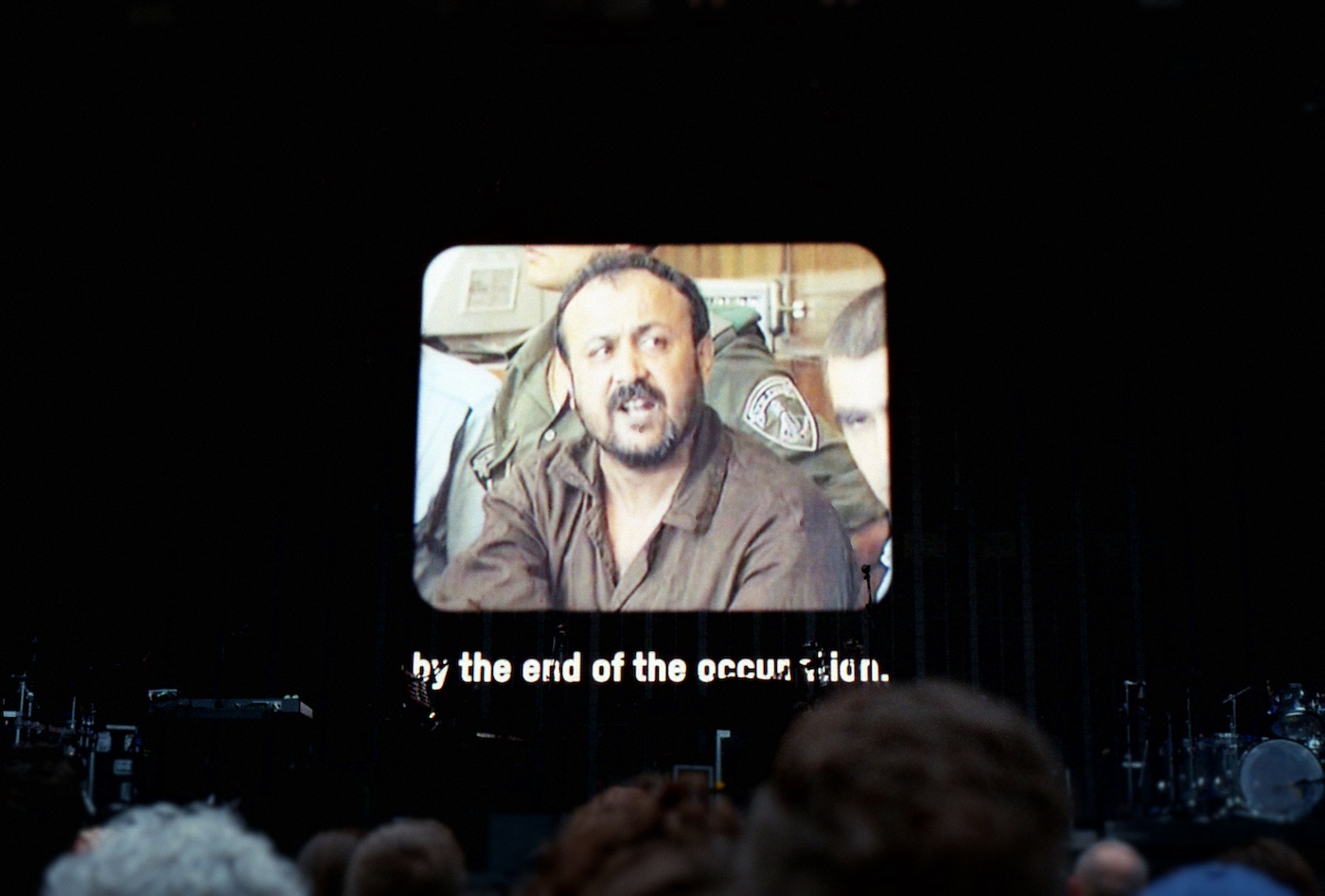
As the show finally starts, the audience is welcomed with a recorded courtroom speech of Marwan Barghouti from 2002 – the man commonly referred to as ‘the Palestinian Nelson Mandela’. Following this, in a surprise move, 3D and Daddy G enter the stage alongside Arab Barghouti, the son of the imprisoned activist, to loud cheers from the audience. As the two musicians stand behind him, the younger Barghouti explains that it is the day after his father’s birthday, in the now 24th year of his imprisonment. “I really wish that this experience that I’m having, and my family is having, is unique to me, but this is an experience for thousands and thousands of Palestinian families”, he continues, before honing in on what his father represents to Palestinians and oppressed people in general: “Hope, for a better future. Hope for Palestinian children to live in peace. Hope for freedom.”
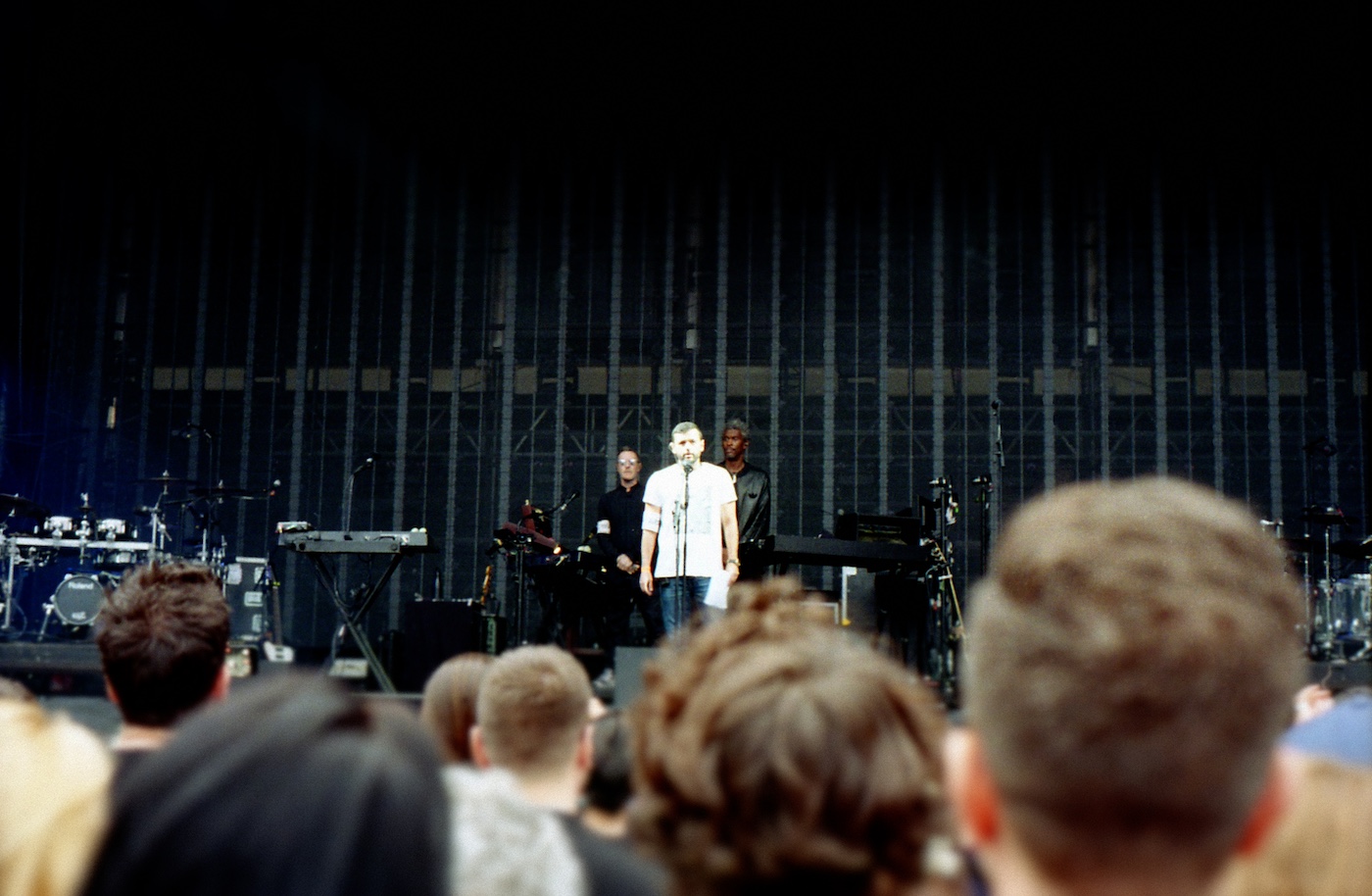
To deafening cheers from the crowd, his final reminder, that hope is the biggest threat against oppression, is a theme that will continue throughout Massive Attack’s exceptional show this evening, which often comes closer to an art installation than a traditional concert experience. This is further accentuated by five covers the band will perform during the set, functioning as thematic cornerstones.
Following the clip of a woman’s recollection of a psychedelic experience to the Gigi D’Agostino rework “In my Mind” by Dynoro, 3D introduces this dark journey aided by a robotic vocoder: “In my mind, in my head, this is where we all came from / The dreams we had, the love we shared, this is what we’re waiting for”, all while on the screen, an ape with implanted neuralink chip is shown to control a food dispenser with his brain activity. Most of the videos at tonight’s show are an intuitive montage made in collaboration with documentary filmmaker Adam Curtis, painting a dark picture of the interlinked nature of world politics and modern mythologies: the ‘one true ring’ from Tolkien – the over 100 dead children killed in the recent American bombing of an Iranian school – scenes from Sam Raimi’s Evil Dead – “WELCOME TO THE KILLING CHAIN – THE ALGORITHM WILL ALWAYS FIND YOU”.
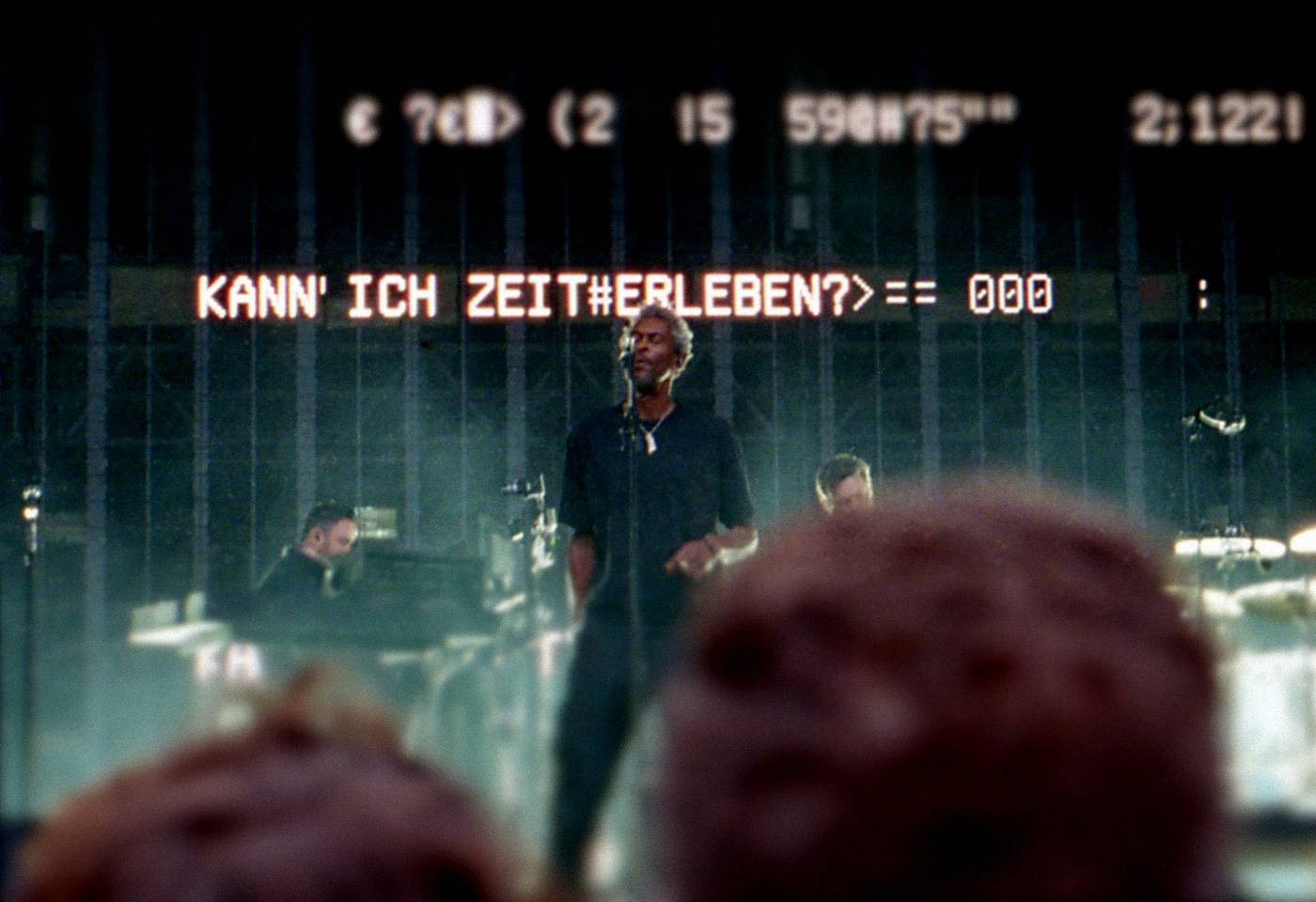
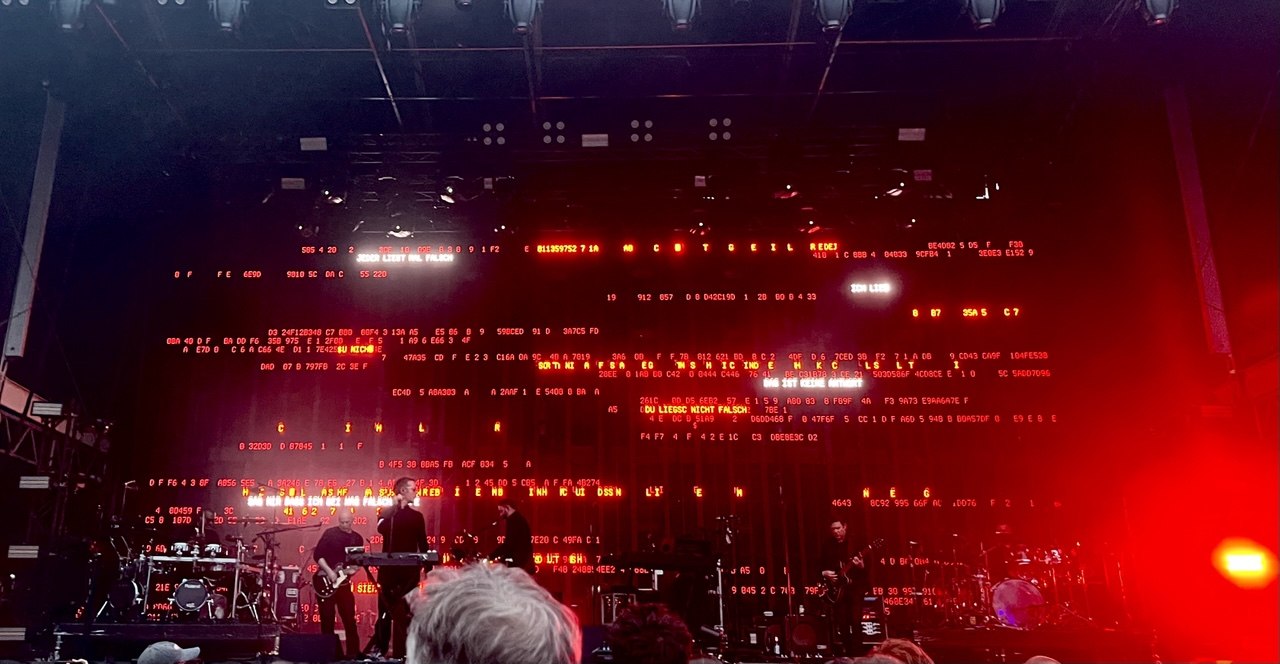
As Daddy G enters the stage and the group shifts into the cavernous dub of “Risingson”, letters and numbers dance across the screen behind them. Out of the chaos, words form: “Is a war starting? Do dreams have boundaries? What is the nature of suffering? Am I dreaming?” The nightmarish lyrics of the track, in which identities suddenly merge and unstable presences are flickering in-and-out (“I see myself in there upon my lover / I don’t know her from another miss / I don’t know you from another / See me run now you’re gone”), blend with the frightened, paranoid language of the projections: is this a dream, a trip, collapsing reality? Even with the rays of a dying sun not fully vanished on the horizon, the chest tightens!
And then it’s over, and 3D greets the crowd in German! “Dürfen wir präsentieren: Elizabeth Fraser.” The crowd explodes! Those who had not been privy to the former Cocteau Twins vocalist joining the group on stage are audibly mind blown – the baffled, speechless faces around me speak even louder! “Black Milk” allows Fraser to show her voice has lost none of its power and grace, as the singer sways with an otherworldly grace. Behind her, we witness the rich attempting to cheat ageing and death, obsolete technologies and morphed bodies, autocratic leaders and military men such as Yevgeny Prigozhin: “Even strongmen die.” It’s an incredible rendition!
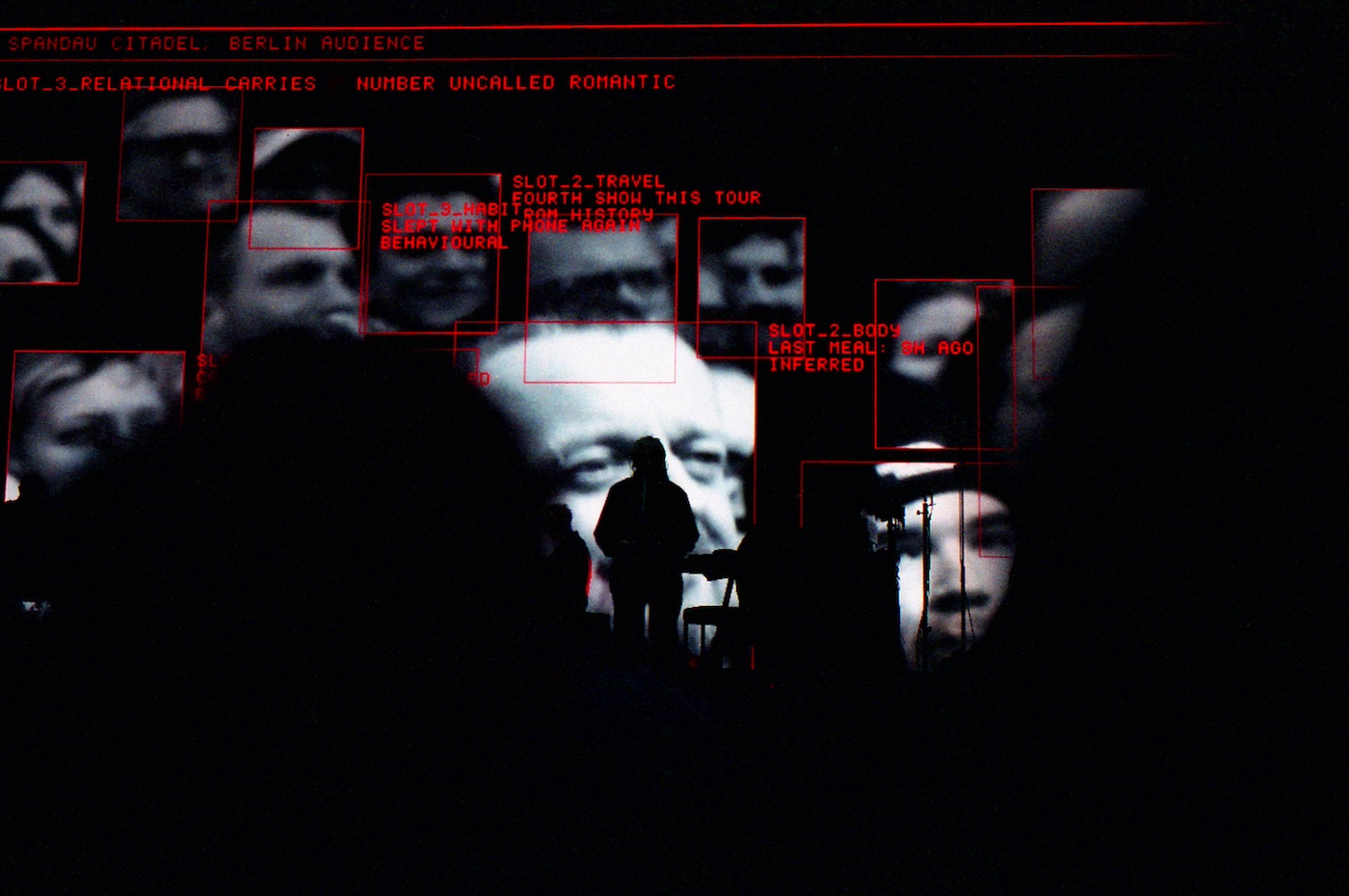
Fraser exits, and switches with the shuffling Horace Andy, whose aura is that of a wise, old sage. “Girl I Love You” marks one of the show’s most controversial moments: to the blaring horns of the chorus, a facial recognition software captures audience members, transporting their faces onto the stage, shifting aimlessly. Ecstasy and paranoia mix – will they show me, is this being logged? The band assured that this is merely a live broadcast without recording, but the bitter irony of this inquiry into surveillance remains that we already are logged: the UK is right now drafting a law that would permit authorities to scan devices, totally and facial recognition is going to be deployed by police (a law western media has been keen to argue as the standard to recognise technocratic quasi dictatorships). Be worried, as the Peter Thiel quote at the end states: “I no longer believe that freedom and democracy are compatible.” Did your face show up on there?
With the second, punk-infused cover of the evening – “Regret of the Times” by Seo Taiji and the Boys – Massive Attack explore the roots of K-Pop as defiant, political gesture that confronted the government massacre and militaristic overreach in South Korea of the 80s, which led to the genres eventual birth. The screen asks: “Where is the political music of today?” Considering my piece on the active aesthetic of the Futurismus sub-genre, the question should not so much be ‘where are revolutionary aesthetics today’, but rather ‘why are these revolutionary aesthetics not allowed to be broadcast further’? “History shows us that repression of protest and the censorship of art go hand in hand,” 3D explains after the song, expressing their solidarity for artists that have been censored or blacklisted by their support for Palestine, and briefly smiles as his words elicit chants of “Free Palestine”.
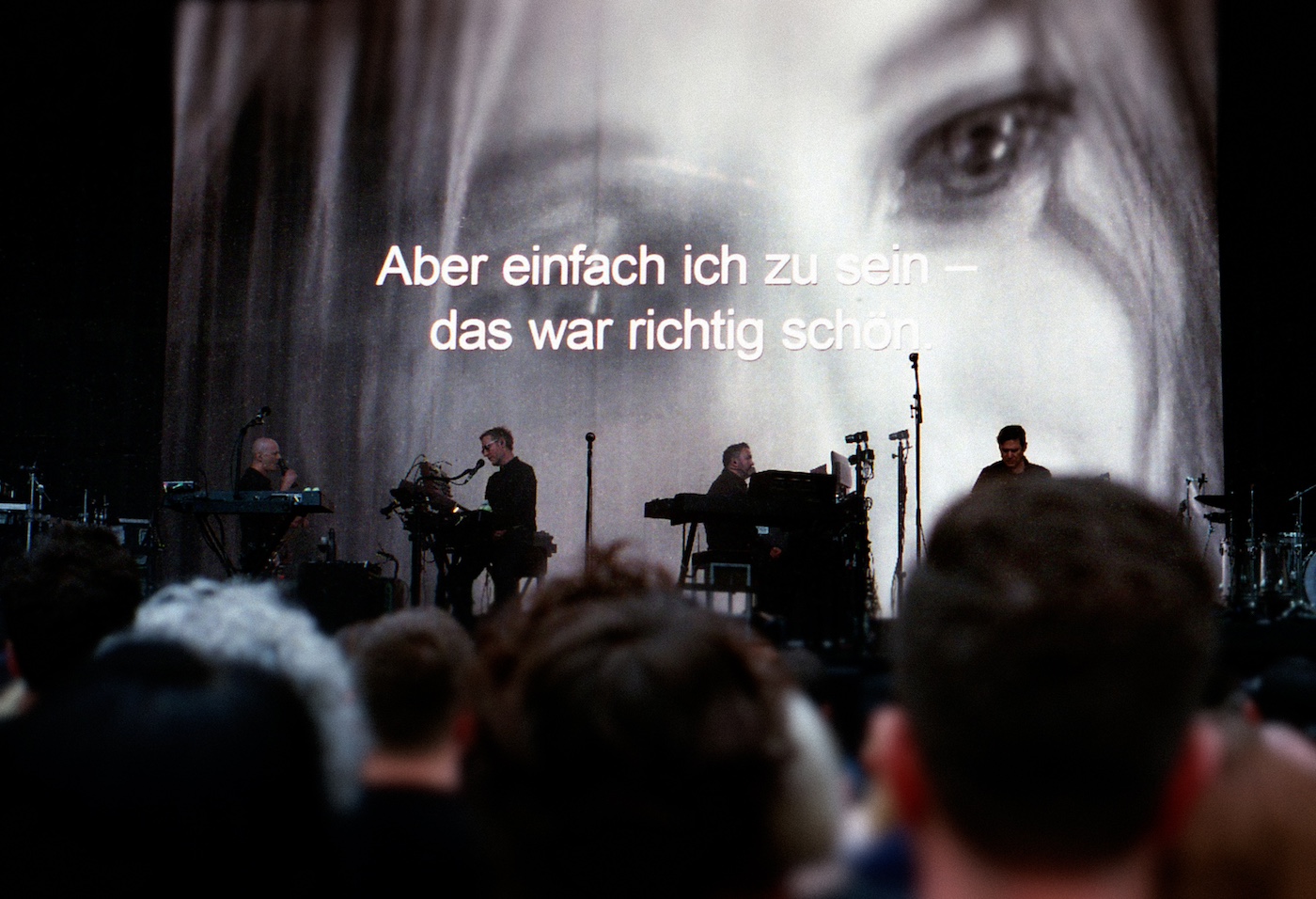
With the menacing “Take it There” and “Future Proof”, the band perform the only songs from their massively underrated 100th Window and Ritual Spirit projects. Immense performances, they come as reminder that the group existed parallel to the experimental post-Britpop of Radiohead and Blur, mixing icy unease with pop appeal.
Exploring the shift of wealth (from the luxury bunkers in the ultra-wealthy resort of Zug to the harrowing child labor in the Congo) during “Take it There”, the projections attack the current ruling class oligarchy, while “Future Proof” is accompanied by an incredibly eerie, blood red chat-log that could document the conversation with a spy – or artificial intelligence masquerading as love interest. The projection is legitimately eerie and fits the electronic cyberpunk aura of the song perfectly, as 3D works an invisible theremin during the explosive, thundering climax, as numbers and letters flash across the screen aimlessly and into broken promises: “I love you!”
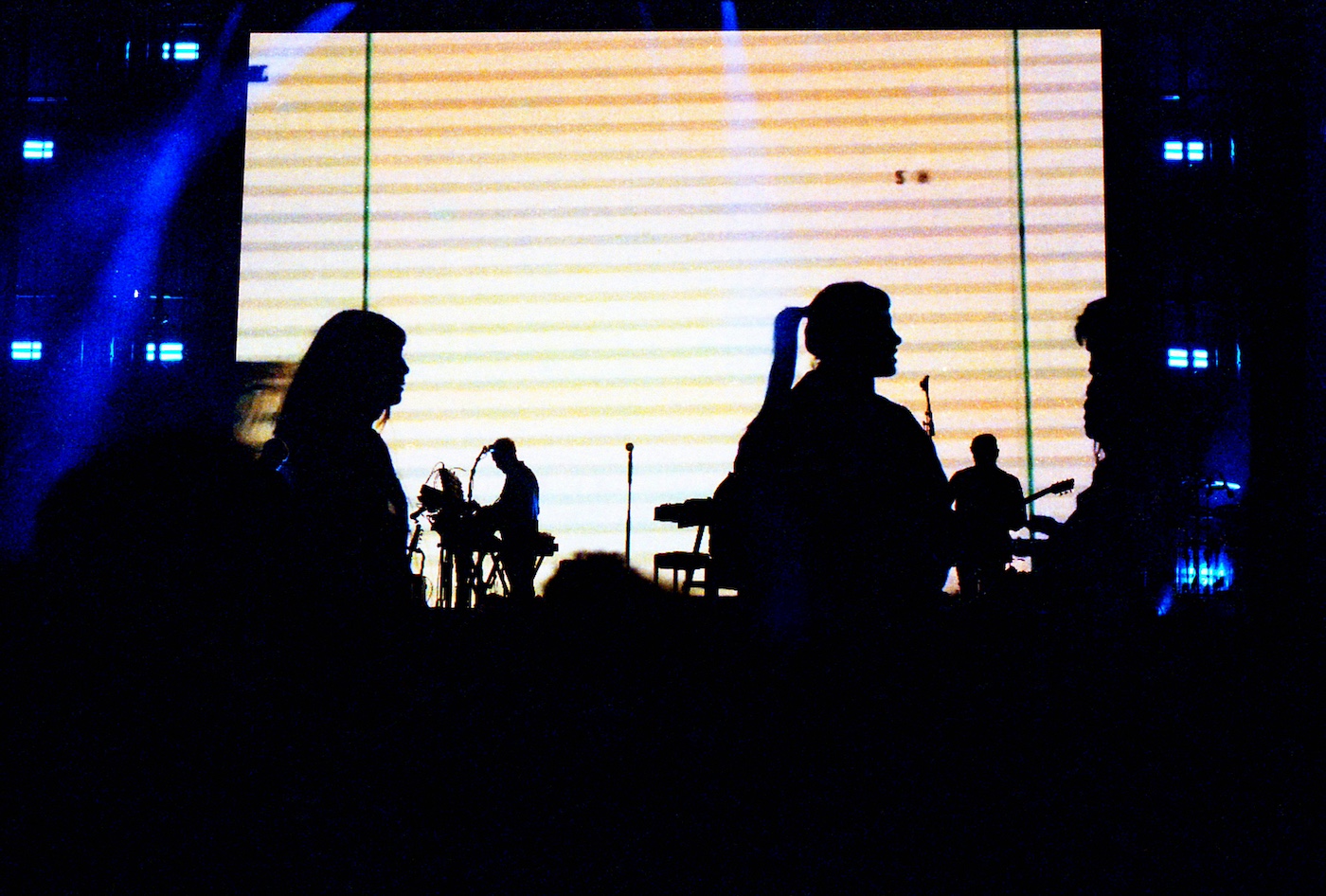
And then, humanity returns, in the form of Elizabeth Fraser, performing “Song to the Siren” – one of the greatest songs ever written, and most unlikely to hear in person. I would not have thought to ever be granted the privilege to witness Fraser in person, and it cannot be stated how immense this experience is, as her voice contrasts immense longing against images of war crimes and bombed landscapes in Gaza, Beirut, Iran.
As the last rays of light vanish, the concert enters its second half, and next chapter, which explores mass control and brainwashing. With “Inertia Creeps” – the band’s ‘sex song’ that has 3D inspect his own dysfunctional relationships – the projections explore celebrity culture and media ignorance in bright, green letters, as news images slowly shift to barely disguised A.I. slop. A mean, muscular punk cover of “Rockwrok” by Ultravox explores how Polymarket and planted conspiracy theories confuse populations into apathy and addictive money gambling: a world where we are being lead to forget that a better future is possible!
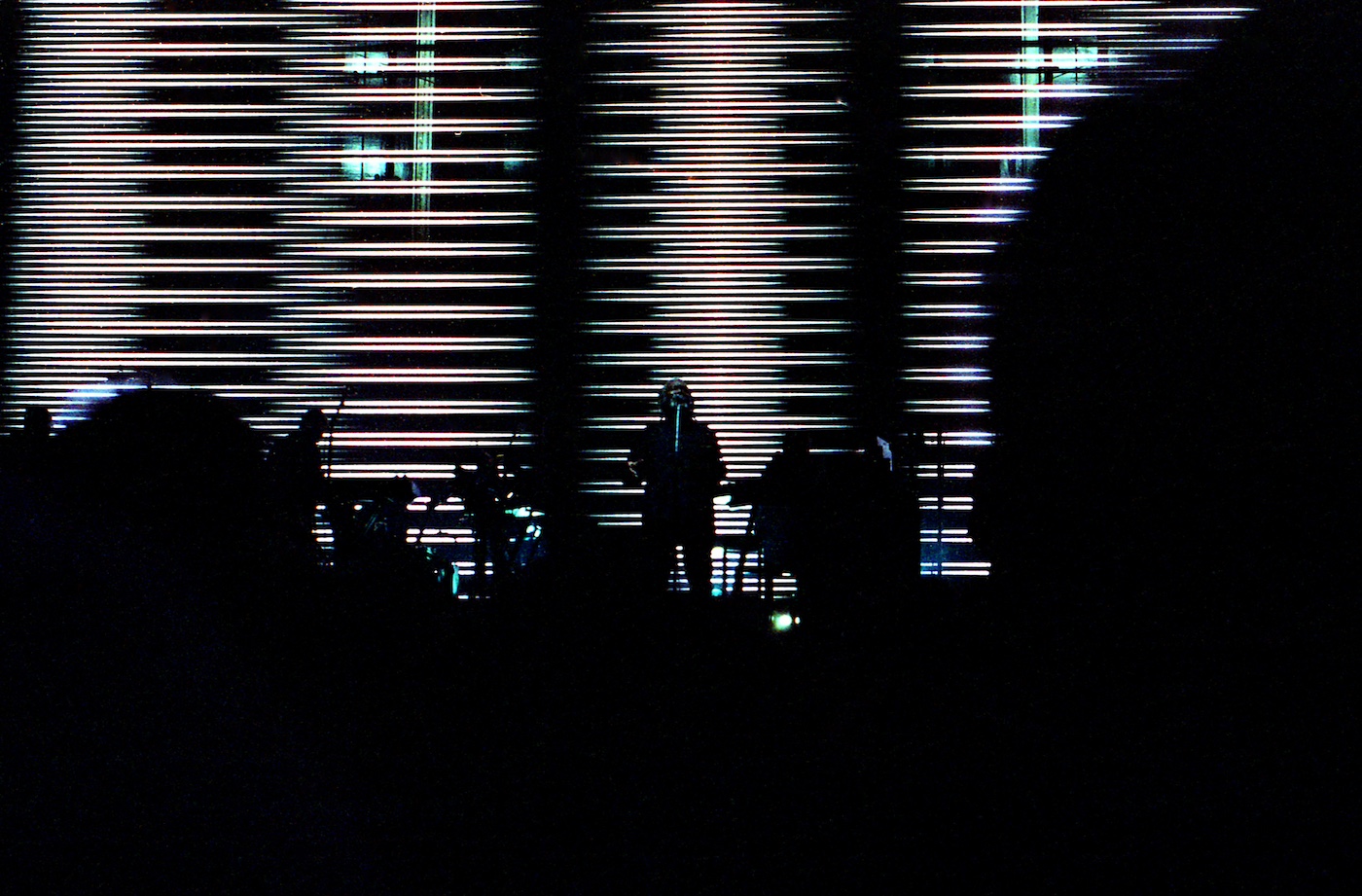
An incursion into this sinister topic comes with one of the evening’s most anticipated moments, as Horace Andy takes the stage to perform an especially dark rendition of “Angel”. After all these years, the groundbreaking song’s dystopian dub has lost none of its eerie violence, as some cheer in the lead up to its thundering climax, delivered to nothing but bright, white shifting lines, with the band reduced to mere silhouettes and Andy all alone in the spotlight. Frightening, hypnotic and seductive! Andy slowly grooves off stage as the dub slowly diminishes, and the evening is followed by yet another high point: “May we present, Deborah Miller!” After 3D briefly thanks Barghouti and asks for the crowd to call for sanctions to further the release of his father, Massive Attack play what will remain the two only renditions of songs from their debut, Blue Lines!
“Safe From Harm” is turned into a monster that explodes into an almost noise finish, as Miller – in all black leather jacket and skirt – carries the weight of a royal presence! Behind her and 3D, who share vocals, the screen counts down the unthinkable toll of the violence reigned upon Gaza: “Palestinians that have been killed in Gaza since October 2023: 72775. Palestinians killed the the west bank since October 2023: 1168. Journalists that have been killed since October 2023: 263. People worldwide that are estimated to be in need of humanitarian aid: 239.000.000.” And as the noise mounts: “Worldwide military spending of 2025 in dollar: 2.887.000.000.000.” It’s a gut churning count-up that unfurls, presenting “Safe From Harm” as a rousing protest song.
But even stronger is “Unfinished Sympathy”: aided by countless spotlights, Miller’s rendition is unspeakably pained and beautiful, as she holds single notes for eternal seconds – I can’t help it and start to sob, cry, unexpectedly, unreasonably, as something breaks loose. Is this the greatest soul song of the 90s?
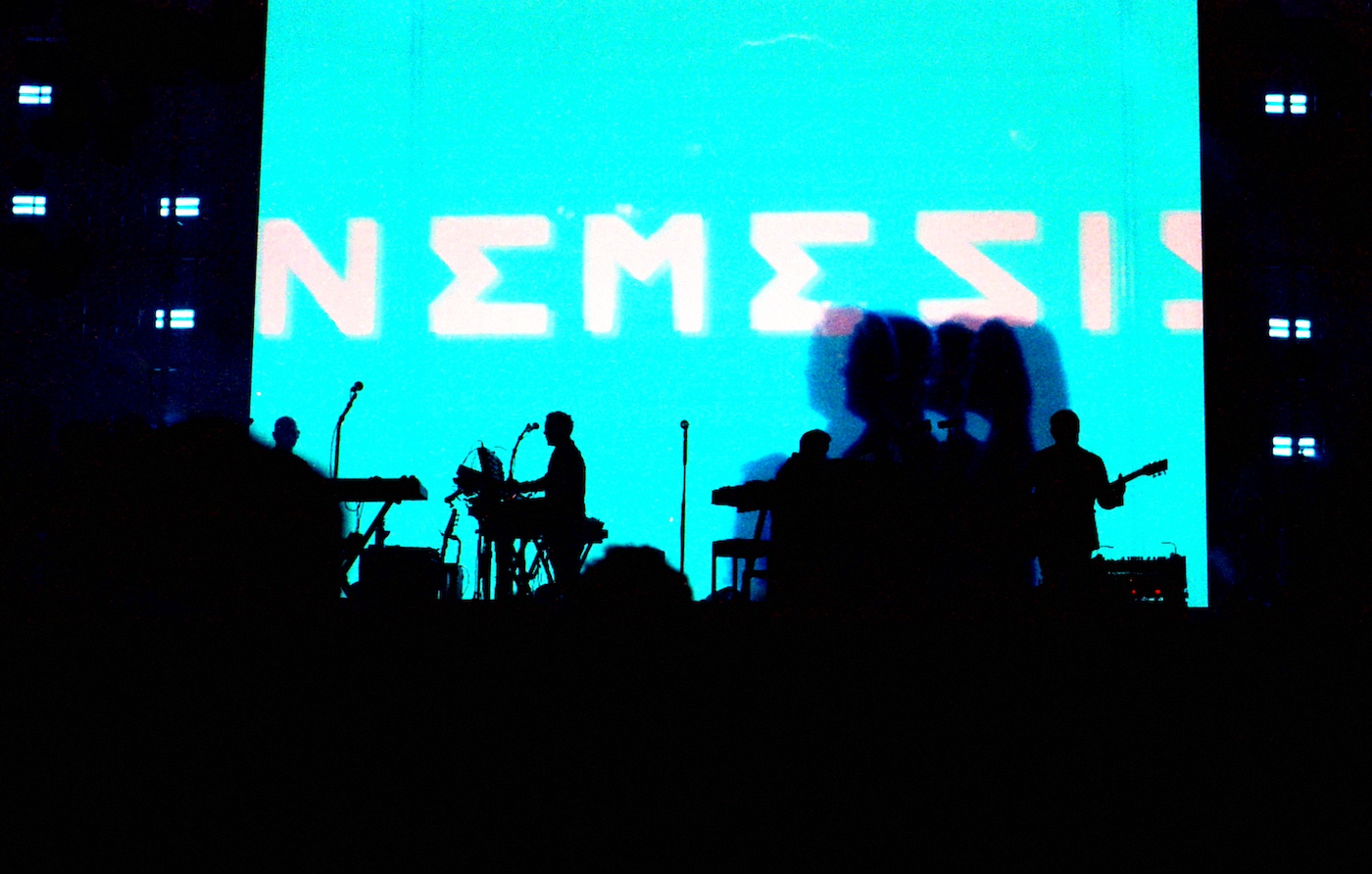
The break is sudden and harsh: for the last chapter of the night, Massive Attack pay tribute to Avicii, performing his track “Levels” to a burst of neon billboard colours: a return down into urban cityscapes! Fallen from the heavens, Fraser returns, for “Group Four”. Now images flash, in record speed: the aesthetics of politics, protests and oppression, failed visions and dystopia, a montage of images that rush by, turning into an unconscious feeling as “Group Four” slowly transitions into acidic post-punk. Fraser’s rendition is incredible as she opposes the central, screaming guitars. When the noise finally subsides, and the band returns to the beginning of the evening with Gigi D’Agostine, the screen posits that individualism, the big promise of the western world, has failed us! What if there is no paradise, as we look deeper into ourselves, confronting our fear of emptiness, of nothing? What if all we thought was us – our thoughts, dreams, desires and expressions – are nothing but pre-fabricated products for us to approve of and follow blindly? What remains of us when all breaks away?
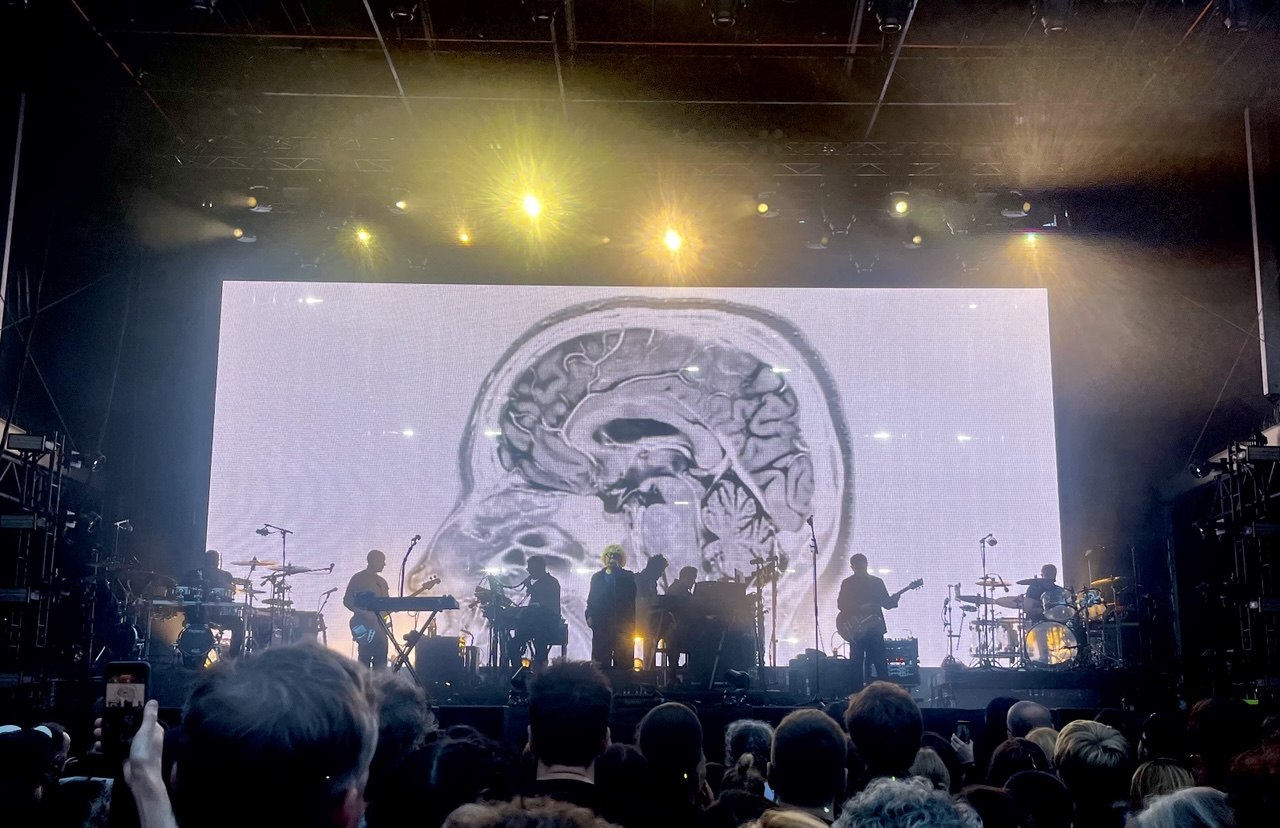
To the sound of seemingly boundless cheers from the crowd, Massive Attack present their thesis how to meet this darkness: “Teardrop”! Cleverly returning to the opening of the concert, the song is as close to the divine grace and cosmic bliss the young woman mentioned earlier. Fraser’s performance is as humane as it is sublime, a brief glimpse of heaven, ringing into the night sky and out towards eternity. The suffocating themes woven throughout the night dissolve, as the song provides a sense of the comfort and upheaval. With her clear, blissful voice, Fraser contains and expresses the potential of all humanity: our hope to find love, to disrupt and overcome endless oppression and destruction.
And then, it is over.
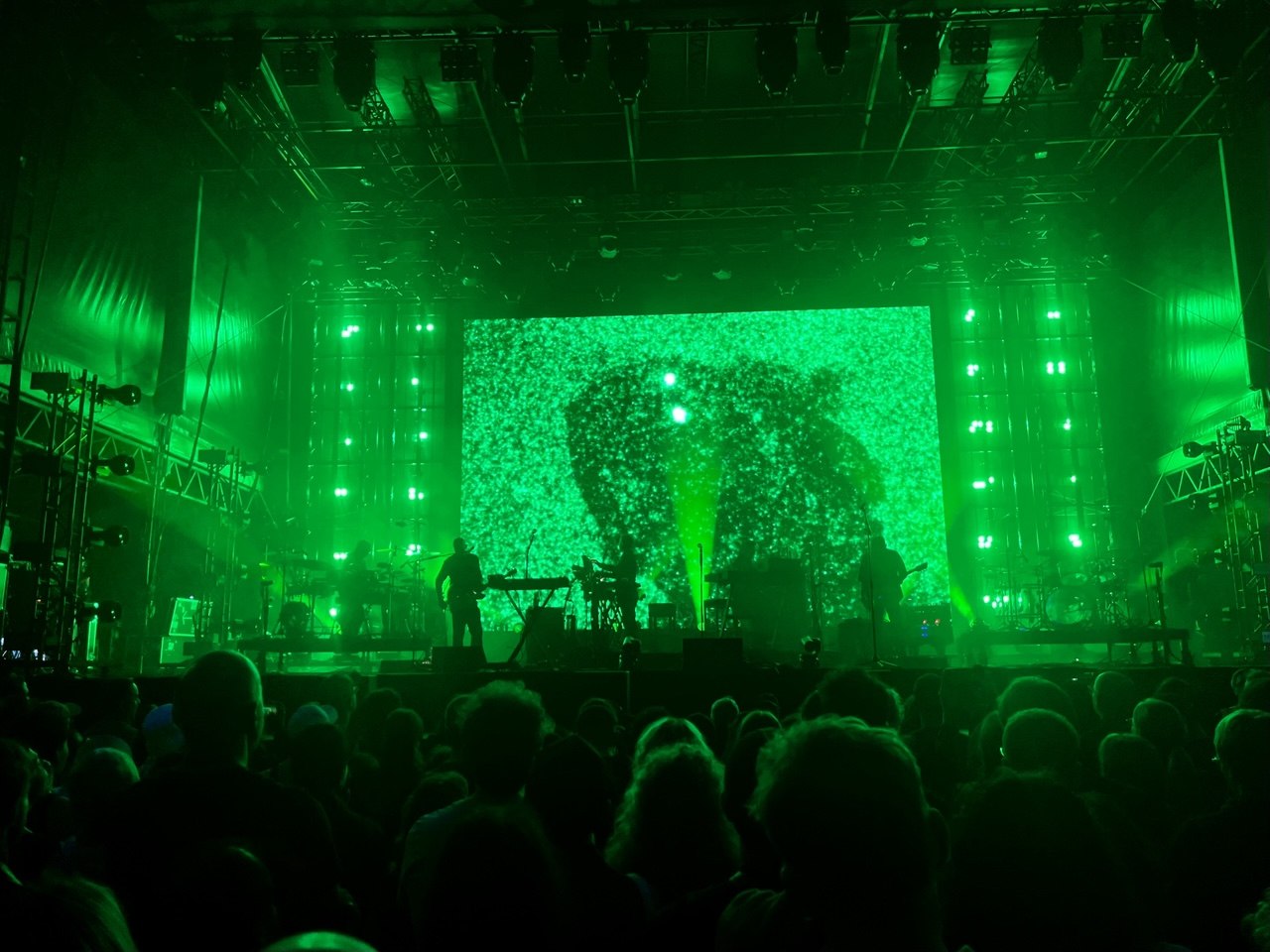
As the band leaves, and after they left, people hug and chat, smile and kiss. Some wipe tears from their faces. An immense emotional burden seems to have been lifted from people. Parallel to other musicians of their generation (a good example here is last year’s tour by Nine Inch Nails), Massive Attack are using this tour to delve into their archive, to ponder their place within a larger culture, explore their legacy, all while confronting an ever-changing and frightening present. Their opposition to individualism, as found in the last expressions on screen, is connected to a collectivist spirit of the Bristol scene. This provided the ability to birth trip-hop and unite artists from diverse cultures through a new aesthetic language. Massive Attack’s opposition to institutionalism allowed for new expressions, while their anti-imperialist politics are enshrined within individual histories of their members. Where is this spirit now, beyond the graces of its originators? There are many questions that remain throughout the night, and judging from the many energetic remaining attendees, they enthusiastically explore them, as smiling clusters gesture with their hands, chattering away. But the voices remain indistinguishable from afar, while those of Massive Attack’s art performance echoes clear in memory.
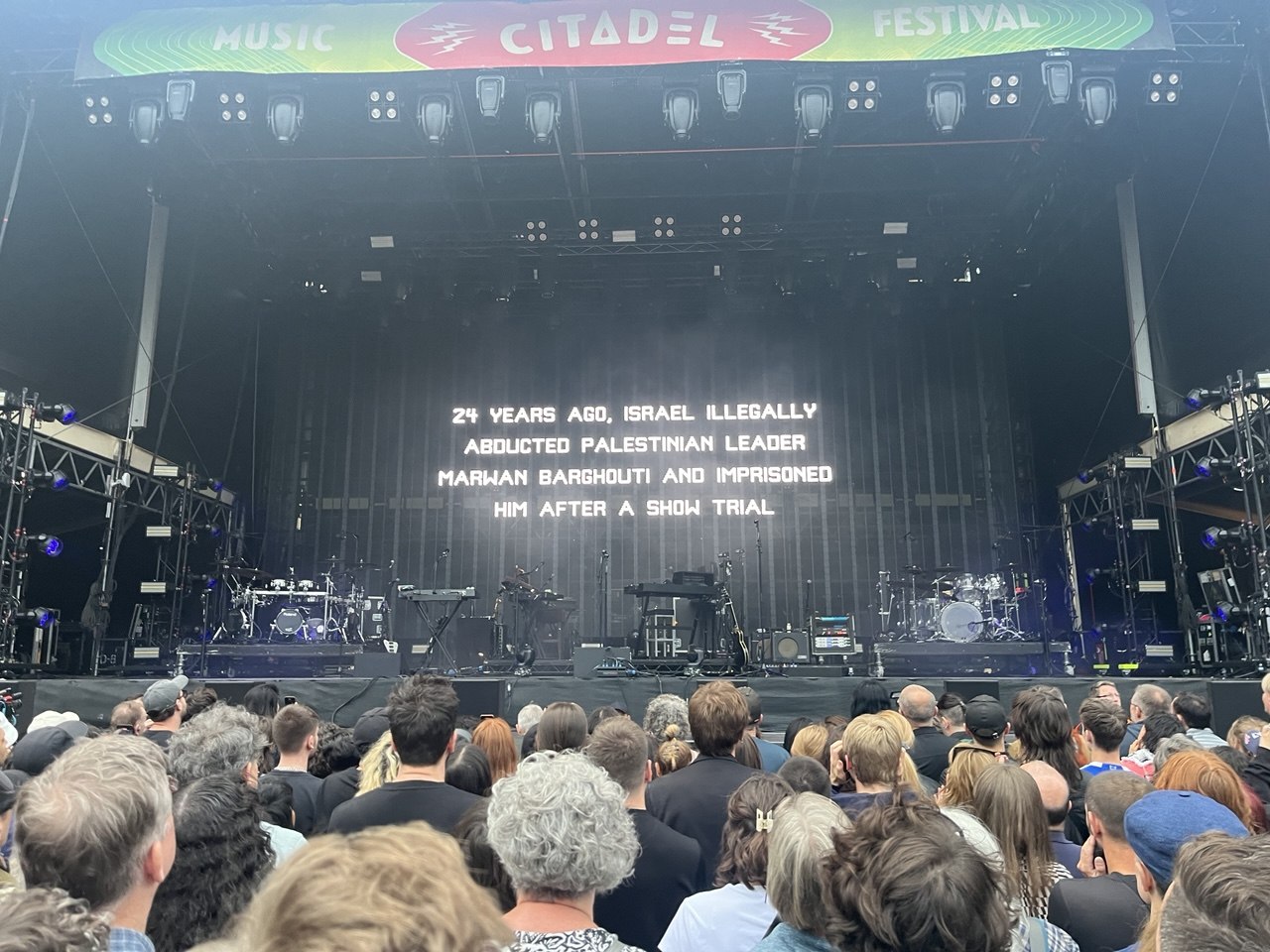
And how right their statements are! In the days following the show, bizarre media reviews trickle in. They are baffling in how structurally ignorant they come across. Only one mentions Arab Barghouti’s introduction, and merely states that “in the beginning, a Palestinian activist holds a speech”. Could this wilful ignorance be the masking of censorship? Another writer claims to have never seen an audience this divided, when really the evening was an immense celebration of unity. The same piece continues to complain that the projections were “one-sided”, and claimed surprise that somebody with the capacity of 3D did not mention October 7 once, completely ignoring the anti-imperialist stances of the band and the immense breadth of their politics. Would the numbers projected during “Safe From Harm” change in any way? Would this ongoing immense death and destruction, enacted by powerful armies and approved by right wing leaders – even deemed a genocide by academic experts, a UN commission and investigated by the international court of justice – somehow end if an individual organisation’s terror would be verbally addressed? How convenient to leave out Marwan Barghouti being still imprisoned in this equation. As stated earlier: the greatest enemy of oppression is peace. Massive Attack’s interests lie in the cause-and-effect of the global imperial push for capital, landmass, resources and power, and how this furthers militarism and fascism worldwide. Upholding division as irrevocable fact and de-contextualisation are tools for those powers. How bad must things get until media deems it acceptable for artists to call for an unconditional end to slaughter by the powers in motion and immediate peace?
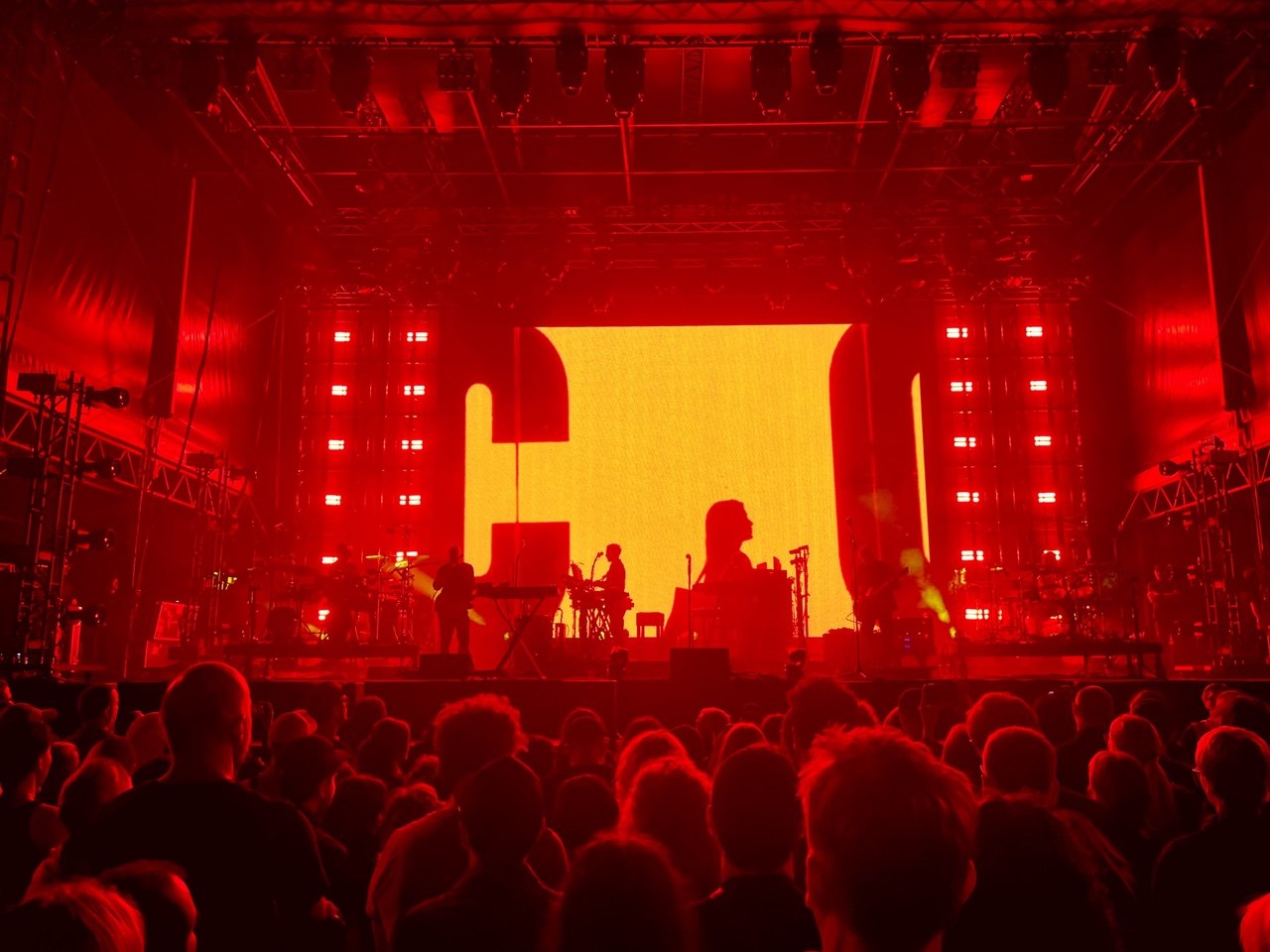
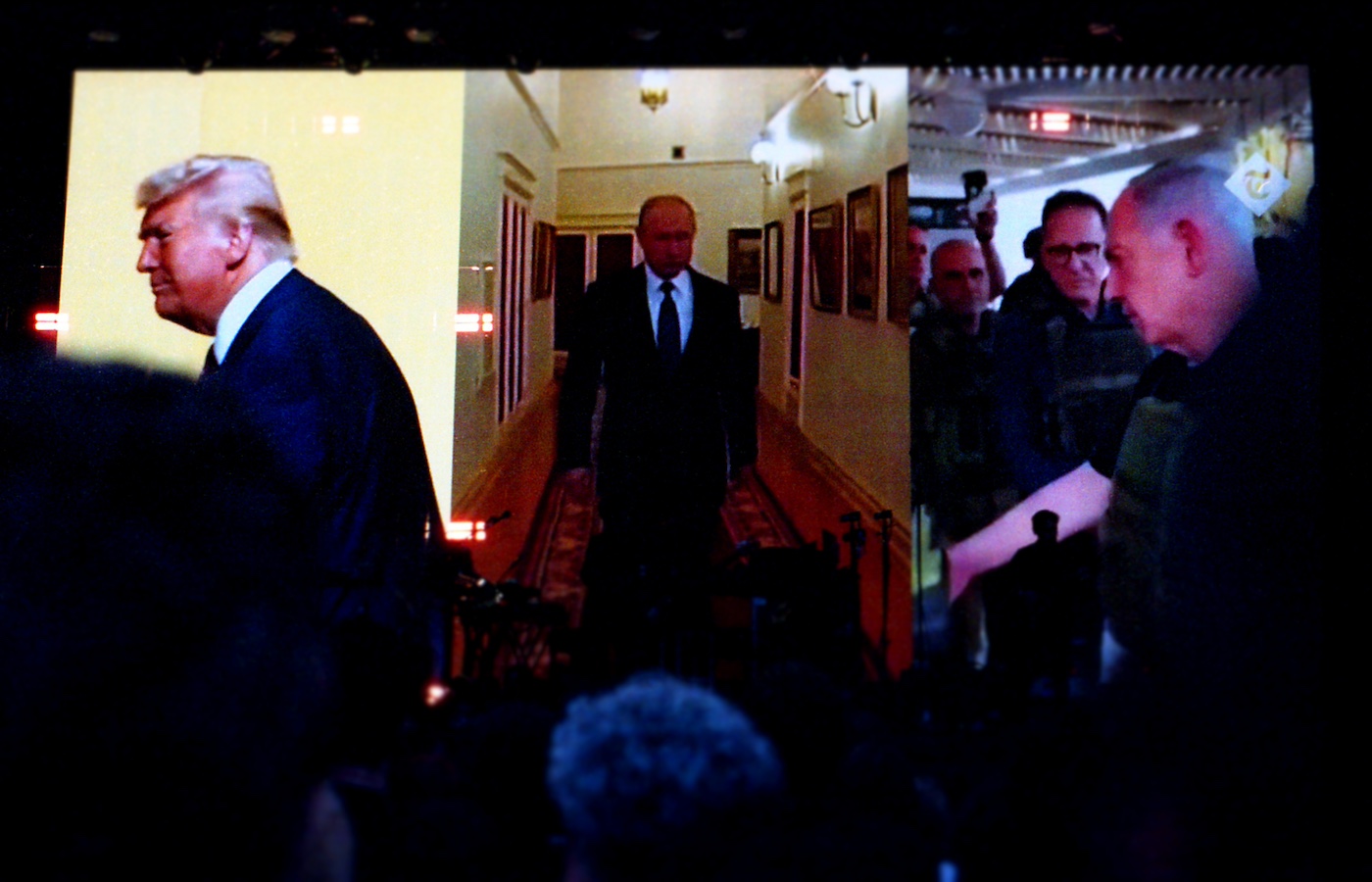
But also, how come the very same media seems often all too ignorant of those bands who provide platforms and stances against empires, against oppression, against institutions? After all, Trump – and Putin – were featured prominently in the video projections, Thiel and Musk got mentions. It’s very clear where Massive Attack locate the actual power players, and what they consider the currency of their corruption: a quest for power over our thoughts, power over our brain functions, power over our abilities to imagine an existence outside of capitalism, conquest and consumption – a mind of our own. Likewise, the subjects of their perspective are the victims of these policies, enacted by egocentric strongmen and financed by psychopath billionaires.
When Massive Attack played with the notion of conspiracy theories during their cover of “Rockwrok”, these seemed like knowing, sarcastic acknowledgements of ironic extrapolation with their own reputation. But confronted with the very real lack of thoughtful exploration and even omissions and derision within the local press, their point stands all the more valid! And this seems by design: Massive Attack have to confront accusations of being one-sided and controversial, while there certainly are examples of music journalists and musicians who have dabbled in fascist apologia, cuddled with right wing bigotry and happily cultivated fake news for months, without ever receiving the most basic level pushback.
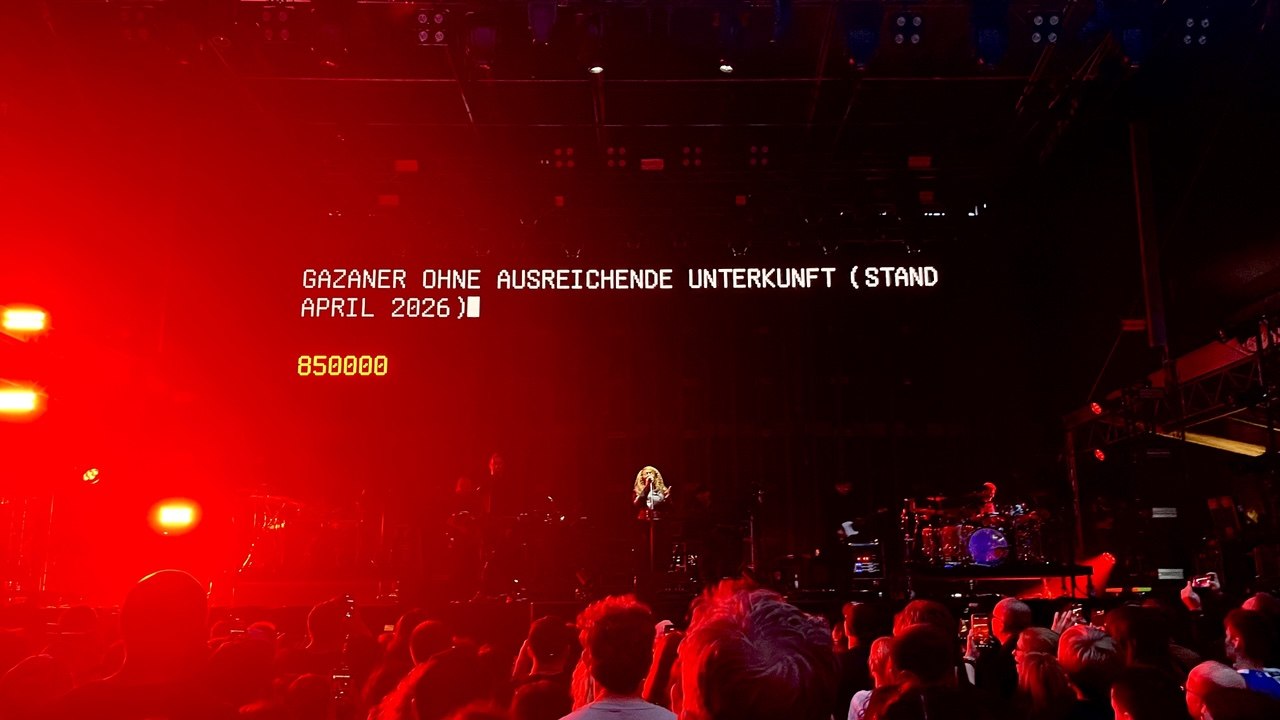
Which returns to a single realisation. Yes, musically, this was an exceptional evening. Possibly, criticisms can be found within the nature of the show being open air (it’s not entirely dark, the sound is not contained, the mixing might need fixing now and then), but the performances, musicality and energy of the band were all incredible and outstanding! But what rings all the louder is that we need Massive Attack! We need a band of such stature and brevity to address what is, essentially, a western elite that seems content to enact a mindless accelerationist suicide pact in the quest for power and land which it continually exploits. These modern empires have learned nothing from history, of which artists seem the last reminders. But Massive Attack are no court jesters: their statements are clear and precise, truthful and vital, even if fashioned with the intuitive strokes of expressionist video art and emotive song constructs. They stir up the powers that try to remain and lock up your mind. This tour is important. So wake up – reality needs you!