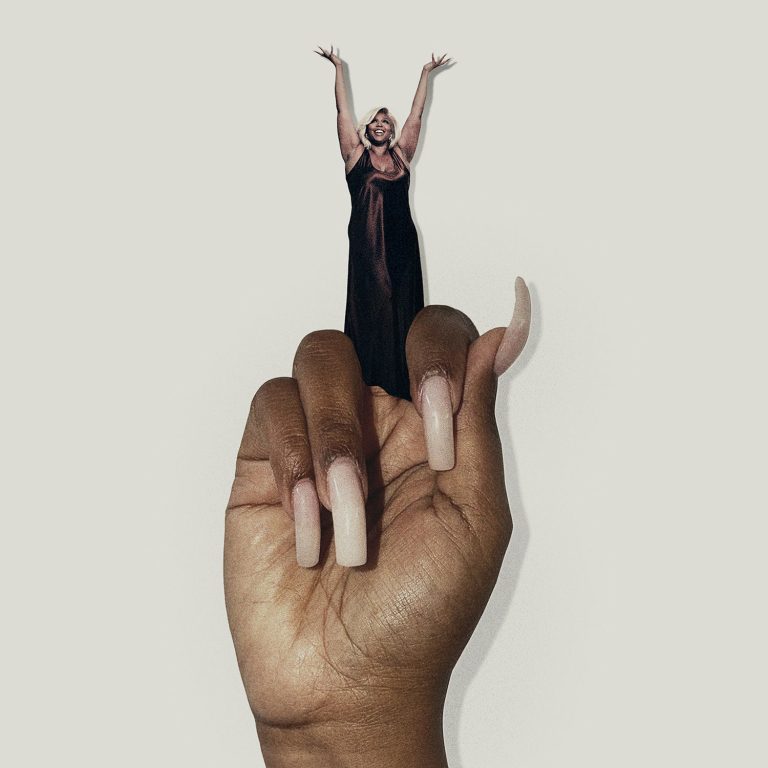

There is a moment, somewhere on the fifth track of Lizzo’s fifth studio album BITCH, when the joke that has been holding the whole record up turns over in your hand and you realize it might also be the wound. The song is called “She Stole My Man” and it is a sugar-rush of pop-punk drums and stalker-eyed lyric; four in the morning, the phone still on, a stranger in a bed she is not sleeping in, and just as it accelerates toward a feeling that real, Lizzo pulls the rip cord and laughs the song off. He wasn’t that cute anyway. Then “Whose Hair Is This” arrives, an organ-cooled blues number about the indignity of red hair on the pillow, and Lizzo screams herself almost to dust before remembering, with a small embarrassed grin, that she has been wearing a red wig. Twice in a row, the bit is the same: lose your mind, save your face. It is also, on closer inspection, the structure of the past three years of her public life.
She has had a fame arc, this woman, that even by the standards of the current celebrity economy seems borderline punitive. Melissa Viviane Jefferson, born in Detroit, raised in Houston, classically trained on the flute, came up the slow way, independent EPs, Prince’s cosign, a 2019 breakthrough called Cuz I Love You that turned an old throwaway single called “Truth Hurts” into a Number One on the back of a meme. She won a Record of the Year Grammy for “About Damn Time” in 2022, lent her flute to Dolly Parton, sang on the Barbie soundtrack and was, for what now seems like a flickering minute, the most reliably charming pop star in America.
Then came the lawsuits. Three former dancers in 2023, a wardrobe stylist soon after, and a corresponding tightening of the discourse around her. She denied the accusations, and continues to deny them; she has refused to settle. The body that had been a kind of public flag of self-love was rapidly altered in the years that followed. The brand that had been built on positivity began, with some grim irony, to be received as a brand that needed defending. By the time she dropped a sweaty two-week mixtape last year called My Face Hurts From Smiling, the title was the entire pitch.
BITCH, then, is the proper album that follows the proper crisis, and it is also a record visibly assembled out of two failed attempts at being itself. A project called Love in Real Life, with a more Strokesian rock lean, was scrapped sometime in 2025; some of its material is believed to have survived the cull. Atlantic Records has, by Lizzo’s own complaint on X, been only fitfully helpful in promoting the result.
The album she eventually gave us on the 5th of June, her birthday, runs 12 tracks and a brisk 35 minutes. It opens not on a hook but on a piano, with Lizzo at the keys, alone, raising a glass: “Here’s a toast to the ones who hurt me most.” She is not laughing yet. She is not even quite smiling. The bass swells behind her, the voice digs in, and you understand within 30 seconds that the woman who once told us she was “100% that bitch” with the affect of a Saturday-morning cereal commercial now means the word differently. She is letting go, she tells us, to free her mind.
It is genuinely the best song on the album, and one of the most controlled vocal performances she has ever put on record. The trouble is that what follows is a record arguing with itself about whether to commit to that moment. The title track has its charms, the Meredith Brooks chorus, the wink at Missy Elliott, but reads, as Maura Johnston pointed out drily in Rolling Stone, like an algorithmic appeal to a particular vintage of ‘90s adult-alternative listener, with bars about followers (“If I lost some, it ain’t a loss”) that protest themselves into a corner.
“Don’t Make Me Love U” sets a power ballad to the borrowed sinew of Tina Turner’s “The Best” and Bon Jovi’s “Livin’ on a Prayer” – both credited, neither quite digested. “Sexy Ladies”, which interpolates the D.C. go-go group UCB’s 2022 “Sexy Lady”, itself a flip of the System’s 1987 “Don’t Disturb This Groove”, is the album’s giddy, undisputed banger and, in a fair world, its summer single. “Little Black Cat,” with its hazy crystal-shop production and Lizzo’s woo-woo numerology trying to summon a lover back, is the dark horse that grows on you. “That GRRRL” sneaks in a Katt Williams spoken-word segment – “They came after Lizzo, and she is unproblematic” – that lands as either the album’s emotional climax or its purest piece of public-relations theater, depending on which morning you play it.
What is most affecting on the record, though, is what is most unguarded. The young Substack critic at Shatter the Standards put it almost too well: Lizzo is a more capable writer of obsession than of grand statements of self-worth, and a song built on one ugly boring feeling, gnawed over for long enough, turns unreasonably good. “Whose Hair Is This” is one of those songs. So is “Like a Crime”, which begins with a single acoustic guitar and a voice that has nowhere left to hide, and ends with a guitar arpeggio refusing to resolve, a man, an investment, a heartbreak, and the suspicion that the heartbreak was a financial transaction in disguise. There is a verse on “That GRRRL”, spoken almost flatly, that does what most of the louder songs only gesture at: “You can be fat, and you can be Black / You can’t be no fat, Black bitch, man / That’s what it takes to be me.” It is the closest thing to a thesis the album risks. It will not be the moment that goes viral.
Lizzo closes the record on “Goodmorning!”, a sun-blasted sitcom theme of a song built on the cheerful premise that all of this was a long bad night and dawn is finally here. Whether you take that ending at face value depends, like everything on BITCH, on which Lizzo you trust. The one at the piano on track one, sober and adult and a little tired, has made an actual song about an actual hurt. The one closing with a Pedialyte joke and a middle finger has made a song for the bridge of a tour stop. Both Lizzos are real. Neither is fully in charge of this album. The result, 12 songs in, is a record that is sometimes a small and brave thing about surviving a public bruising and sometimes a tactical maneuver toward the algorithm, and is, more often than her sharpest critics will admit, a serviceable middle thing trying to be both at once.
A more disciplined editor might have cut “Bitch” itself and let “A Toast”, “Like a Crime”, “Whose Hair Is This”, and the spoken section of “That GRRRL” carry the whole moral weight of the project. That album does not exist. The one we have asks us to grade on a curve she has, in fairness, been forced to draw under unusual fire. Lizzo is not finished. She has a Sister Rosetta Tharpe biopic in the wings, a children’s book on the way, a residency at the Blue Note that drew her back closer to the jazz girl who started this whole thing. The album that finally consolidates the last four years is probably not BITCH. But it is closer, by a meaningful margin, than the louder discourse around her would let you believe. The piano on “A Toast” is the sound of someone who has stopped trying to convince the room. The rest of the record is the sound of someone who has not, quite, decided whether to trust that yet.
She will figure it out. They almost always do.