
Lindsey Jordan won’t be rushed. It’s been five years since her second album as Snail Mail, Valentine, delved deeper into the idea of heartache and unrequited love that had become the band’s signature themes. In those intervening years, Jordan has undergone surgery on vocal polyps which led to the need for speech therapy, she moved out of New York, and decided to write an album more centred on cerebral questions of humanity and ontology than the eternal heartbreak of her previous output.
Ricochet is a vast step forward in terms of subject matter, but also in musical arrangement and confidence. It’s an aural Bildungsroman, a departure from exquisite introversion to addressing the wider questions of being. It’s often wide-eyed, in awe at the world rather than broken by it. When you stop worrying about the actions of others, and realise that all we have is our own moral compass, there’s a newfound sense of freedom which Jordan seems to have reached here. But don’t worry, there are still some moments of angst and melancholy on the album – it’s not a full 180.
Album opener “Tractor Beam” is ace, but the first guitar line unwittingly (hopefully unwittingly!) sounds like “Peaches” by The Presidents of the United States (a band, not actually former leaders of the US). Once you manage to exorcise that particular ghost, you’re left with a shimmering indie anthem that places Jordan’s vocals a little lower in the mix than fans are used to. The high production values of the record as a whole are entirely evident in the strings arrangement that beautifully underscore the chorus. The lyric “But you can’t find anyone else like me” feels like a deliberate riposte to her greatest lyric to date, from “Pristine” from debut album Lush – “And if you do find someone better / I’ll still see you in everything / Tomorrow and all the time.” This is a new Lindsey Jordan, one with a sense of optimism, looking toward the skies instead of navel-gazing.
“My Maker” has a haunting quality to it, with hazy production that perfectly complements the restrained mood and subject matter. A hallmark of Ricochet is that many of the songs benefit from the production work which is subtle but brings out another layer of meaning in the arrangements. There’s a sense of reluctant nihilism in the lyrics as Jordan ponders what if nothing matters as another year goes by. The eternal question about the existence of God is answered when “Battalions of angels marching from on high / Say ‘Above us, it’s just sky.’” Instead of this feeling like a moment of anguish and existential dread, there’s a polish to the sound which makes this a positive – clarity and acceptance simultaneously.
Although there’s a general sheen to Aron Kobayashi Ritch’s production work, Jordan is still borrowing from the 90s alt rock template that was so evident on Lush. Where that album triumphed in its angular guitar work that leant on post-punk, this album has gorgeous and restrained orchestration underpinning most tracks. It feels like an album created for the studio, not a garage rehearsal space.
“Light On Our Feet” has a Melon Collie-era Smashing Pumpkins backing supporting the plaintive guitar and vocals, while the descending chord sequences in “Cruise” are given grandiose treatment with the introduction of horns towards the song’s end. Both have an expansive feel to them, and a sense of contentment which feels reassuring for those who’ve followed the Snail Mail journey to this point.
There’s still some fire in Jordan’s belly which is most evident on “Dead End” which recounts teen years hanging out doing next to nothing. It’s the midpoint of the record and the converging centrepoint of the lyrical themes on Ricochet – looking back, but realising that the future is (for once) a bright one. There’s a sense of leaving the old habits behind across the record, a shift in perspective which is needed with the state of the world today. There’s still beauty out there, and it isn’t even that hard to see if you just take a minute to look for it. The track also serves as the gateway for the spikier, more barbed second half of the record.
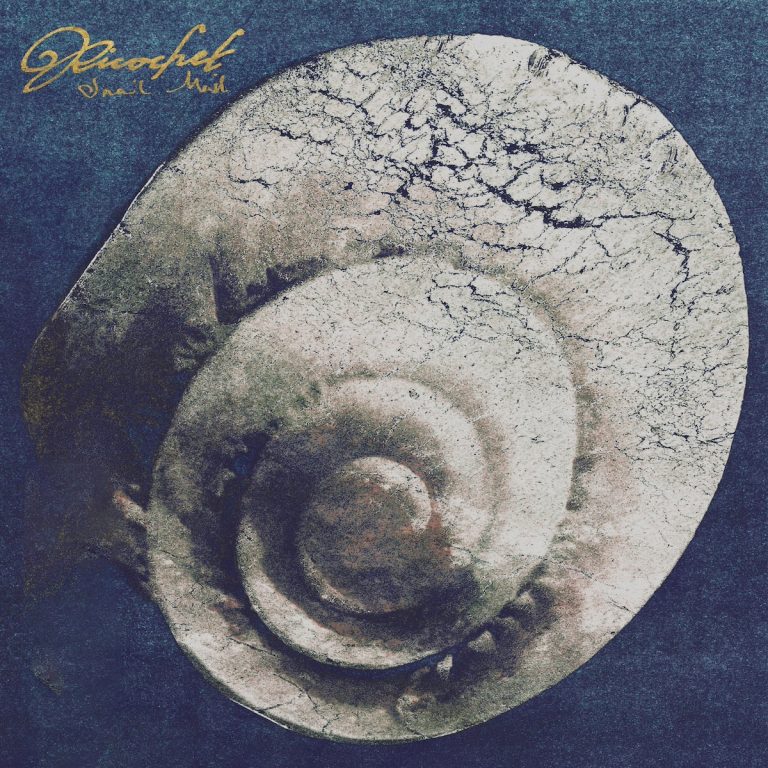
Both “Butterfly” and “Nowhere” sound like they could sit neatly on either of the two earlier Snail Mail albums as the guitars are more to the front in the mix, while the ethereally glacial intro to “Hell” doesn’t suggest it’ll have the most energetic chorus on the record. It’s nice to hear the distortion pedal used here, too. The title track starts the descent downwards again, and it feels like the album’s taken us on a journey similar in style to the hot air balloon from the “My Maker” video. The song spirals in on itself, much like the shell on the front cover. There feels like a deeper sense of connectivity in all aspects of the album rather than just being a collection of songs.
It’s a Snail Mail tradition to close an album on a stripped down track that feels like an epilogue, and “Reverie” is just that for the first half of its runtime. There’s a 1960s psychedelic tinge to the song, and it feels as though Jordan’s expanding the sonic palette that she draws inspiration from. There’s a sense of positivity here as she sings about connection, fulfilment and how “life is so worth living now” and from an artist who has always worn her ragged heart on her sleeve this is quite a thing to hear, and long may it last.
Ricochet is a masterful record of restraint, realisation, and poetic maturity. Beneath the layered production there are pure earworms and killer hooks that are up there with the best of Snail Mail’s work, but the overriding themes are contrary to the aesthetic tone of both Lush and Valentine. It’s a step forward, but one that feels entirely organic. Our little dramas and interpersonal frictions can often mask our own insignificance, but if we let that go then there’s beauty to be seen and Ricochet is an album that’s attentive to that fact.