
Listen to a Spotify playlist of our favorite tracks from BPM’s Top 50 Albums of the 2010s
30.
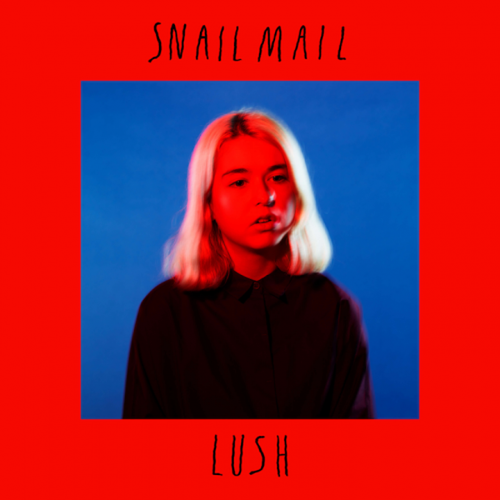
Snail Mail – Lush
[Matador; 2018]
Lindsey Jordan is exactly the type of musician you’ll find the eternal cynics crow over. Released when she was still a teenager, her debut album as Snail Mail is laden full of the tension that comes with heartbreak. Release can only be found in sarcastic missives, the tone throughout is of a resolute melancholic strength: “Leave things on speaking terms / And I’ll see you around”. That’s mostly thanks to Jordan’s incredible charisma, which lends tracks like “Let’s find an out” and “Deep Sea” incredible gravitas and made “Heat Wave” and “Full Control” into classics of the last decade.
At its heart, Lush is a Slacker album that fits perfectly into the yearning Zoomer desire for reconnection with the mid 90s (a time most of them didn’t directly experience). Its sound conjures Pavement and the Pumpkins, Liz Phair and Courtney Love – but also Avril Lavigne’s early work. In other words: it’s a kaleidoscope into adolescent experiences and a perspective that translates loss as a societal truth. It’s just gonna happen, man.
In the end, we’re all incredibly lonely, and probably will stay that way for a long, long time. But to express that loss also means to express who we are, torn jeans and dirty chucks and oversized shirts and all, drinking New Coke and drawing on each other’s hands with sharpies. Life sucks, but it’s the best thing ever. – John Wohlmacher
29.
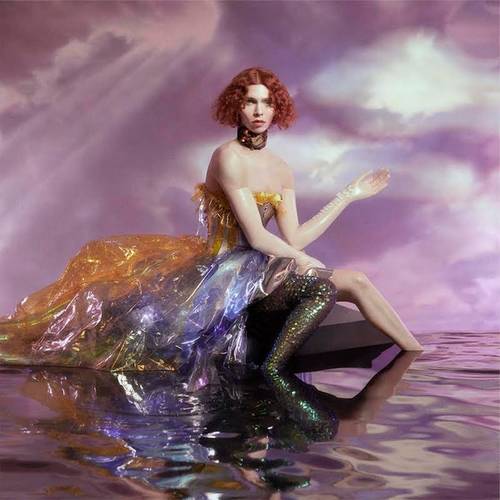
SOPHIE – Oil of Every Pearl’s Un-Insides
[Future Classic/Transgressive; 2018]
Before volunteering to write the blurb for Oil of Every Pearl’s Un-Insides, I had not been able to face listening to it since the news of Sophie Xeon’s death spread through music twitter like an unspeakably cruel cosmic joke at the end of January of this year. At the time, it was almost impossible to believe. It was more in line with one of the press-baiting, anonymity-bolstering PR stunts of her early career, than with any comprehensible reality. But, reality it was. Cold and hard and unambiguously devastating.
Revisiting SOPHIE‘s first full length in light of events is predictably revelatory. What strikes me as clearly as it did back then is that Oil Of Every Pearl’s Un-insides is, first and foremost, about Becoming. This narrative for the album was written by SOPHIE from the moment the deeply vulnerable yet defiant video for “It’s Okay To Cry” dropped. This is not like listening to Blackstar, or Closer, or In Utero; there aren’t subliminal (or non-subliminal) clues towards a retrospectively inevitable ending; it’s just beginnings and exciting glimpses of a future to come, a “whole new world” if you will, personally, societally and artistically.
Following the release of her singles compilation, PRODUCT, in 2015, Sophie had focused exclusively on collaborations, lending her future-facing production to a diverse roster of artists, from Charli XCX to Vince Staples, Madonna to Let’s Eat Grandma. With Oil of Every Pearl’s Un-Insides (yes, that’s a mondegreen for “I love every person’s insides”), Sophie put herself front and center. Somehow, she had taken the quasi-satirical plasticity of PC Music and invested it with such genuine emotion, that listening to the heavenly synth swells of “It’s Okay to Cry”, amongst countless other moments, is overwhelmingly disarming.
And yet, it’s an album of stark, discombobulating contrasts. Creation is necessarily borne out of some kind of destruction, and Sophie’s becoming is necessarily precipitated by violent fragmentation. “Ponyboy”, “Faceshopping”, and “Not Okay” feature pulverizing percussion in line with the pleasure-center-hitting beats of “BIPP”, Charli XCX’s Vroom Vroom EP and Vince Staples’ “Yeah Right”, and then there are expansive, beatless, ambient things of transcendental wonder, like “Pretending”, or overwhelmingly gorgeous exercises in perpetual ascension like “Is It Cold in the Water?”
There is fan-service here for those that fell in love with Sophie’s unique sound world, but also wild subversion of expectation. Sophie’s burgeoning identity was a sum of everything she had been, was, and would have become, had the universe given her the chance. The album’s final two tracks bear witness, firstly, to an ultimate crystallization of Sophie’s most pop-minded tendencies with the 21st Century’s pre-eminent banger “Immaterial”, whose vocals by Cecil Believe express the fundamental freedom of self-realization: “I could be anything I want”; and secondly, on the brutally experimental and sonically dazzling, “Whole New World/Pretend World” to a conflicted view of a world of promise, that may all be a bitterly cruel illusion, of pretend feelings, pretend acceptance.
It’s a devastating listen, made almost unbearable by the loss suffered by the music world, not to mention Sophie’s family, friends and ardent fans. Her influence on her peers and successors is both plainly evident, and yet to be fully felt. The personal resonance to the global trans community of her expression of her true self can surely not be overstated: for many people, Oil of Every Pearl’s Un-Insides will feel like a validation, an empathetic embrace, an understanding that their inside is their best side. It’s a future classic, now. – Andy Johnston
28.
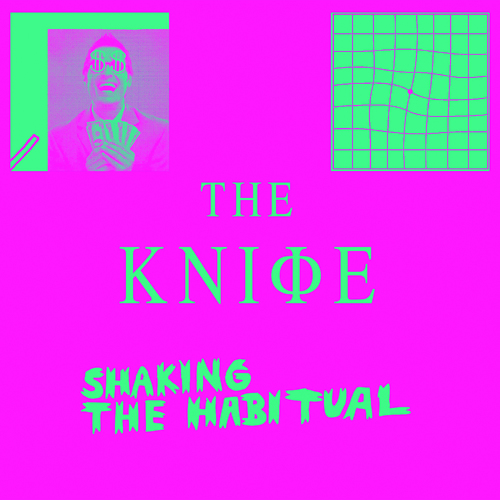
The Knife – Shaking the Habitual
[Rabid/Mute; 2013]
From post-human emotional schisms, to mid-album drone-scapes of wonder, The Knife’s fourth (and final?) studio album is a shockingly expansive record filled with philosophy, politics and female empowerment. It’s a rare album that creates its own sonic landscape, and Shaking the Habitual does exactly that. It successfully cocoons the listener in soothing sounds like the ambient washes of sound on “A Cherry on Top” before the twisted dancefloor anthem of “Without You My Life Would Be Boring” comes in to rattle your bones.
Shaking the Habitual may not be as easily accessible as Silent Shout, but it’s a better piece of art for it. The confrontational placing of the near-20 minute drone of “Old Dreams Waiting to be Realised”, at around the halfway point of the record, can be seen as an act of resistance to the swelling fan base they were accruing – or just a middle finger to every listener. The Knife were always shy of delivering something too obvious, too ‘pure’ and Shaking the Habitual is the very zenith of their career trajectory as artists rather than mere musicians. A masterful record at every level. – Todd Dedman

27.
Carly Rae Jepsen – Emotion
[School Boy/Interscope; 2015]
An album to make you fall back in love with pop music again. Carly Rae Jepsen uses the heart-on-sleeve narrative themes of the best 80s records, producing an album of exuberant vulnerability and positivity in facing the inevitability of boy problems and life in general. With a different production team on almost every track, there is a separation in the tone between each, but Jepsen’s songwriting is the real prize at the core of the record.
This is not superficial and sugar coated banal pop, this is pure joy buried beneath the realism in the face of life’s ups and downs and limitations. Heartbreak seeps through the record, and Jepsen’s voice is fragile (“Your Type”), desperate (“When I Needed You”) and sadly sultry (“All That”). This level of open heart examination and emotional rawness is made all the more delicate by the fact there are no happy endings promised here, just hope and communal acknowledgement of pain in equal measure. This is a tightly packaged record, a smooth record that rewards the listener with a little digging behind the seemingly positive sheen of the surface. –Todd Dedman
26.
Earl Sweatshirt – Some Rap Songs
[Tan Cressida/Columbia; 2018]
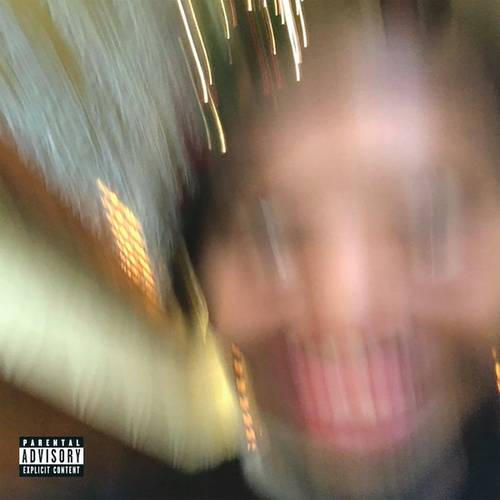
Incoming hot take alert: Earl Sweatshirt reinvented rap. At least, he reinvented a certain kind of rap. That certain kind has exploded in recent years and now there’s a collective that Sweatshirt is at the forefront of, alongside like-minded rappers such as Navy Blue (who makes a stellar assist on Some Rap Songs‘ “The Mint”), MIKE, Armand Hammer, and AKAI SOLO, just to name a few. But Earl’s on an island alone. As wonderful as those rapper’s bodies of work are, Some Rap Songs changed the game. It subverted the expectation, something Earl has always seemed to do.
At 15 songs in less than 25 minutes, Some Rap Songs is Earl’s strongest to date, and ranks high on the best rap albums of the decade, as it introduced a skeletal system of bars and samples. There’s nothing showboaty about Some Rap Songs, no chest bumping, no arena-sized beats, it’s all encompassed in this hazy visage of Earl’s face that leads us into some passages of his brain. It’s a captivating work on multiple levels that no one really expected Sweatshirt to explore; an introspective work at its core, Some Rap Songs is an honest soul-searching album that it’s protagonist doesn’t necessarily invite us along to, but simply leaves the door open for us to follow. – Tim Sentz
25.
Destroyer – Kaputt
[Merge; 2011]
Destroyer had changed sound before in the course of their first eight albums, from the lo-fi home recordings of the debut, the full-band backing of Thief to the MIDI instrumentation of Your Blues – but there was nothing to indicate the complete upheaval that was in the works.
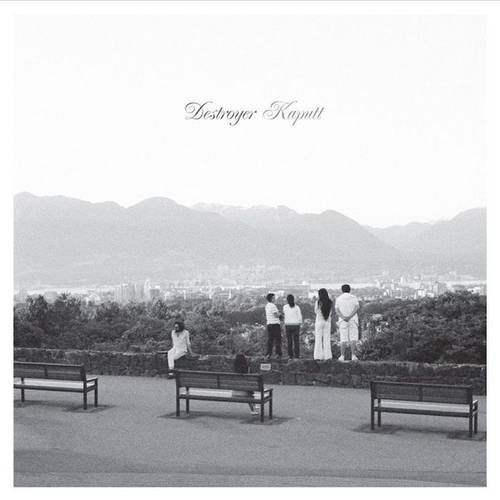
Looking back on it a decade later, Kaputt’s affinity for smooth 80s sophisti-pop ended up being a fruitful vein for artists across the upcoming decade. (Even the 20-minute bonus track “The Laziest River” now sounds like a perfected early entry in the revived balearic subgenre.) What’s remarkable about Kaputt is how fully-formed and comfortable the band is in the sound in their first try, like if Roxy Music dropped Avalon straight after Siren. It ends up feeling perverse that Kaputt wasn’t Destroyer’s discography-closer like Avalon was.
With the sound change perfected, Destroyer used it to create a landscape of bittersweet departure, lingering in the past in order to send it off. Dan Bejar’s characteristically winding, free-associative-sounding lyrics aid this style, adorning tracks with anecdotes flitting between past memories of women’s names, cocaine hunting, music magazines, his age in 1992, hearing just-alright albums – an effect as elusive and fleeting as old memories themselves. The man lingers on the word “ruins” over a fading disco-like groove and Joseph Shabason’s mournful saxophone sounding like it was recorded a room over – the album lays it on thick, owning its every indulgence.
Even as the band marched on to explore new styles, Kaputt remains enclosed in time, a tableau of nostalgia and fading skies and closed photo albums. A decade on, Kaputt now sounds like a nostalgic artefact of time just like the ones it dwells on itself, a perfect distilled embodiment of the mood it so carefully painted. – Josh Sand
24.
Radiohead – A Moon Shaped Pool
[XL; 2016]
The 2010s did not promise much potential for new music from Radiohead, as the underwhelming performance of their 2011 album The King of Limbs’ seemed to pave the way for the members to become increasingly involved in their own endeavors: Thom Yorke released three solo albums (including his Suspiria OST) and partook in the supergroup Atoms For Peace, Johnny Greenwood focused on film scoring, composing five soundtracks, Philip Selway released two solo LPs. However, the band as a whole always seem to be up to something in their secretive way.
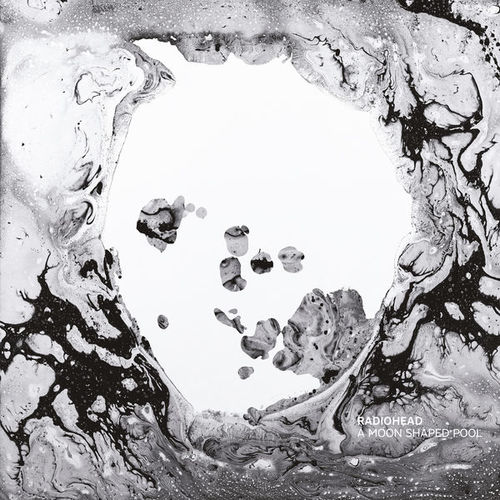
A Moon Shaped Pool arrived in 2016, and while was not exactly an album full of original songs (with “True Love Waits” dating back decades), it was a more than welcome return. Radiohead’s most recent album feels both dark and hopeful, spacious and claustrophobic — basically, all that we have come to love the band for. But it also came across as much more tender than its predecessor;
A Moon Shaped Pool feels like Radiohead taking a step back and taking a look at what their music had amounted to up to that point. It certainly takes a great understanding of one’s own creativity to be able to not only find a proper context for songs that they were not able to fit in anywhere previously, but also to be able to reconcile them with new tracks. That it turned out not only make sense as a final product, but to be one of the band’s most sincere records, is testament to their timelessness and skill.
It is uncertain whether or not we will get a new Radiohead album anytime soon (or ever), which is important to note specifically as not being the reason why A Moon Shaped Pool deserves a place on this list. The last Radiohead album to date reminds the listener of all the reasons why they fell in love with the band in the first place, which could either be taken as a great return or a the best attempt at closure. Only time will tell which one. – Aleksandr Smirnov
23.
Iceage – Beyondless
[Matador; 2018]
It’s weird how few punk albums that dropped in the last decade – one which had been fraught with revolutionary zeitgeist. Those that materialized were often of particularly dark, grim nature (see: Monomania) and case in point, Iceage’s at times borderline-Weimarer tone on Beyondless really feels as if the end is here.
A progression from Plowing into the Fields of Love‘s occasionally plodding sound, the album revisits 20th century mythology as bluesy punk ballads, suggesting a variety of stylistic vantage points. The odd, ironic shuffle of “Thieves Like Us” could have come from The Clash, while “The Day the Music Died” is reminiscent of The Hives when they were at their peak. The eerie Vaudeville atmosphere of “Showtime” even scratches on a Bowie aesthetic.
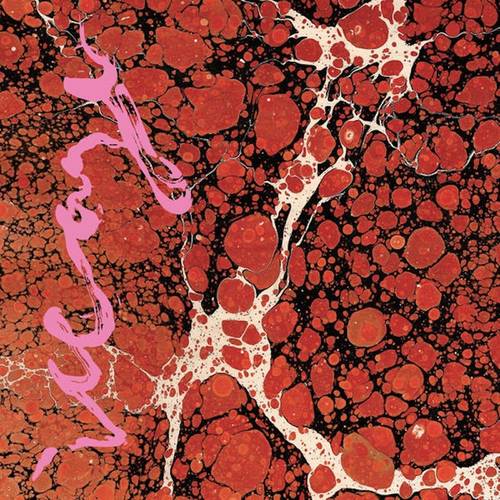
But the record isn’t blind aestheticism. The lyrics ruminate on the spoils of world wars and apocalyptic images, encapsulating the dire atmosphere found during the Trump era: with tyrants leaving trails of destruction in their wake, the security of the past seems hopelessly gone. But then Beyondless is also a love story, as the hopelessly romantic “Take It All” and the album’s high point “Catch It” reconfigure vocalist Elias Bender Rønnenfelt from soldier to partner. Maybe the characteristic blood-like liquid on the cover isn’t meant to evoke suffering after all, but wild, uneven heartbeat. – John Wohlmacher
22.
Blood Orange – Freetown Sound
[Domino; 2016]
Since starting the Blood Orange project, Dev Hynes has always sought to reflect and honour the Black experience. True, this has often brought gritty, harsh truths to light, but 2016’s Freetown Sound found him largely putting the social commentary aside in favour of celebration. Named for the capital of Sierra Leone (where his father was born), Freetown Sound reflects the African city’s cross-cultural artistic pollination, drawing on West Indian, French, Creole and British sounds to shimmering effect.
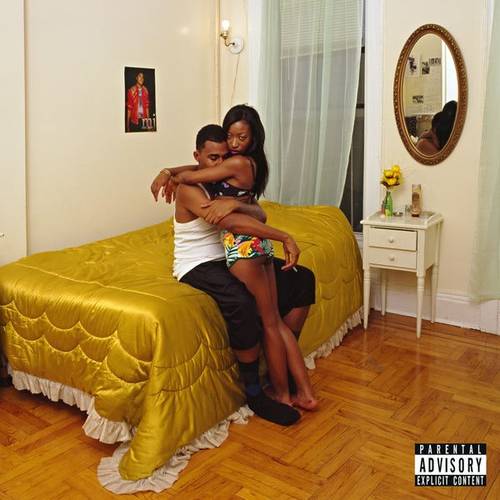
In his output as Blood Orange, Hynes seems to see himself as a curator as much as a performer, and everything about Freetown Sound is expertly interwoven to accentuate his Black pride; from the cover photo by artist Deana Lawson, to the musical and lyrical references to Charles Mingus and Missy Elliott in the opening track, to the cast of guest vocalists. In that regard, Freetown Sound opens its doors to collaborators from all backgrounds, including Kelsey Lu, Debbie Harry, Carly Rae Jepsen, Empress Of and Nelly Furtado.
With this selection of samples, instrumentation, and voices, Freetown Sound is a vibrant patchwork of modern New York City, where Hynes has made his home. Filled with irrepressible pop songs that take influence from classic soul, funk and jazz – yet sound utterly modern – it’s a masterwork of joy and multi-cultural pride that is based around our one major commonality: our hearts and their quests for love, community and home. – Rob Hakimian
21.
Solange – A Seat At The Table
[Columbia; 2016]
It blows my mind how well Solange straddled the line between accessible pop music and thematic weight on A Seat at the Table. I mean, I’ve heard “Cranes in the Sky” in a Starbucks, yet this album became the focus of a college course. This is a big record with a diverse range of names and ideas, but all the pieces coalesce exactly right.
Rarely do interludes service an album so well: “Mad”‘s prelude from the patriarchal Knowles details rage-inducing racism that sets up the track, which is not only deeply meaningful, but an outstanding pop song that features one of the best Lil Wayne verses in years. And plenty of artists can reference the legendary Master P in their music, but who else actually sat P down to interview him about his legacy, his inspiration, and what it means to him to be a Black American? Solange did.
Even on the bouncy “Junie” we get a nugget: “You wanna be the teacher / Don’t wanna go to school / Don’t wanna do the dishes / Just wanna eat the food”. It is not enough, Solange says, for us to enjoy Black music and culture if we are going to avert our eyes from Black struggles and persistent racism, which only became more and more transparent over the past decade. It may not be a new message, but it is nevertheless one that is important as ever, and one that has rarely been translated to music as substantive and addictive as A Seat at the Table. – Ethan Reis