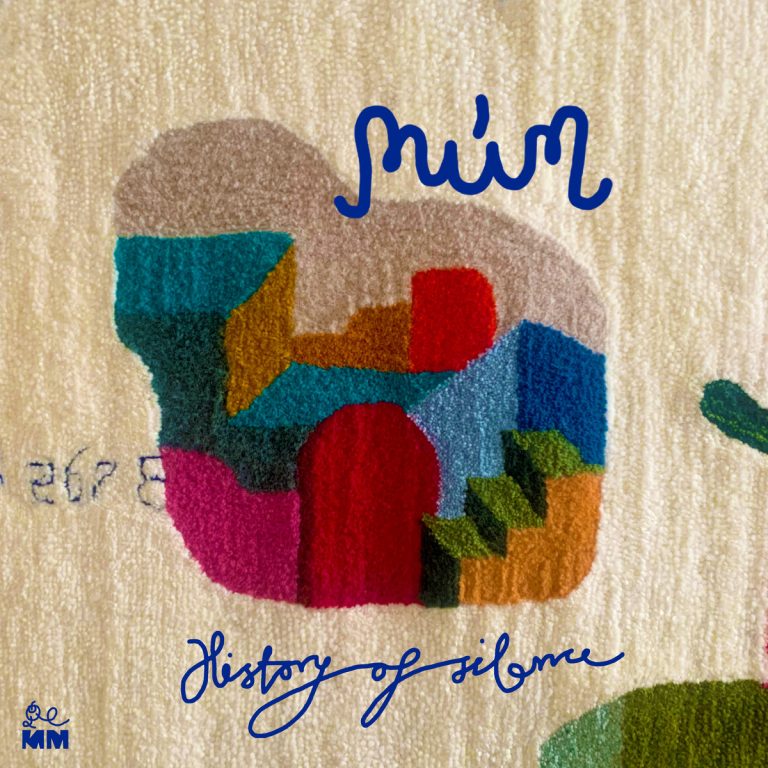

Icelandic band múm have always played with noise, layers, and the very elements of what make up their music. Over their quarter of a century history they have repeatedly pared back the ingredients that seemed integral to their very being: electronics put to the background in favour of live instrumentation, more and more vocals driving the songs, and a shift into sounding more adult contemporary than childlike wonder. It has worked to varying degrees of success: their debut album Yesterday Was Dramatic – Today Is OK is rightly heralded as an enchanting slice of playful and charming electronica, while 2004’s Summer Make Good seemed to shift the favour, the gloomy, rudderless atmospherics sounding almost entirely separated from what came before.
Since then it has been a sequence of middling albums that can’t quite circle the square of wanting to endear and captivate in equal measure. Mediocre records like Sing Along To Songs You Don’t Know and Smilewound were marred by lumbering sequencing and increasingly lifeless arrangements. Smilewound even took a step back into the glitchy electronica of their heyday, but despite all the lively and spirited percussion, it fell flat and stuck itself in the mud. Their determination is there though, a sort of eagerness to grasp that magic of making music together and capture that playful sparkle that shimmered repeatedly on their early records.
Cue History of Silence, múm’s seventh album to date and their first full record in over a decade. On it they shift away even further from what came before; the album is sparse, scant, and slight in almost every possible way. The band pare back everything here, taking away where they would have added on before. It’s like they have stripped their music to all but a few parts; call it the bare minimúm, if you will. Songs drift by without daring to even rustle or jangle. The whole thing is performed like they are desperately trying not to disturb people in the next room or sleeping child upstairs.
Soft piano chords plod gently along; guitar notes creak like floorboards; electronic debris sparks like a campfire; and strings (arranged and conducted by longtime collaborator Ingi Garðar Erlendsson) colour the edges, often trying to add some substance to skeletal arrangements. Fans of the band looking for something to latch onto in History of Silence will have to work to hear just about anything.
If History of Silence is a kind of deconstruction of noise or music, then I guess in that regard it works. It takes your expectations of what they – or indeed any band – might create and asks you instead to take a moment to consider the quiet. It’s a record that demands the titular noiselessness, for to try to listen and engage with the album in any other way is a fruitless endeavour. múm want you to find a moment of pause and lean in close to join in with the intimacy they’ve created. The problem is there’s just so little to find that even if you give it the time and space, it bears little in terms of reward. These are songs as fragile as ricepaper, like the band were scared of adding too much or stepping on each other’s toes in the recording studio. So thin is most of it that the fact it took two years to make is almost flabbergasting.
The delicacy does allow some gorgeous textures to get the spotlight. The swooping, alien strings on “Avignon”, the way the guitar notes on “A Dry Heart Needs no Winding” sound like they are being etched onto wax, or the Valtari-like dewy stretching groans of the piano and electronics on “Kill the Light.” The band still have the knack for texture and sonic detail, but here they are just passing moments, bare and disparate elements missing a greater purpose or context. The album leaves you grasping for kernels, or just wanting of something more substantial to thread all the disparate sounds together.
It’s the feeling that you are left waiting for something to happen on every track that sours the milk here. “Only Songbirds Have a Sweet Tooth”, with distorted vocals and warbled synths, hints at propelling and tumbling itself towards a din or a crescendo of some sort, but instead opts to just peter out. The electronic bass drum on opening track “Miss You Dance” sustains a bristling undercurrent, but feels like a red herring as Christmassy piano twinkles and toybox melodies pepper the barren landscape. “Our Love is Distorting” takes its sweet time fluttering filmic strings and fidgety synths to then burst open for the last half. The explosion of swirling synth arpeggios, creaky strings, and clattering drums is genuinely thrilling, if only because it will immediately wake you up after dozing off to the surrounding sleepy sequence of tracks.
If there’s another strand of interest with History of Silence then it’s the tone and the purpose. These tracks are confoundingly dour, almost entirely void of childish enchantment, colour, or any kind of vim for life. “Half way is half dead and half more is half-deader still,” goes the languid “Miss You Dance”, delivered like a eulogy at a funeral. “Nothing left to lose, even less to gain,” they continue on “Mild at Heart.” If it’s a self-effacing and reflective remark then you could call it poignant, I guess, but you would expect múm to choose to embrace life instead of utter resignation (and to have a crumb of self-awareness or humour).
It brings questions as to what these eight songs are for, questions that other records from the band have invited, but never so strongly. With everything stripped back and nothing but skeletons to show, it reveals that there isn’t a lot of talented songwriting skill under the hood. You come out the end of “Avignon” or “Kill the Light” and you’re left wondering what the message was they were trying to convey. “I like to shake like a leaf,” repeats the final track “I Like to Shake” as a glum, almost-blues inflected guitar riff rings out. Cool. That’s nice – if it were coming from a three year old. Over an almost blank arrangement we see a hard truth clearer than ever: múm have nothing to say. The silence they ask for here is damning.