
Ahead of their wedding in 2019, a friend of mine reached out to me to ask if I would write a song for them to perform at their ceremony. Known amongst my friends as someone who was (seemingly) adept at writing fun, silly, and occasionally sappy songs, they gave me artistic freedom to write a suitable song about them and/or “love and all that shit”. It’s a charming request, but also a daunting task: how do you be personal, but not too niche to weird out everyone in the pews? Where’s the line between sweet and achingly corny? And what can you say about love that hasn’t been said a million times over by other (better) musicians?
So I did what any person should do when faced with a quandary: I asked for help. Who better to ask than a man who has a wealth of experience singing songs at people’s weddings as well as writing songs about performing at people’s weddings. Not really expecting a reply, I wrote out my worries and thoughts and emailed them to Jens Lekman. The man who wrote the charming “Wedding in Finistère” and “If You Ever Need a Stranger (To Sing at Your Wedding)” would surely be able to help! Lo and behold, he responded – and within the hour! He gave general but useful advice and tips to help put me on the right trajectory. Not only did I get guidance for the song I eventually wrote and performed at my friend’s wedding (reader, it went down very well), I got a fun personal anecdote about a brief correspondence I had with one of my favourite artists.
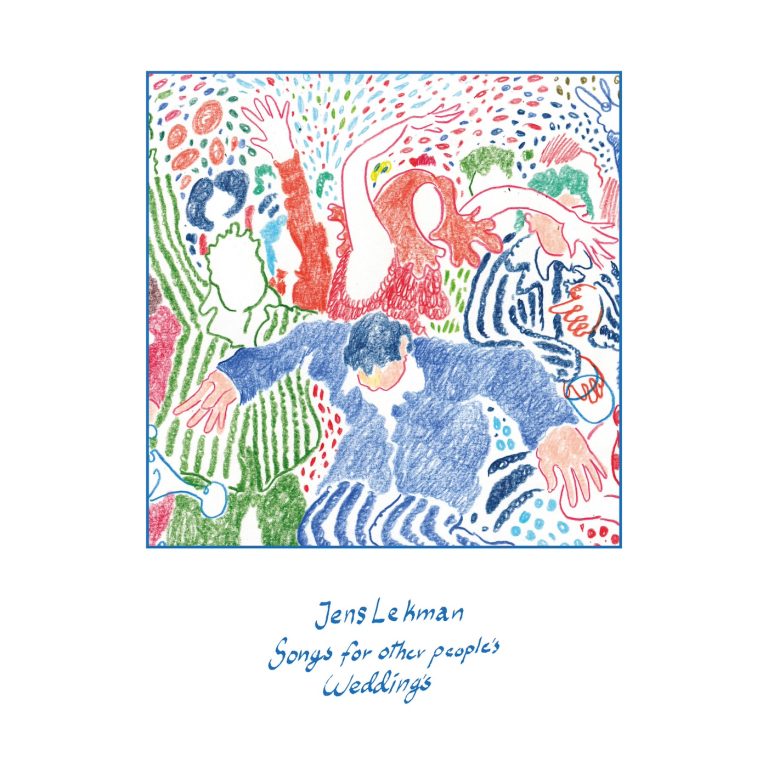
I write this to set up the point: writing a wedding song is no mean feat. So for Lekman to go a leap further and write a conceptual indie-opera (as well as co-writing an accompanying book of the same name with David Levithan) is admirable in its own right. Songs For Other People’s Weddings is a hefty undertaking like any full concept record of this sort should be, but it’s also equally charming and delightful all the way through. It’s an album bustling with all the tropes you would expect from the Swedish songwriter: winsome melodies as sweet as confectionary, engaging storytelling told with a smirk, the occasional quirky sample drop, and an undeniable focus on the heart (and heartbreak). Fully formed as it is, it’s easy to envision it becoming a full stage musical at some point down the line.
With 17 tracks to boot, there’s something to like in every corner: the 10 minute “Wedding in Leipzig” with its piquant riff that somehow never wears by the end; the soulful Scandi balladry of “I Want To Want You Again”; “Wedding in Brooklyn”’s fidgety brass and keys; the giddy excitement of new love captured with the jazzy horns on “Candy From A Stranger”. There are even forays into new territory too, from the balearic house of “On A Pier, On The Hudson” to the doomed melancholic folk of “GOT-JFK”. Inspired by the likes of the 1970 doleful concept album Watertown by Frank Sinatra and the Streets’ A Grand Don’t Come For Free, Lekman embraces the story element of the album, filling tracks with excursions, field recordings, extended outros, and transitionary music to help the story flow along.
While originally conceived as a 10-track album to accompany the 10 chapters in Levithan’s book, Lekman realised there was more to say and more gaps to fill. Inspired by the weddings he has spent a chunk of his career playing ever since he unintentionally offered his services on his 2004 debut album (some people took the title of “If You Ever Need a Stranger (To Sing at Your Wedding)” seriously), Lekman forges new characters to frame his tender, sweet, and charming musings on a relationship. The album’s central character, J, falls in love with V (voiced on the album by Swedish singer Matilda Sargren), and we get the dizzying highs (“Candy From A Stranger”), the cosy intimacy (“Two Little Pigs”), and the genuine gratitude and acceptance (“With You I Can Hear My Own Voice”).
On the flip side (and the album’s second half), as V moves to New York without J, we hear the relationship dropping away seam by seam. In an iconic Lekman-esque gesture “Increasingly Obsolete” has J “calling from the last payphone in New York” to represent his relationship falling away. Over 80s keys and a forlorn farewell, “You Have One New Message” see Sargren cut the life support between V and J. After that, what other song could there be to finish the album other than one called “The Last Lovesong”?
Lekman’s quips, anecdotes and sentiments have always been keenly observational and vulnerable, even when he’s leaned dangerously close to being clichéd. On Other People’s Weddings he toes that line just as precariously – but it feels that bit more deliberate. He can quietly indict the state of music industry through the existence of the album (“In the 2010s, when streaming made it harder to make a living from music, the wedding gigs became a way to get by financially,” he comments in the press release) and with a wisecrack (“After all, I make a fortune from my stream on Spotify” he jokes on “A Tuxedo Sewn For Two”). That some songs’ melodies edge tellingly close to familiar refrain’s from other love songs (“For Just One Moment” is a few notes away from being “Wind Beneath My Wings” and “Increasingly Obsolete” is a stone’s throw from Crowded House’s “Fall At Your Feet”) feels fitting; love doesn’t exist in a vacuum and nor do other people’s weddings. It takes from the world around and becomes something individual and personal, creating a new story, a new melody.
“Speak To Me In Music” captures it all best. A sort of real-time account of J meeting a couple and talking to them over coffee so as to get inspiration for their wedding song (something Lekman only did for a few couples in the 132 weddings he’s performed at to date; this album will no doubt help that side of things). As the charming story unfolds and the couple’s history surfaces after some awkwards silences, J lays it out: “If we’re gonna talk about love, let’s talk about music,” he leads as impossibly romantic strings enter and carry the song off on a musical daydream. After J says goodbye to the couple he confesses to himself that the song is written, but it isn’t for them anymore. It’s taken on new meaning, like any love song does. When we first hear a love song that moves us, it can tell us something about how we feel or help us recognise a familiar feeling with the person singing it. Over time it becomes something else: a warm memory, a reflection of a former self, or even a tainted anthem forever to be associated with someone we’d rather forget.
A couple of years after my friend’s wedding, she gave birth to her first child. When I met this new addition to their family, my friend told me about how she played my recording of her wedding song when she was in labour. “It helped calm me down and helped me breathe,” she shared. Needless to say, that wasn’t a way I ever anticipated the song to be used as, but it shows that love songs have power, even if they do change purpose over time. It’s why Songs For Other People’s Weddings strikes a strong chord: it shows us the change in how a love song can be perceived over 80 minutes and embraces this reality. Love changes like the love songs do, but they will always be there, serving a higher function than we perhaps realise. Lekman may have titled his 2012 album I Don’t Know What Love Is, which he would likely still attest to today. But if Other People’s Weddings proves anything, then it’s that he knows exactly what a love song can be, and wields that knowledge with an endearing power.