
David Stroughter was shot on January 18th 2017. He was suffering what can only be described a psychotic episode, resulting from long lasting mental health issues. On the day, he was behaving aggressively while driving in Westchester, Los Angeles, and ended up approaching an officer with an axe in his hand. He was killed as the consequences of a life on the margins, behaving erratically and getting arrested for volatile or indecent behaviour, as facilities meant to help not only failed him, but were never provided.
Stroughter’s story is one emblematic of the structural lack of empathy towards black and brown people in the U.S., and it would be but one vanishing in a sea of many, if there wouldn’t be a significant factor: David Stroughter used to be the singer of one of America’s most incredible shoegaze bands. Majesty Crush had a short stint, releasing only one album before their label folded and they were dropped by the senior company, but they garnered notable interest and support during their short existence. After a recent reissue campaign, the band is now being championed as pioneers of American shoegaze and are specifically noted for featuring one of the few black frontmen in the genre – and in alternative rock more widely. It is the tragic story of an immensely charismatic musical genius, whose identity clashed with the perception of cultural stereotypes in the alternative rock world, and who finally succumbed to ignorance, racism and demons he should have been provided treatment for.
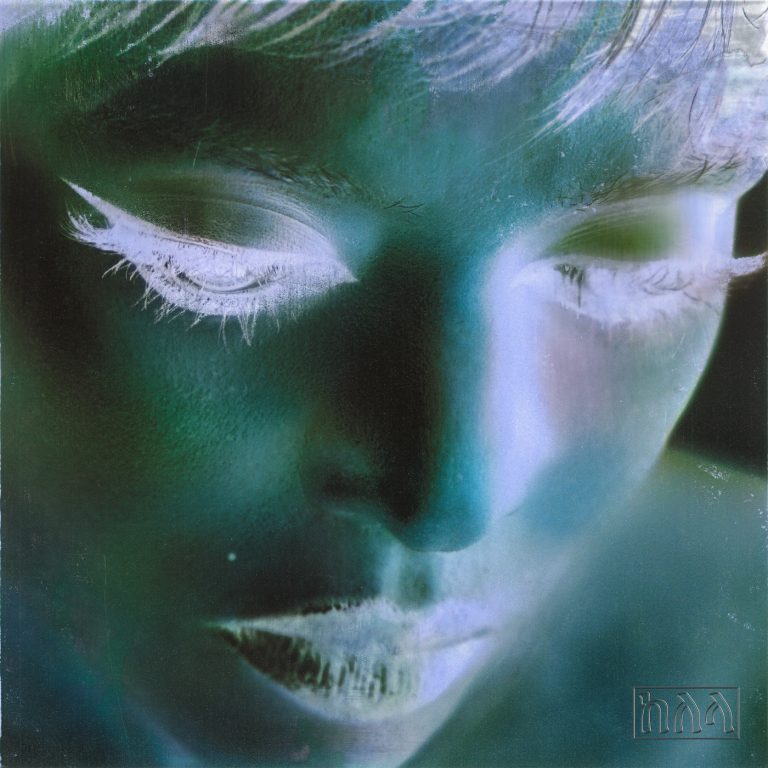
I was thinking of Stroughter while reading up on Kelela‘s intentions for her third album, new avatar. As you might have noted, we are big fans of her second album, Raven, which was voted our album of the year 2023. I perceive it as the best record of this decade so far, and considering its dense mixture of political philosophy, emotional expression and symbolist dreamscapes, her intentions for this new album seemed mandatory to access the work. Not that her work can’t speak for herself – being a Gemini with Pisces moon, Kelela is a master of emotional communication. But as she stated herself, she considers her music a cultural “bridge” of sorts, where her silken R&B vocals lure the listener into territories they used to shy away from.
In the case of Raven, this was directed at nocturnal dancefloors, imagining a hypnagogic landscape, where locations and bodies fluidly melt into each other, where identity becomes malleable and the membrane between dance and sex is as rudimentary as between waking and dream. new avatar is different to that: angular, and metallic, it finds a strange contradiction between sinister alleyways and brightly lit subway stations. Where Raven was interested in images of nature and vanishing boundaries, new avatar seems conscious of walls and windows, house fronts from which city life echoes. And again and again, the sound of a sole electric guitar in bedrooms. Indeed: everybody’s making rock music!
To Kelela, approaching R&B through guitars is no contradiction. Black music, she points out, was the origin story of the electric guitar, but furthermore, the vocalist also grew up in alternative spaces. A child of the 80s, she grew up with grunge, alternative rock and punk as much as with soul, rap and R&B. But then, hers was also the generation to face a business that marketed genre as racial divide. Black artists playing rock were not read as marketable, while Black genres were sidelined by radio and TV stations, dismissed as lacking complexity and layered artistic expression.
Kelela refers to this as “sonic racism”: survival is understood to merely be achievable through excellence – you have to be the best at what you do, because the world demands of you to prove yourself, or else. Or else? Or else you won’t be able to pay your bills, or else you lose the granted privilege to work artistically outside of low wage workforce systems, or else you lose your ability to stay sane, or else you end up on the margins of society, suffering from deteriorating mental and physical health, killed by a cop during a psychotic break. Be the best, or get crushed and be forgotten. Yes, I thought of David Stroughter a lot.
To white people, rock music has always been marketed as a personal political statement: sex and drugs were tools to unlock individualist self determination, to leave your parents’ values behind and boldly step into the world as modern journeyman. Adventurer, rebel, conquerer. A drunk white kid who smokes too much weed is just a nuisance; night off in a holding cell, dispatched back to his parents the next morning to receive a stern talking to – let the same kid be black, and the parents might get a cold call from the morgue, a week later. So rock evolved to not only allow illusions of escape, but provide safe spaces: clubs and bars and hangouts, where identity seemingly didn’t matter, so long as you belonged to the same free spirit. But then, that story remained a lie, as few spaces transgressed monoculture.
new avatar, Kelela expresses, is for the four black kids at the hardcore show that had to compartmentalise their identity and their emotional relationship to music they were being told they were not a part of. It’s articulating a space that does not exist: a realm outside the binary, where they can engage in a multifaceted experience.
It is interesting that new avatar is, ultimately, not quite as abrasive and noisy as this description might insinuate. Most of the compositional constructs of the album are delicate, translucent even, bringing to mind the y2k chic of iMacs. “retaliation lullaby” is a solemn ballad, held together by gentle guitar notes and submerged bass, centring on Kelela’s hushed vocals and framed by a thunderstorm. The weather contrasts her emotional stasis, as she bemoans a relationship where her partner has lost his libido: “And the water will run dry / Toss and turn in the bed all night / Wakin’ up to the rain outside / We take form in the early light”.
“point blank” continues the imagery of dried up wells as emotional exhaustion: “By now, I hope you see / That the bullet set me free / And the more I pour, the more you reap / And I’m too spent to weep”. To echoing, disassembled House beats, Kelela explores how her lover seems alienated and absent, unable to address her, or his, emotional states. Asked by a friend if the album was about one guy, Kelela shrugged: not really; men are just exhausting! Where Raven explored queerness as an emotional well, where expression ultimately breeds self knowledge and connection with potential soulmates, here heterosexuality is just posited as, well, fucked. The beats can’t even connect to each other: they just echo into emptiness.
“goin down” uses another masterful sonic metaphor for this stasis, slowing down an alternative rock song to the point where it almost becomes the vaporwave version of a Prince tune. Kelela sounds immensely angry when she confronts her partner: “Got me cryin’ all day, on my grind / Meanwhile you’re waterproof / And you’re sayin’ you’re so sorry / We know that’s overused / Then you tell me we’re fine / When you lyin’, it’s no use”. On “against me”, Kelela commits to the echoing drum sound familiar from shoegaze to express the struggle with communicating a dying love. The beats effectively become heartbeats and failed thought-forms. “crystalize” almost seems like a direct continuation of the song – not just because it segues right into it, but also because it explores the longing and emptiness that follows separation.
“linknb” turns this approach on its head, with a nervous, jangling indie rock riff, while Kelela merges the lead vocal with a muffled rap all the way in the background like a distant phone caller who tries to attack her verbally. It’s a brief segue, but was picked as a single, just like the soulful “idea 1”, which finds space as an electronic dreampop song.
Shoegaze has often been mentioned in the early discourse surrounding these two singles, but while they make ample use of distorted or atmospheric guitars, they seem more firmly rooted in the genealogy of Jimmy Hendrix or Thin Lizzy: heavy rock that is rich with psychedelic imagination. Of course, the children of these bands were the relayers of alternative rock and grunge, who found inspiration with the metallic hard rock of the 60s and 70s. But Kelela’s songs clearly aim for a different trajectory, for a more intimate and elusive atmosphere. This contradiction becomes clearer with each spin, as there is no genuine climax or catharsis in these two songs. They accentuate beauty, sensitivity and fragility as movements. Maybe this is where the comparison makes sense: Hendrix died at 27, Lynott at 36, both due to substance use. The impression of ghosts not as oppressors, but haunters comes to mind: something to express a past that was not allowed to fully embody itself, stay translucent, half-formed, mournful – a relationship with others, an identity repressed. Octavia E. Butler’s post-apocalyptic Parable of the Sower is mentioned as an influence, further elaborating on the sorrow and weight black women have to carry in a mad world that relies on their perceived strength as motherly provider and healer, banishing dark spirits.
Ironically, the electronic songs on the album sound much more evidently haunted. “outta time” is practically witch house, sinister and grim even when a sapphire guitar lead lifts it from the catacombs. A duet with A.K. Paul, the song dates back to the days of Take Me Apart – a bit of an orphan that seems strangely confused between the soulful “goin down” and the sparkling “against me”.
“don’t piss me off” goes further, expressly using UK Garage in the vein of Burial as sort of a war chant, accentuating the beats with hissing blades and a legion of ghost choirs. “the bridge” continues this sound, also providing listeners with a gorgeous guest spot from PinkPantheress, but introducing a more wholesome, romantic sentiment – the cavernous sound becomes associated with beating hearts and melting bodies. It’s not the only romantic track of the album: possibly the greatest track on new avatar; “new life forms” presents a duet with Fousheé as sparkling future RnB, all heavenly harps and synth layers. With its many images of shorelines and water, the song seems like an echo of Raven, exploring the transcendental beauty of utopian love.
Finally, the muffled and minimalist “if we meet again” closes the album off with a throwback to the brilliant “Better” off Take Me Apart. But where that song sought for compassion in separation, “if we meet again” feels more antagonistic: “You don’t try hard enough / Even when it’s easy and obvious / You don’t rock hard enough / You’re playin’ in my face, that’s why I’m givin’ up”. It’s a strong statement, coming from a Gemini with a Pisces moon, to dismiss somebody so clearly. But then, the composition itself feels on the lighter end of the spectrum – not quite as forceful as Kelela’s immense vocal delivery here requires.
Looking back at Kelela’s statements, it is quizzical that her exploration of the guitar as transgressive statement isn’t quite so transgressive as how, say, her contemporaries Soul Glo, L’Rain or Bob Vylan use them. And these are just three acts in a growing canon of bold, black rock acts that transgress genre boundaries. Kelela obviously is more interested in bringing guitars into RnB than adapting metal or hardcore onto her natural vocabulary, so this is not necessarily a critique – especially considering how gorgeous, deeply emotive and incredibly atmospheric new avatar is. But coming after two genre- and era-defining masterpieces that feel like they were brought back from some cyberpunk future, some of this album feels very contemporary and sombre in comparison.
Evidently, Kelela is hungry to explore the opportunities that indie and alternative rock can provide her compositions, how guitars add to and complement her vocals, but on some of the more traditional variations of this, it feels like a transitory state, a development that’s still being processed. However, when she uses this backdrop to convey an almost alchemical process – adding the recording of a thunderstorm, relying on filtered instruments as storytelling device or trusting the raw expression of distorted guitar chords to make way for her mute emotional inner world – these songs provide a revelatory experience. new avatar unravels with time, its concrete forms of distorted or broken rock and electronica sinking into the listener’s subconsciousness, as if the blank spaces within beckon to be filled with their own memories.
If Raven was about dreams and water, then New Avatar is about ghosts and air. It’s about invisibility, about being out of tears or spit or sex, about spectral memories and about speaking so many words that still say nothing. Frustration and exhaustion ultimately lead to grace – which marks a parallel to how the pain black people endured was transformed, through the sound of guitar strings, into an expression of resolve.
And in that, there is also a story of Kelela as contrast. When she speaks of black excellence as a mechanism of survival, the dark truth is that most black men who mastered it – Hendrix, Lynott, Stroughter – were abandoned and suffocated by the systems meant to empower them and foster their talents. Success meant just another form of endangerment to their spirits. Kelela’s perspective on new avatar is that of the voice that confronts their imbalances, their inabilities to reckon with these fragilities which black men have so often been told to dismiss and suppress. Her point of view is indivisible from how black culture has been moulded, by racism and oppression, into a heterogenous divide. And communication, something Geminis are so good at, is being passive aggressively rejected and withered. So if words don’t work, then the statements have to come through sensual, emotive expression, which ends up the same instrument and genre construct of those very men who failed in their struggle.
But unlike them, Kelela transcends the idea of preconceived notions. And every time she fully abandons those, instead making way for pure body music, her approach succeeds. And when these moments ring out into the ether, I think of David Stroughter, and I wonder where he would be now, if back then, some white label executives that made a hundred times the cash that he was awarded had believed in his vision, and provided him the care and understanding he’d deserved.
84%