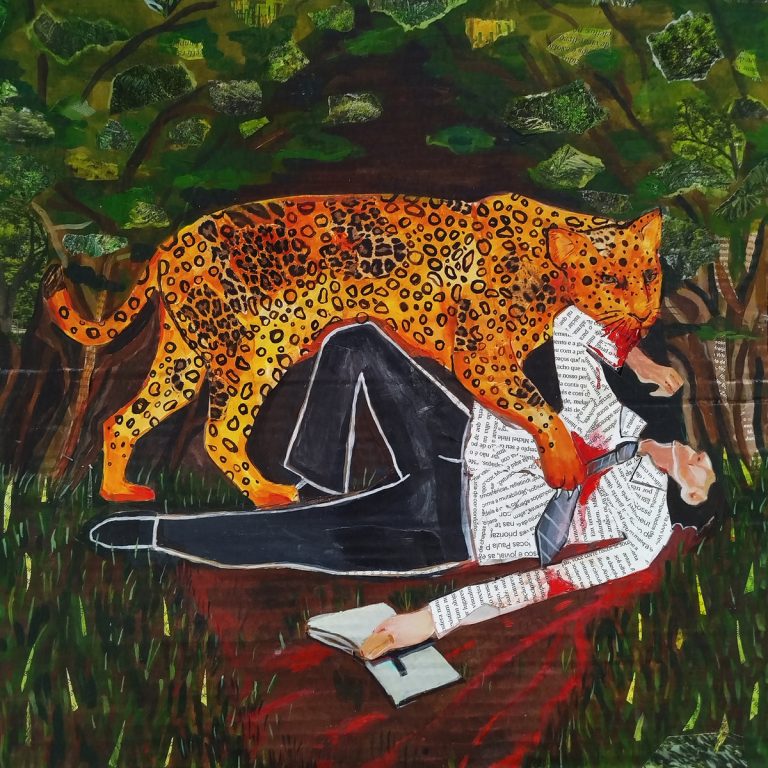

Lua Viana’s work under the Antropoceno moniker – the debut, Natureza Morta, and now second release, No Ritmo da Terra – merges transportive rhythms, metal-leaning guitars, and ambient elements (plus some shoegazey textures a la her alternate vehicle, sonhos tomam conta). Really, though, these albums are memorable for their energetic reconciliations. Morta represented a leap for Viana, a vivid intro to a refined brand of legerdemain, but with Terra, the Brazilian composer, musician, and producer strikes aesthetic gold, pairing a vision of Conscious Oneness with audial tableaux re: humanity’s toxic impact on the natural world.
The album exudes idealism, even child-like innocence, while remaining unflinchingly realistic. Terra, like Morta, fetes the wisdom and resilience of nature a la Ailton Krenak’s book, Ancestral Future, while also pointing to the postindustrial split, how capitalism and anthropocentric Christianity forged a model by which humans dominate and exploit nature rather than working in harmony with it. Viana pulls no punches in her critique of civilization’s ongoing betrayal yet refuses to relinquish her wide-eyed appreciation for beauty.
Throughout Terra, Viana draws on the grand themes of natural process, including divine involvement and evolution. With “Pe Rembi’urama”, she melds propulsive rhythms and celestial accents. Vocally, she moves between a hoarse urgency that would appeal to Tanya Tagaq as much as Chat Pile’s Raygun Busch and a triumphant melody that would get a bow from Helado Negro. The track integrates portentous, rumbling sounds and crystalline accents that flutter atop the mix, pointing to sunlight, space, possibility. Lyrically, Viana references destruction and loss as well as reinvention and eternality.
On “Avamunha”, airy field sounds are juxtaposed with weighty bass notes. Drums and percussion evoke warrior circles. Swirly accents conjure dragonflies and beneficent guides. “Ayaba Oxum” features a bouncy guitar and drum part, Viana trekking a line between celebration and prep for disaster. Midway, the piece grows more ebullient, carried by loose drumming that brings to mind otherworldly trances, astral travel, Castaneda’s mystical plunges, Jung’s archetypes, Cora Coralina’s “Song of the Earth”, throngs speaking in tongues, the rapture, the landing, the resettling of terra firma, humanity transformed – no longer driven by egoic self-interest but, rather, empathetic collectivism, operating as part of nature rather than nature’s keeper, judge, executioner.
“Oyá Dewo” is punctuated by Viana’s shrieks and growls. Apocalypse and rebirth are unfolding according to longstanding causes and conditions. Karma goes back to the Big Bang. Viana is in the matrix but not of it. She calls for acceptance, even lapses into resignation, but also prompts us to mine new intentions. “Futuro Ancestral”, with its loping percussion and wiry acoustic intonations, has a listener feeling that they better do something. At least give money to an important cause. Protest. Go work in the burning forest, the smoldering rubble. Sift trash from the ocean. Carry food, carry wood, carry water.
The 11-minute “Xe Anama (Coração no Ritmo da Terra)” underscores Viana’s talent for composition and pacing – stoking and tamping fire, to put it ritualistically – as she works with spaciousness, busyness, and lulling sounds contrasted with engaging melodic lines. Pressing rhythms and sharper melodies are introduced, then morph into starker interludes, which in turn are again fanned, erupting volcanically. The track closes with Viana shrieking – an amalgam of prayer, rage, desperation, and much-needed catharsis – a distorted guitar trailing into the protean night.
Viana observes the post-humanitarian and anti-environmental stances of the 2020s and crafts a manifesto-cum-call-to-arms. Where do we go from here? Can we corral our instincts, our viral infrastructures, the momentum of craving? Will we establish a more symbiotic relationship with our planet or remain stubbornly tethered to our parasitic and ultimately self-destructive ways? Built around mantric lyrics and exalted sonics, Terra fulfills the potential invoked by Morta, unfurling as an artistic, spiritual, and activistic triumph.