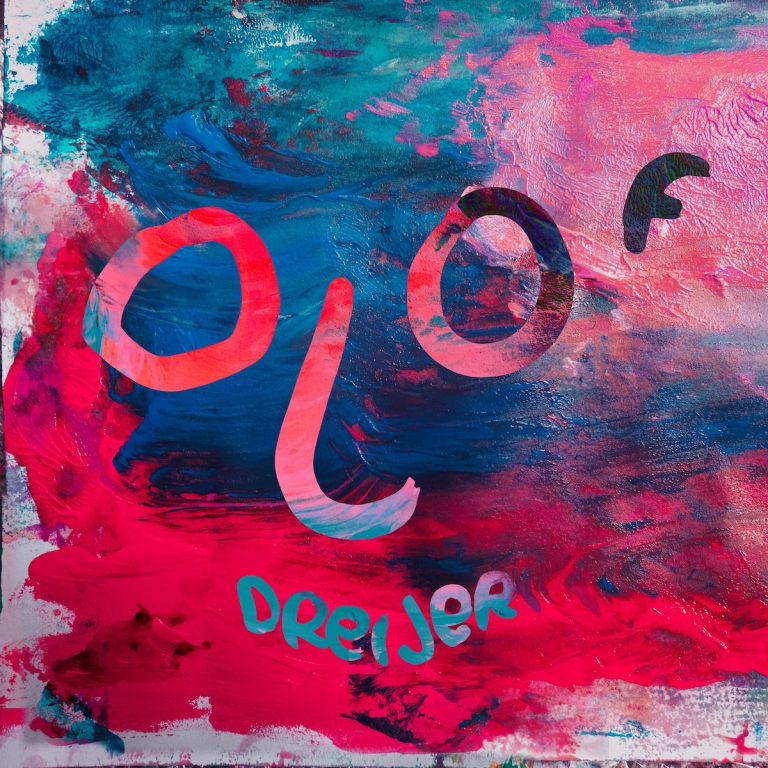

Olof Dreijer does not believe in constants. The Swedish musician lives and creates in a way that encourages – if not demands – change and adaptability. He finds music that tickles the dopamine hit of pleasure from dancefloor music, but also veers off into excursions for the sake of finding something new or a greater purpose. He pursues passion projects that bolster the community around him: he produced music for his sibling under their Fever Ray moniker, remixed big names like Björk, Rosalía, Röyksopp, and Robyn, and is beckoning in a new generation of musicians by setting up a music school in Berlin for refugees while also teaching creative music production to immigrant kids in his native Sweden.
His debut album, Loud Bloom, is almost fashionably late as he pursued all these avenues while also being a rally against the expected; there’s no wall of bangers from start to finish here. “After taking a break I’m very happy to have arrived at allowing myself to just have fun with my own music again,” Dreijer elaborates. Dreijer asks you to meet him in the middle and then take his hand as he takes you to a different place altogether.
If Loud Bloom were a tour of the club, it’s Dreijer leading you through every single room of the venue; from the sweaty dancefloor to the seedy bathrooms, from the quiet bar to the smoking area; from the fluorescent sterility of the staff room to the ignored janitor’s closet. His music is akin like little else; his synths sound both like retro video games and Cthulhu-like. Warped notes whip like tentacles and bend like they are entering alternative dimensions. It manages to simultaneously sound both organic and electronic, a hybrid entity growing arms and legs, spreading like wildfire.
This is music for the dancefloor, but Dreijer finds glee in playing with expectations. Loud Bloom is a hefty 14 tracks, running some 75 minutes. The first half can almost feel like a red herring, an amorphous selection of energetic, vibrant, and colourful tracks (which includes reworkings of singles from the past years). On the second half the comedown arrives as Dreijer tries out “microtonal and calmer jazzy improvisations and explorations”, offering something of a photo negative to what came before. It’s a bold move, but one that feels personal to Dreijer: it’s him wearing inspiration from the likes of Nigerian author Akwaeke Emezi proudly on his sleeve while also pursuing the seed of interest that germinates upwards and outwards.
And Loud Bloom is undeniably interesting to follow the branches of as it grows, from the pregnant bass tones and sun-kissed aura of “Plastic Camelia” to the itchy low end workout of “Blood Lily” to the soft sway of “Coral”. The synth tones are undeniably Dreijer’s own and comparisons to his work with his sibling Karin as The Knife will be rife. Opening track “Rosa Rugosa” could well be considered a cousin of the work from Shaking The Habitual while “Iris” begins with what sounds like the same clicking rattle of Silent Shout’s “Marble House”. In both instances, though, the comparison only lingers so long as Dreijer takes the tracks on their own journey; “Iris” in particular whiplashes into flashes of strobe light synths, jittering like the whole thing was suddenly injected with pure caffeine.
When guest vocalists take the spotlight the individuality of Dreijer’s work is also given more opportunity to shine. His desire to challenge the persistently white, male, Western dominated homogeny of the music scene has him looking outwards for fresh inspiration as well as bucking the trends in the textures and tones he uses. Cairo-based Sudanese singer MaMan brings a sweetness to the festival-ready “Echoed Dafnino” while Colombian MC and percussionist Diva Cruz’s spot on “Acuyuye” proves an injection of vitality in an already feverish run of tracks, playing up against Dreijer’s playful electronics. South African MC Toya Delazy sings in both Zulu and English with a sultry allure on the house-infused “Makwande.” Dreijer isn’t without his own voice though; just listen to the playful way he manoeuvres the synths like he himself is singing through them on “Rosa Rugosa” and “Plastic Camelia”.
The contrast in energy between the two sides of the album won’t work for everyone. The eight-minute “Fern Valley” is a soft electro-nylon guitar wander that is undeniably calming, much like the dying neon lights of “Verbena”. Both are pleasant and curious exercises but they don’t invite repeated listens like tracks from Loud Bloom’s infectious first half. Shorter excursions like the jagged “Lantana” and buoyant “Laurel” feel like a pause from the thump of the dancefloor with their brevity, a gasp of air and space away from the crowded bustle of tracks like “Acuyuye” and “Iris” while “Coral” goes to marry both sides and feels like a gentle reintroduction to the festivities.
Like its title, Loud Bloom is undeniably a blossoming. It’s a flourish of individual style and a record of following your gut for what feels right; some of the tracks might not work for everyone, but they work for Dreijer. This is a document of his progress and evolution as an artist since his early output in the late 2000s under the Oni Ayhun moniker (just listen to how vividly different his beats are here compared to on tracks like “OAR003-A”). If there’s one consistency in his music, then it’s that Dreijer has consistently found ways to represent himself. Like with all of us, that’s an ever-changing thing. Humans are not static and Loud Bloom is a testament to that.