In 2011, Zack Snyder released his first original movie, Sucker Punch; a strange and unique vision if there ever was one in mainstream action filmmaking. Set in a highly stylised version of the early 1960s, the story follows a group of young women trapped inside a mental asylum that, through the perspective of a troubled teenage girl, morphs into an upper class brothel, where the girls are forced to perform elaborate musical numbers in the guise of glamorous showgirls to a leering audience. Doubling the imaginary layer, the protagonist further envisions the dance numbers as action-film fight sequences, which function as symbolist retellings of her trauma: performative physical expression that is usually reserved for men. Dismissed by critics and initially misunderstood by mainstream audiences, the film was widely touted as “the end of cinema”.
In 1995, the dutch enfant terrible Paul Verhoeven released his follow up to what was arguably his career peak, the moody and sardonic neo-noir Basic Instinct, with the technicolor epic Showgirls. Chronicling the rise and fall of a stripper that catches a ride to Las Vegas with dreams of becoming a stage dancer, the film plays out like the campy, big budget Hollywood movie Rainer Werner Fassbinder could have attempted, had he lived longer. Unapologetic in its raunchy, steamy tone, it invents a national landscape of ultimate artifice, where exploitation is the consequential outcome of the American dream. Dismissed by critics and initially misunderstood by mainstream audiences, the film was widely touted as “the worst film ever made”.
You see the pattern? Filmmakers have used showgirls as a feminine inversion of the traditionally masculine coded heist genre. Both are surgical observations on the role of gender within working class ambition and grind. They chronicle protagonists that come from nothing and chase a dream, coupled with the myth of the ‘last big work’, the masterpiece that would define their legacy among peers. But once the top is reached, the fall from grace follows. The involved parties are dispatched via the unforgiving meat-grinder of society: the overseers – cops, pimps, directors – are chasing the transgressors down mercilessly, all while your best friends and understudies betray you for a bigger cut, or rat you out to save their own skin from being up next, all while your nemesis is waiting behind the curtain to finally rise and take your place. It’s just that the men who plan and execute the heist do so cloaked in shadows and silence, their audience exists only through the screen, while the women can only achieve their goal in the bright lights and deafening noise of a stage. They vicariously live through the appreciation of their audience.
Because the dynamic of their success is sharply contrasted by the threat of a return to life in poverty, the story of the showgirl is inherently anti-capitalist and about the working class condition. However, the two visions I mentioned were also rejected because they deal with a complex association of the eroticism that comes with total emancipation. The camp and heightened sexual entendre both films portray is in stark contrast to the daily violence its protagonists accept as normal. Both works embrace that ugliness is an inherent and dominant part of relationships which, ultimately, are the basis of power structures. These narratives argued that escape from those prisons is only probable when embracing the status of a pariah to the male power complex – as a consequence, the films themselves were dismissed viciously. Too sardonic and subversive of the imperial aesthetics associated with Hollywood narratives, it took an audience to re-assess them through the gaze of marginalised experience.
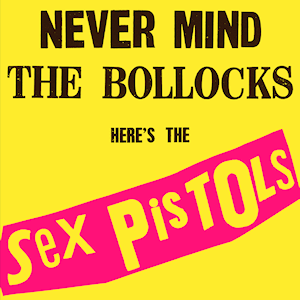
This is a necessary introduction when we look at Taylor Swift‘s presentation for her 12th album, The Life of a Showgirl. Helmed by fashion photographer duo Mert and Marcus, the album’s artwork cycles through multiple eras of showgirl iterations – if you will, a journey through the decades, from the high times of the Moulin Rouge to the BDSM-inspired grit of 80s eroticism. At the centre of the many images is the “official” album cover, with Taylor Swift in a cyan bathtub, her face submerged to her mouth in dirty water. Her pose somewhat vaguely reminiscent of Marilyn Monroe’s famous Playboy-mag shot, the image suggests a sinister connection between glamour and the macabre. Swift looks about to submerge and drown, the inviting gaze of her eyes on the verge of slipping into the spell of sleeping pills – not so much a girl in amber as one in formaldehyde or resin. The title of the album is hovering around her in sickly orange glitter, cut out as an echo to the era-defining look of Never Mind the Bollocks, while sharp-edged pieces of the image are scattered like a broken mirror.
The symbolism of this approach is most realised on this CD-variant image, which has a melon-yellow Swift climbing across theatre seats, almost a direct reference to the iconic image of BOB climbing over the sofa of the Palmer household in Twin Peaks. The assemblage of the cutouts leave no doubt that the image is supposed to represent a broken mirror, dark Taylor climbing out through the gaping portal. In my review of Midnights, I observed and asked if Swift had become her own Laura Palmer, staring boldly into the flame, beckoning it to “walk with me”. In contrast, this image suggests an extension into the monstrous, announcing that a cosmic evil is approaching. Swift has used imagery of a dark twin repeatedly, especially in music videos. Let’s count them: “Style”, “Willow”, “Ready for it”, “Anti-Hero”… I could go on. Swift is always fractured in two: the person she perceives herself to be and the persona others force her to perform. The dark urge versus the shining example, the myth and the misery, the man and the woman, a constant yin and yang with the opposite a mirror reflection. If the glam-punk of the cover art is anything to go by, then this would suggest that, finally – like in the “Ready for it” video – the thin membrane between the audience and Taylor has been broken. The fiction is spilling out.
But where is the working class struggle of the showgirl in this? Swift is now a billionaire – not just successful, but a mogul of her own empire. The showgirls she embodies on the cover variants of her new album are in stark contrast to that: they live on the edge of poverty and trauma, portraying idolised femininity to a male audience that cultivates fantasies of them as reborn goddesses. In Showgirls, the aspiring dancers live off dry dog food; in Sucker Punch the girls are mentally ill hospital patients that are violated by their patron. That is the ‘life of a showgirl’ – can Swift relate to that? When advertisements came peppered with the slogan “Oftentimes it doesn’t feel so glamorous to be me”, it ended up irking a lot of fans. Read through the linked article and you will find a roadmap of our political day to day life, pointing to the economical downturn of the west and resulting empty bank accounts. There’s also the humble reminder that we are experiencing multiple, mind boggling genocides that are broadcast to our social media feeds daily, while media and politicians are content to do their best to cloak dissent as moral transgression, funding murder and atrocities with our tax dollars. “Why hasn’t Taylor said anything on Gaza?” has become an echoing sentiment on social media – but while that could be argued as too risqué, she isn’t saying much about the American downturn of the political reality into ‘we have fascism at home’-levels of dystopian terror either.
All this highlights a key contradiction of this new era. The focus on showgirl aesthetics, with Taylor in unmade hair and at times badly-fitting costumes, all heralding that we will get a dark, macabre look behind the facade, forgets that the facade is gone. When the reality in front of everyday people is autocratic terror, then a celebrity that owns more liquid capital than any of us ever will seems pretty unbothered. And anyways, hasn’t this ‘unvarnished, real, close-up inside look’ been the narrative of her previous two albums already?
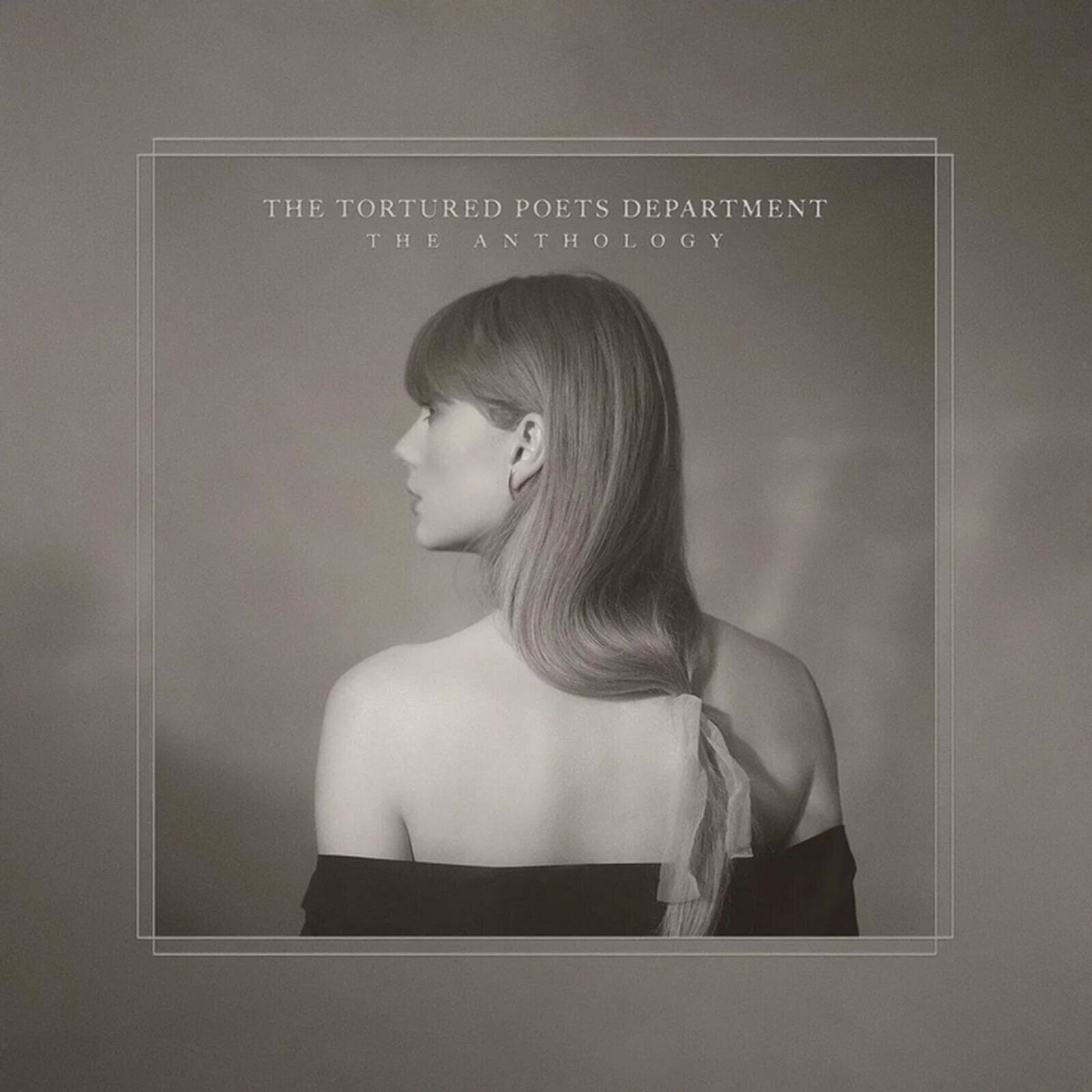
This isn’t meant to be a criticism, but a reminder that these topics will swirl inside of the heads of most people holding the album in their hands, prior to their first spin of any music. That there hasn’t been any lead single prior to the album’s release, no music video or indicator outside of artwork, multiplies these introspections. And hey, some of the variant covers absolutely lack the stark compositional qualities of The Tortured Poets Department artwork. Will this finally be her pop-punk record, which fans anticipated since the rumours of a ditched album titled Karma? Does the return of Max Martin and Shellback herald a companion to 1989 or – better yet – the edgy soft-industrial of her misjudged career-high Reputation? Will we get disco? Or a conceptual storyline record that follows a single character through the rise and fall of showgirl lifestyle, with the theatrics of a broadway musical? Is she gonna go BRAT? The opportunities seem endless, and (the main album) The Tortured Poets Department was so lukewarmly received that the bold topical imagery surely would command a forceful return to form.
If you wonder why I talked so much about the cover art, look no further than the album’s opening track, “The Fate of Ophelia”, which directly references the imagery of drowning in melancholia. Swift imagines herself as parallel to Shakespeare’s character, sleeping in a metaphorical bed of scorpions and succumbing to insanity in the second verse. It’s the best track on the album, reminiscent of Fleetwood Mac’s songwriting style, gifted with a nice instrumentation, singalong chorus and (always Swift’s secret weapon) a memorable bridge. If we remove Martin’s sonic palette to look at melody and composition, “The Fate of Ophelia” is a veiled country song – later on the album, this will become a recurrence. Much of The Life of a Showgirl is a country album that, aesthetically, is thinly veiled as pop. There is no real surprises here, and not many novelties – but let’s get to that later, and stay with “Ophelia” for, well, a throwback to The Tortured Poets Department.
One of my favourite tracks on that album was the moody “The Alchemy”, which I singled out as atmospherically and tonally impressive in my review. However, it has an Achilles’ heel: the mundane, prosaic lyrics about Travis Kelce. “Ophelia”, likewise, is quite transparent in its lyrical imagery: “I heard you callin’ on the megaphone / You wanna see me all alone”, she sings about his infamous podcast admission, before diving into “Pledge allegiance to your hands / Your team / Your vibes”. It’s uncharacteristically clumsy. The way Swift writes about Kelce is always bereft of depth or form – he’s the guy who lights “the match to watch it blow” before he “lit my sky up”. He’s the “gym teacher”, the frat boy in “So High School”. It’s like running down a list of terms, with no lyrical passion. In an interview, Swift singled out her writing as including contemporary imagery and terminology in the song as “new”, which is baffling, considering the lyrics of 1989 or Reputation already did that with a more poetic talent.
Speaking of Reputation, “Elizabeth Taylor” could be an outtake of that album – maybe a little less futuristic than “Don’t Blame Me”, but similar in tone, composition, delivery and theme. It features the manic speak-singing style that has become a signature for Swift, paired with cinemascope pop that mixes orchestral instrumentation and electronic beats. Lyrically, it’s a love song that feeds into Swift’s trademark paranoia of being hated and used as industry stepping stone: “Be my NY when Hollywood hates me / You’re only as hot as your last hit, baby”. It’s familiar territory. For the better or worse, these two songs are the blueprint for the rest of the album: after all the speculation, The Life of a Showgirl turns out to be a modest pop album about domestic bliss and romantic inclinations in the pastel-coloured vein of Lover. This becomes clearest with “Opalite”, which concerns itself with Swift’s past oeuvre, such as colour theory and ghost-imagery: “I thought my house was haunted, I used to live with ghosts”; “Sleepless in the onyx night / But now the sky is opalite”. This track is the most Antonoff-sounding, with an alt-pop gloss and a chorus that is an inversion of the upward arpeggio in “You need to calm down”. The verse is vastly superior to the chorus here, as the latter kind of ruins the mood the former sets in favour of a quirky TikTok hook.
It gives me no joy to point out that “Opalite”, the album’s third track, marks a cutting off point. From here on out, things become, let’s say, strange, and not in the Lynchian ‘BOB climbing over the sofa’-way. “Father Figure” follows, a track including a George Michael writing credit, suggesting it could feature as much as a sample of the classic track. And then, it… does not. At all. After about an hour of analysis, the best I could find is that the two tracks have the first line of the chorus in common, but not even that is true: Michael’s is “I could be your father figure”, which he performs in a manic, monotone way, dropping an octave down on “Father Figure”, his voice characterised by an erotic and breathy inflection, while Swift sings “I’ll be your father figure” in a high, quasi-falsetto tone, which drops down on the last syllable of “-gure”. Her performance owes more to the Bee Gees than Michael. Every other element of instrumentation, composition, melody or lyric seems to lack any detectable likeness. This is baffling, until one remembers the drama around Olivia Rodrigo retroactively attributing writing credits to Swift. Indeed, in a Vulture piece, Zach Schiffman speculates openly that the credit could be a veiled jab at Rodrigo, also tying it to the Poets Department closer “Clara Bow”. Swift obviously has cast herself as the vengeful power player who comes for her perceived enemies before. But is it that jarring to see the song as nothing more but a reflection on male industry machismo? After all, when Taylor sings in the chorus “I’ll be your father figure / I drink that brown liquor / I can make deals with the devil because my dick’s bigger / This love is pure profit”, the words eerily resemble the tone found in the leaked emails of her father Scott Swift.
But “Father Figure” is even stranger in light of the transparent diss track on the album, “Actually Romantic”, whose title is already being canonised as a reference to “Everything is romantic” by Charli xcx. It is speculated to be a response to “Sympathy is a knife”, as the BRAT track potentially addresses Swift. “Actually Romantic” can be considered noteworthy on this album. First of all, this is Swift’s first straight up attempt at a pop-punk song (there’s another one coming down the line) and by all purposes it lifts the riff from “Where is my Mind?” by Pixies! I cannot stress enough how odd it is to credit George Michael on a song that does not even have one line in common with its supposed inspiration, and yet to find another one on the same album that directly recreates possibly the best known punk riff of the 1980s without any acknowledgement. Ironically, “Actually Romantic” ends up having more in common with Weezer’s dirge “Beverly Hills”: it’s lacking in bite, both in production, delivery and lyrical volatility (for a diss track), sounding more like a polished but skeletal demo you present to a co-producer or play to a friend. And what even could be the most savage diss here? That Charli is doing coke, or that she’s “Like a toy chihuahua barking at me from a tiny purse”? Because those two are about it when it comes down to verbal confrontation, and both fall flat. Considering that Charli is significantly less well known than Swift, maybe that’s for the best: “Sympathy is a knife” was meant to elaborate on insecurities when confronted with more successful women within the music industry and how success breeds paranoia. It wasn’t a song about Swift, it was a song using the presence of a figure like Swift to allow insight into Charli’s struggle of being constantly paired against more successful women.
Still, this isn’t the most quizzical of all things with this song. During the bridge, Swift asserts that Charli’s perceived jabs feel like flirting to her, closing with the line “It’s kind of making me wet” to a feedback-assisted break. Now, anyone familiar with the fandom war about ‘the gaylor theory’ as presented by the New York Times will perk up, as Swift’s team famously and viciously shot down any speculation on her sexual orientation. I quote: “This article wouldn’t have been allowed to be written about Shawn Mendes or any male artist whose sexuality has been questioned by fans”, the representative states, ignoring the multitude of articles centred on George Michael, Morrissey, Ricky Martin, David Bowie and Freddie Mercury over the years, disputing that Swift had incorporated flirtatious ‘hairpin drops’, aka veiled references to possible queer imagery. Now, let alone that there’s nothing wrong with being queer (not to mention that sexual flexibility and experimentation is deeply ingrained within the society of 2025, with most of Swift’s closest friends being openly bisexual or queer), it’s borderline comical how, one year after Swift’s team came for a New York Times piece with the response of ‘how dare you?’, Swift herself drops a ‘Charli diss track’ that has her openly say she “is kind of making me wet”, all while sounding like the first draft of an Olivia Rodrigo song. I’ll leave the discourse to Reddit, but will just add that sexual desire can – and in fact should – transcend any preconceived notions people have, as human beings are complex creatures and all this debate and speculation about something as fluid and emotional as sex is, frankly, silly: let people enjoy what they enjoy.
And Taylor is quite frank about what she enjoys. On “Wood” – a song that does not credit The Jackson 5, but is quite clearly an interpolation of “I Want You Back” – she expands on Kelce’s dick, and what it does to her. You dont believe me? “Forgive me, it sounds cocky / He ah-matised me and opened my еyes / Redwood tree, it ain’t hard to see / His love was thе key that opened my thighs”. Yeah, I’m not sure if the “Penny” she mentions in the first verse references coins, because: it’s all about “wood”. Remember when I mentioned how prosaic and lacking in poetry her writing about Kelce is?
Continuing on from here, “CANCELLED!” (all caps and exclamation mark) is yet another song which feels oddly derivative, almost directly following Lorde’s “Yellow Flicker Beat” in its composition and bringing back the slight pop-punk pinch of “Actually Romantic”. The song seemingly addresses the Blake Lively controversy, as Swift observes a contemporary who is cancelled. I won’t kick down on the lines “Did you girlboss too close to the sun? / Did they catch you having far too much fun?”, they are already widely ridiculed. Instead, let’s focus on the chorus: “Good thing I like my friends cancelled / I like ’em cloaked in Gucci and in scandal / Like my whiskey sour / And poison thorny flowers / Welcome to my underworld / Where it gets quite dark / At least you know exactly who your friends are / They’re the ones with matching scars”. I’m not sure if Swift is reflecting on herself in the wake of the Kardashian/West fallout here or extending a hand to Lively, but it’s all rather descriptive and strange for the biggest and most beloved pop star of our era. And even dismissing the Lorde comparison I made, the song sounds all too close to “Don’t Blame Me!”, without the manic, desperate, drunken energy of the former, which made that one of Swift’s most resonating tracks.
I don’t want to sound all too negative, there’s some very listenable pop songs here, still. “Wi$h Li$t” is a somewhat flavourless, but pleasant synth-track that could have been on Lover, expanding on the bliss of domestic life in contrast to fame, while on “Ruin the Friendship”, Swift returns to her country-pop songwriting style for a retrospective meditation on the missed chance of pursuing a romantic inclination with a friend – something we all likely can relate to. Tragically, the story ends at the grave of the friend: “It was not an invitation / But I flew home anyway / With so much left to say / It was not convenient, no / But I whispered at the grave / Should’ve kissed you anyway”. While far from Swift’s most impactful track, it’s still really enjoyable and she strikes a chord: “My advice is to always ruin the friendship / Better that than regret it for all time / Should’ve kissed you anyway / And my advice is to always answer the question / Better that than to ask it all your life”. The Swiftologist in me also wonders now if “Bigger than the whole Sky” – the eulogy and standout outtake from Midnights – might be related to this story.
There is also the – for Swift always especially important – fifth track, “Eldest Daughter”, a quiet piano ballad that opens up to some intimate confessions. As a composition, it never reaches the strength of previous “track fives”. Sadly, as with many other tracks on the album, the lyrics are a weak point here: “Everybody’s so punk on the internet / Everyone’s unbothered ’til they’re not / Every joke’s just trolling and memes / Sad as it seems, apathy is hot”. It is, however, interesting to see Swift admit the control trauma has over her: “You know, thе last time I laughed this hard was / On the trampoline in somebody’s backyard / I must’ve been about eight or nine / That was the night I fell off and broke my arm / Pretty soon, I learned cautious discretion / When your first crush crushes something kind / When I said I don’t believe in marriage / That was a lie”.
It’s one of the more therapeutic moments on the album, as Swift nakedly observes her often addressed paranoia and distrust in those closest to her. Like “So High School”, Swift admits that this current love takes her back to a place only familiar from her youth (“’Cause I thought that I’d never find that beautiful, beautiful life that / Shimmers that innocent light back / Like when we were young”), giving new meaning to her perspective in “Seven”, where she serenades the uncompromising innocence of children.
The sentiment continues in “Honey”, yet another pop song in the vein of Lover that is rooted in country songwriting. Extrapolating on nicknames, such as “honey” or “sweetheart”, Swift observes how derogatory those terms can be, and how transformative the meaning can become, when it spills from the lips of a lover. The titular closing duet with Sabrina Carpenter is similar in aesthetic to “Honey” and aesthetically could have easily fit on Lover – curiously, the song is evidently very similar to the Jonas Brothers’ “Cool”. It features one of the few memorable bridges on the album, with its slightly Broadway strings leading to a piano break, but how to assess the song critically when it is yet another obvious interpolation of a well known, popular track? Carpenter is doing fine at what she does best, but it is merely a guest spot and not a standout. It throws the focus back on the lyrics – which are solid enough, but inconsequential in their straightforward narrative and bare rhymes: “Her name was Kitty / Made her money being pretty and witty / They gave her the keys to this city / Then they said she didn’t do it legitly”. The rhymes are as clumsy as those of “Bad Blood” and the storyline is stale. It opens up a central question hinted at in the beginning of this piece: why again is this album called The Life of a Showgirl?
There’s something weird about this era – from the way Swift announced the album on Kelce’s podcast (possibly a nod to the domestic bliss theme that infuses most of the songs?) to the oddly misplaced showgirl aesthetic. The absence of any socio-cultural sensitivity on Swift’s timeline seemed to irk people before its release, but even ignoring the configuration of a strangely apolitical album in times of genocide and wannabe dictatorship (Trump presidency No. 1 gave us “Miss Americana and the Heartbreak Prince”, while Covid had her reflect on trauma with “Epiphany”), The Life of a Showgirl is the most unfocused album Swift has released since Lover. Considering the 2019 album was famously altered last minute and thus can be excused, it might even be her most unfocused work since her debut. I have been very critical of The Tortured Poets Department (which had the grace of an additional album of much stronger material complementing it after a few hours of existence), but that record had a moody, tonal density, which carried the weaker material of the 16 songs – not to mention the gorgeous physical artwork that it came with, which greatly added immersion. Even when that album really lost itself over long stretches, it felt like Swift had a clear plan in mind, a unified tone and structure, a vision. Midnights – which I still consider one of her best and most risky records, diving into niche genres and unvarnished self-analysis – is all the more edgy, thematically complex and noteworthy as an artistic project in comparison.
The Life of a Showgirl feels less motivated and less euphoric than those albums, at worst presenting what sounds like demos or interpolations of immensely famous tracks by other artists, without a clear referential red thread. An album where Swift plays dress-up, like Halsey did on The Great Impersonator, would have allowed for that, adding sense to the odd choice. Was the intention to create a similar work like Sabrina Carpenter’s genre-hopping Short n’ Sweet? Perhaps, but then where is the equivalent to the boisterous “Taste” or the vaporwave-shaped blockbuster hit “Espresso”? Max Martin’s punchy sound-theatrics, which made 1989 and Reputation so memorable and led to the iconic bangers on Red, are almost entirely absent, while Swift’s thematically dense and charming, witty diaristic writing style of her folk albums gives way for the strained metaphors many attacked on The Tortured Poets Department.
And once more – what does this have to do with showgirls, their place in society, their depiction in genre narratives? Swift barely even grazes the topic of feeling inadequate in light of PR glamour image making. The vision of a befuddled Gordon Ramsey, hands on hips, comes to mind, as he furrows his brow and whispers a dumbfounded “What the hell is going on?” Where is the spite, where is the drama, where is the sensuality? Where are the qualities that made Swift the biggest pop star of our times?
The sentiment seems to be shared widely. On the review aggregator Rateyourmusic, as of writing the album has a Swift career low of 1.74 out of 5, while the comments and opinions on social media are even more savage – yes, no memes to be included this time, they really are quite brutal. My fellow Swiftologist-friends were in my inbox this morning, all disappointed and confused, calling this – to quote a friend – “the end of her winning streak”. Some of the traditionally more sympathetic Swiftologists among the journalistic elite, too, have been quite rough on the record, from what the published scores and echo-chamber whispers indicate. Pitchfork has “Actually Romantic” embarrassing.
Swift – like Billy Corgan – has said that criticism often strikes her as reflective of personal shortcomings, which is rooted in our society propagating an educational system that indoctrinates children into ‘learning’ and doesn’t mean to actually encourage and mentor them into successfully developing skills and capabilities they show talent for. No, it’s pushed on us as a system that assesses a human being as either ‘valuable’ or ‘failure’ within society. That leads to a lot of trauma, and a lot of fuck ups. Swift herself has explained she felt constantly torn apart between wanting to be the over achieving A-grade student, but also to be invited to sit at the cool kids table with the weirdos, trying to please every conceivable observer. This leads to a difficult process, where Swift wants to win over the Alt-crowd, but has barely touched the avant-garde. Since folklore, it’s felt like Swift has slowly edged towards this crowd, collaborating with indie-darlings The National, boldly adapting more complex genre stylings and creating impressive physical packages that came packed with content. It all felt motivated by insight through critical introspection. And hey, if a consumer is paying 30 or 40 bucks for an artwork, then every single element released should be a deliberate choice.
Swift seemed to embrace that criticism of her works become a discourse, a public dialogue with the work itself, at best allowing reflection and inspiring future development of her artistry. But now, we see how certain publications have resorted to just handing out full scores to every Taylor Swift album, robbing her of an introspective motivation that is analysis based. This is especially bizarre when reflecting on the online response of Swifties to The Life of a Showgirl, who seem to be very torn and disappointed with the quality of the album. To paraphrase one commenter: Swift possibly needed a strong, guiding voice to bounce ideas back and forth, and in the end only found immediate approval. It’s surreal to see, but now the Swifties are in the ‘perfect 100’-scored reviews, asking: “Are you for real?”
In the end, it becomes palpable what could have been, how Swift could have used the showgirl trope as a rich symbol – of working class disenchantment, of the end of the American dream, of the uncanny valley that comes with male expectation of performed femininity, of sonic brevity and uncharted territory, of campy defiance to a heteronormative world… or how she could have simply crafted a more memorable album. Again, even its moody predecessor, which didn’t spawn a standout hit single, had a more perceptible vision. Where Showgirls and Sucker Punch got a ton of hate for being singular and unapologetic pieces of subversive mainstream art, The Life of a Showgirl comes across as dispassionate compositions accompanied by especially awkward lyrics. It feels as if Swift rushed the process, with multiple songs residing in an uncomfortable twilight, striving to depart from their country roots, but half-born in the process, confused how their structure manifests, searching for the signature punch Swift usually provides so effortlessly.
In a discography where even her initially assumed misstep – the edgy and passionate Reputation – has become a widely acclaimed and rightfully appreciated work, The Life of a Showgirl stands out as just confusing. Should, in hindsight, this turn out as a selection of ‘on the road’-composed pieces, which were quickly released to make way for a more daring and bold work, I would not at all be surprised. But until then, this is an album that Swiftologists will hotly debate as to what just happened here.