
A windswept beach.
Certainly not the summery kind. Picture some faraway piece of coast, so isolated as to have been essentially lost, only enjoying the occasional lucky passerby. It’s fall, or perhaps winter, and the icy waves slowly lap up the untrodden, weary sand. Clouds seem not to move, nor even drift, but to hover in the proximity of this forgotten, pained reprieve.
One could pass their days in worse ways than watching the world distantly revolve and pass by.
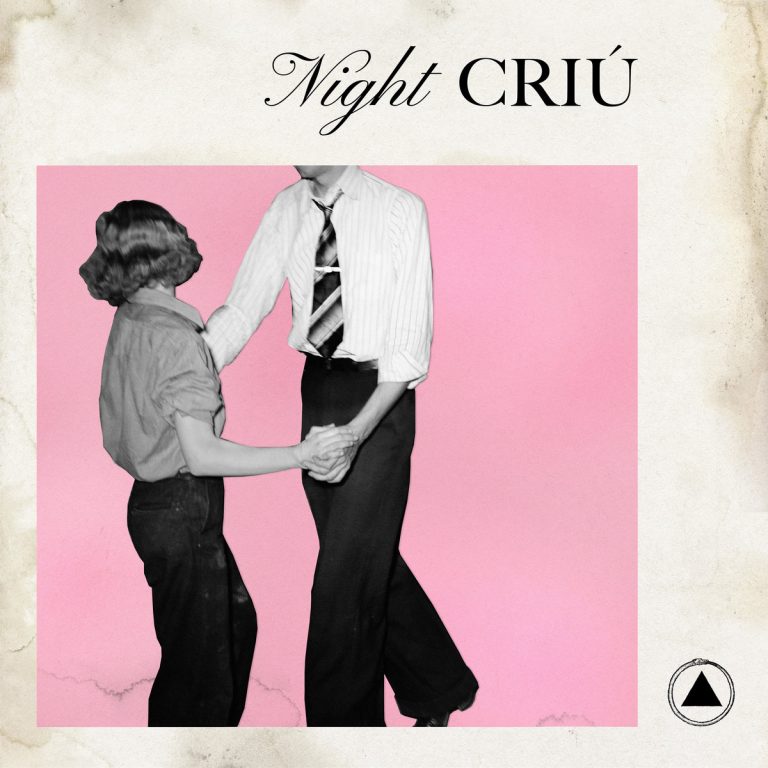
That’s what Night CRIÚ sounds like.
Hilary Woods hasn’t so much needed to perfect her sound; she stands among those precious few artists who seem to arrive already fully-formed; certain in purpose, feeling, and intent. There is a crystallized, hazy-hued beauty to Woods’ work; one intently clouded by weariness, a feeling of distant mourning, feelings kept just out of reach, yet plainly in view.
Thankfully, she has chosen to dwell in that world since her 2018 debut Colt, mining different pockets across several albums, drifting in a nebula between ambient pop, chamber music, darkwave, field recording, electroacoustic and more. I imagine she’d have little interest in defining her sound, I certainly have little in writing this (and I’ve never been particularly fond of “ethereal wave” as a descriptor). With music of this nature, so disinterested in boundaries, insistence on pinning it down to a category is reductive, not to mention lacking in imagination and limited in perception of the work at hand.
All that said, given her focus on the internal world she’s created, Night CRIÚ arrives feeling something like an emergence.
Indeed, the emotions on display are still furtive and inscrutably personal, yet the music here is the most tangible Woods has offered to date, the most vivid. Somewhat paradoxically, Woods’ lyrics have grown both more impressionistic and singular at once. While the feelings and words of Colt tended to be clear singer-songwriter depictions, her singing across Night CRIÚ tends to function more as shades of deep paint, giving a feeling more than spelling it out loud. This allows the listener to drift through their own emotions and thoughts, with Woods as their guide, their outlet, their conduit.
Her work has taken on an almost Socratic nature. As you lull through the album’s seven songs, you can practically picture the world that’s floating by your eyes. As ever, Woods is crafting a world, and through every layered vocal and measured musical flourish, this one feels distinctly lived in.
The album drifts between a children’s choir and the elderly throughout, using voices of different ages to add a generational juxtaposition and flowing, dense layers to the music. As things near a close with the penultimate “Offerings”, choral arrangements again distantly mourn, while a recorded speaker flits in and out, an organ steadily fades out: together with the concluding “Shelter”, it makes for an icy exit.
That beach remains, and we could have chosen to stay. Perhaps we should have. Yet, the unavoidable morning nears, and, unable to ignore it, we will allow it to pull us on; to return us whence we came, leaving these thoughts behind. It shall persist. We can only wait for evening, for the shroud to return, and for Night CRIÚ to beckon us back.