
The cross-pollination of black hood narratives and the avant-garde that was born in the 90s is a curious one. Many of the artefacts that survived the era seem like fever dreams, oddly psychedelic and gifted with the strong glow of counter-cultural perspective. Hype Williams’ “Belly” and Return to the 36 Chambers are good examples, existing in a twilight of poetic politics that defines itself through its raw, unvarnished emotional and aesthetic diversity. The roots go back and interconnect to many levels – from the black exploitation cinema of the 70s to underground pornography to funk and jazz record collections and, finally, the unique life experience in the shadow of the American dream. Those who survived are legends, but their works have arguably morphed into the realm of acceptable predictability – what was the last standout by RZA or Spike Lee? I guess – and this is my personal perspective – it’s impossible to stand the extreme tides of the transgressive experiences that fuelled those works for long. Either you get out, or you get dragged under. Either influences your art. There’s no easy way out.
The fact that Freddie Gibbs comes from Gary, Indiana – the former “murder capital of America” – seems like a logical influence on his particular flavour of gangster rap. Gibbs feels authentic and gritty, can effortlessly switch between different techniques and presents his stories of street life with a deep understanding of melancholia. Still, arguably his most incredible work is his collaboration with The Alchemist, 2020’s brilliant Alfredo.
Arriving parallel to Alc’s collaboration with Boldy James – the incredible The Price of Tea in China – Alfredo presented nocturnal, melancholic, at times shapeless music. Where The Price of Tea seemed rooted in late-night drama, peppered with news reports and weary stories of attempting to merge life as a father and drug dealer, Alfredo recorded the dreams that spun off from it: the edges softer, the images psychedelic, the instrumentals dissolving like smoke. A modern classic, down to the clever artwork that merges delicious fettuccine with the logo for The Godfather – I still can’t believe it didn’t make BPM’s year-end top 50 in 2020, but hey, it was the lockdown, we all missed out on something. Considering its now legendary status, and the Godfather reference, it should not come as a surprise that we finally got a sequel. The twist: it doesn’t sound like its predecessor.
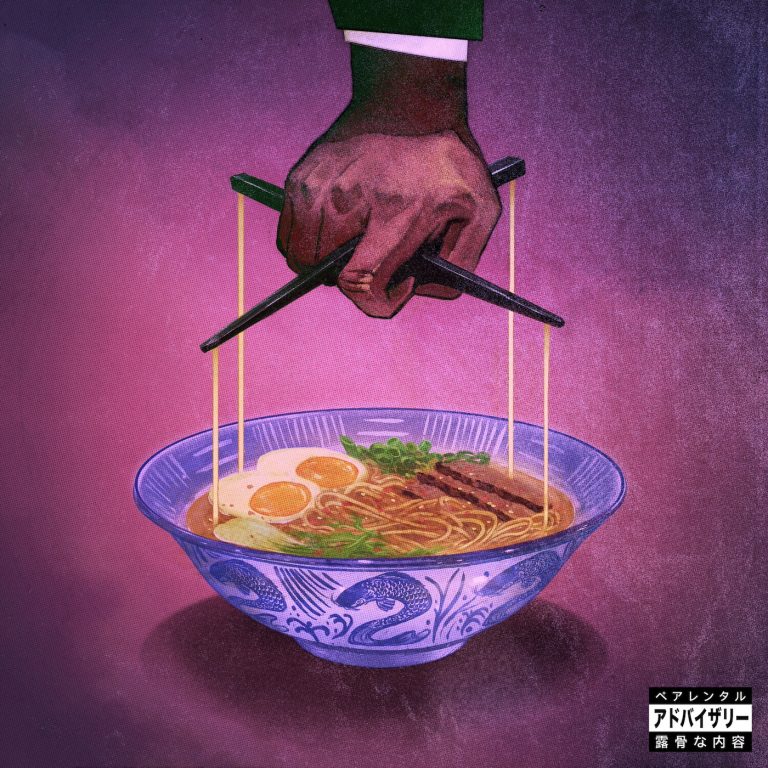
Alfredo 2 changes husky brown for bold magenta, the plate of pasta with a bowl of ramen. And where part one dove into oneiric journeys through the night, the sequel sounds like daytime. Breezy and relaxed, the album is more chill, accessible and sunny than the predecessor: it sounds like the boat that Tyler, the Creator imagines on “Something to rap about”.
The Alchemist delivers some of his best work in recent years here, often settling for jazzy fusion textures that seemingly range from the late 60s to the mid 70s. Tracks still occasionally dissolve and voices echo into the void, but this time it resembles how paint is washed away in water – directional and retaining presence, such as on “Empanadas”. Meanwhile, Gibbs delivers another tour de force performance, guiding his flow precisely and razor sharp through the dissolving structures. Sex, death and drugs occur like grocery store runs, but exist within the larger context of autobiographical severity, not unlike how Ol’ Dirty would frame his life. There’s a bit of tear to Gibbs’ voice here, which adds beautifully to the overall tone, magnifying his growth, both as an artist and in context of the scenes he describes.
At 14 songs and 48 minutes, the album is also much longer than the original Alfredo – but never comes across as overstaying its welcome. Highlights are plenty, from the already canonised “1995” – the track that sounds closest to the first album – to the eerie 80s-noir vibe of “Skinny Suge II”, from the pretty and romantic softcore of “I Still Love H.E.R.” to the retro futuristic and cinematic “Gas Station Sushi”, it’s impossible to find a single lesser track on the album.
But a track like “Ensalada”, which prominently features Anderson .Paak on the chorus and provides an incredible instrumental hook with its laid back guitar backdrop, seems a new standard of listenability in the collaborative union of Gibbs and Alc: this could be a legitimate radio hit that crosses into the mainstream. “Shangri-La” is another standout in that regard, recreating familiar millennial RnB-rap sound. And if that should worry anyone as sounding not abstract enough, a track like “Gold Feet”, with its sprawling piano notes and an incredible verse from JID, still is as refreshingly artsy and strange as the most formless experiments of the predecessor. And then there’s the warm “Jean Claude”, which incorporates the orange glow of Miami sunsets, as Gibbs ponders the “in and out” motion of the rap game in light of relationships and his crew – an absolutely wonderful track that could not exist on the more ominous and melancholic predecessor.
This leads to the big question: is the sequel better than the original? The fact this isn’t easily answered with “yes” or “no” showcases the strength of the two albums. There’s no up or down here, just… different. The switch from fettuccine to ramen makes sense in this regard: it’s not quite what you might have expected, richer in taste, with more ingredients and a warming, more nurturing and maybe even spiritual quality. Gibbs’ protagonist here is still busy on the street, but he’s settled into a more routine lifestyle that allows for relaxation and stability. There’s less paranoia, fewer shadows lurking. Instead, he references mystical imagery that marries the sacred with the profane – climbing mountains while high, an orgasm in church. There’s an idea here of the ultimate imagery of the American anti-hero. Where the predecessor seemed haunted by Scorsese’s mad insomniac Travis Bickle – journeying on the edge of reality in a nocturnal version of New York – the sequel portrays the impressionistic cool of Takeshi Kitano’s Yakuza protagonists: well dressed, laid back in the face of violence, colourful and deeply Zen.
Personally, and this is just my opinion: I do feel more at home in the strangely oneiric first album, with its vaporous tone and melancholic ballads. But there’s an easy argument that can be made that Alfredo 2 is more thought out, diverse, colourful and also more coherent – at times seeming like a cohesive concept record that tells one long story. And that doesn’t even mention what a great summer album it is. Just as with the Godfather films, picking a favourite between the two says more about the critic than the work itself. Because, really, this album is just as vibrant, innovative and exciting as Alfredo was five years ago.
85%