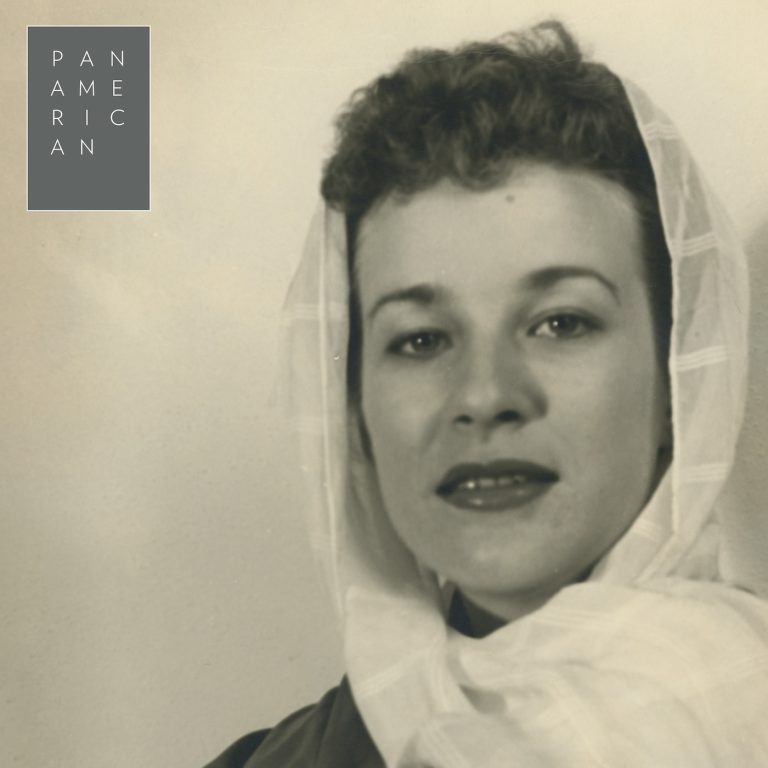

Whether as part of 90s torchbearers Labradford or under his Pan•American moniker, Mark Nelson can easily be considered as one of the architects of post-rock and its most innovative parts. He has proven adept at bridging the gaps between genres, covering everything from ‘classic’ prog to drone, ambient, post-modern classical and elsewhere.
Nelson started operating as Pan•American around 1997, at the same time as Labradford released Mi Media Naranja (in my opinion the band’s most accomplished album), releasing his self-titled debut the following year. Some dozen albums later, Nelson is still operating without any big pomp and still setting the pace for the constantly shifting genres and sub-genres whose boundaries he keeps on blurring.
All that is quite evident and still present on his latest Pan•American offering, Fly The Ocean In A Silver Plane. Memories have always been Nelson’s field of exploration, but instead of looking at them just through lenses that freeze them in time and place, through his music he seems to be trying to explore how they apply to what we are doing today and how they can help move us forward.
This time around he focuses on travel, as our method of movement through time and space. He explains:“Having experienced the arrival of my children, the decline and departure of my parents, and the many years of venturing out and returning home in my own life, travel feels like the perfect tropology to consider the mysteries we inhabit.”
And while on surface such a concept might seem easy to execute by using the well-weathered formulas that could be broadly deemed “cinematic”, there’s nothing simple about how Nelson here tries to be innovative and solely guided by his personal vision of thin. Even when you sense that there is something you think you recognize as familiar as exotica, Nelson presents a different aspect of how you can treat that concept, as he does here on “Heaven’s Waiting Room”.
This is the approach he takes throughout the album – everything might seem familiar but is not the same. All the elements of post-rock, krautrock (shades of Michael Rother’s guitar sounds), drone, ambient electronics, post-modern classical and what not else are there, but placed only in the order Nelson sees them fit together – and they do so captivatingly. Only the most innovative artists can take this approach and come up with the right results.