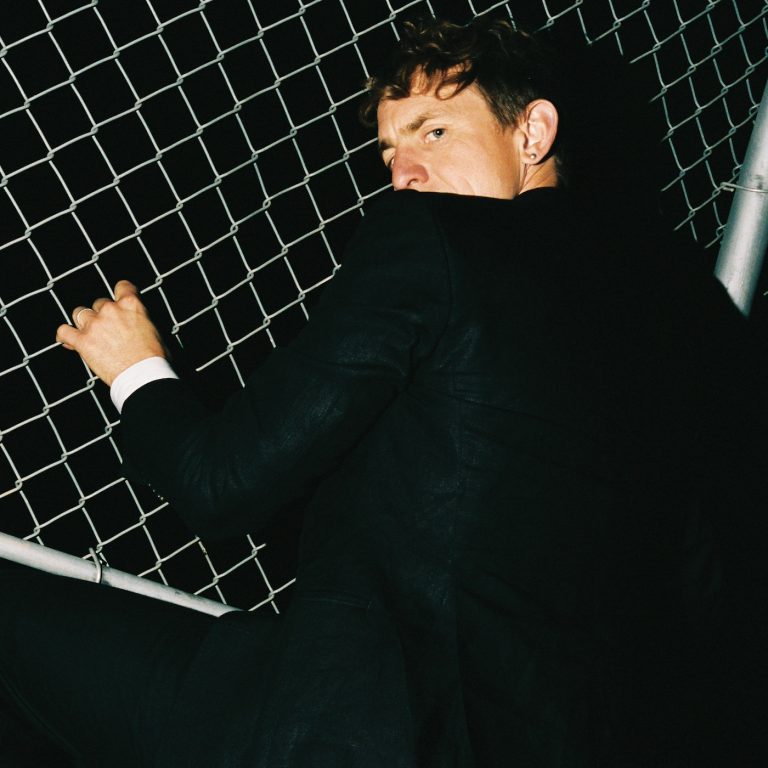

On his fourth studio LP The Mirror, Buck Meek outlines the sharp edges of love and how it forces one to reconcile with the self. A singular element of the Big Thief catalogue, Meek is very familiar with the collaborative process of creativity. On The Mirror, he has with him a group of well-seasoned musicians (such as Adrianne Lenker, Mary Lattimore and Angel Olsen) along with friends and family (including Adam Brisbin and Buck’s brother Dylan) to create an organic, collective atmosphere of warmth and innovation that Big Thief fans should revere.
However, this is the first time that the band’s producer and drummer James Krivchenia, who produced Big Thief’s dense and highly acclaimed Dragon New Warm Mountain I Believe In You, has piloted production on a Meek solo album. Like Warm Mountain, Krivchenia stretches and molds the organic fervor of The Mirror like Play-Doh, often accomplishing a sense of something that is raw, new, and exciting. All the while Buck’s crooning slices through the production like a butter knife, shifting the sound into something that feels less like Big Thief and more towards something distinctly Meekian.
As mentioned above, The Mirror first and foremost tells a (mostly chronological) tale of love. The hooky opener and single “Gasoline” ignites a spark of passion, portraying those first few moments of whirlwind-romance where the question of “who will say ‘I love you’ first?” and incoherent, emotionally-driven babble reigns (“Ooheeah laloooo”).
After this brief moment of lust and desire, The Mirror then turns reflective. On the second track, “Pretty Flowers”, Meek realizes, “The more I get to know you, the less I know of love”, and then asks “Is it science? Is it art? Can I learn to give away my heart?” On the following track, “Can I Mend It?”, Meek worries, “Can I make it whole? Now that you’ve seen the dark side of my soul?” These two tracks epitomize the album’s self-cultivating intentions, demonstrating how Meek is attempting to find and better himself by examining his own relationships.
The love story continues on “Ring of Fire”. Selfish intentions are tossed aside, commitments are promised, and futures are envisioned: “Would you be the mother of my child? / all my life I’ll sing and buy you things / like this diamond ring of fire, ring of gold / ring of highway road.”
But the self-bitterness returns on the catchy album-standout “Demon”, where Meek’s inner demons “crawl in the weeds again” and Krivchenia’s exquisite production teeters between clarity and dissonance. This von Trierian image is easy to identify with, as we sit with Buck in his “tunnel underneath the road” where he goes “to sing with echo echo echo”. Nobody is there to help him, yet he finds solace through his relationships: “Stole that last line from my friend / Tucker Zimmerman / The line between us all is thin” (Singer-songwriter Tucker Zimmerman being a long time collaborator, muse, and friend of Big Thief).
Other standouts like “God Knows Why” and “Soul Feeling” find Meek confronting himself head on. “Eat your heart our rock n’ roller / you can sing for god, you can sing for glory / but that don’t make you a holy man” he croons on the former. Krivchenia’s production shines on the latter with a glitched-out, fuzzy guitar breakdown as Meek attempts to understand how memory and existence give rise to a sense of his own essence.
It is worth noting that in a previous interview with Interview Magazine, Meek stated: “the more I’ve written, the more I’ve learned of the endless resource of our own experience, and just our own truth being an undying resource of creativity.” It is evident, with The Mirror, that Meek has fully embraced this style of songwriting. Most obviously on “Heart In The Mirror”, he admits he has feared critics in the past but swears to “try to dive and breathe underwater” and to “try to write a song that is not for others”.
The Mirror, then, is a promise to the self; it’s a record that exposes Meek’s weaknesses within his own relationships but at the same time acts as a safe haven for himself (and anyone else) to return to. “I’ll try to keep it for the times when I’m happy, for the times when I’m sad” he tolerably concludes, “It’s kind of outta body, I’ll keep it for that”.