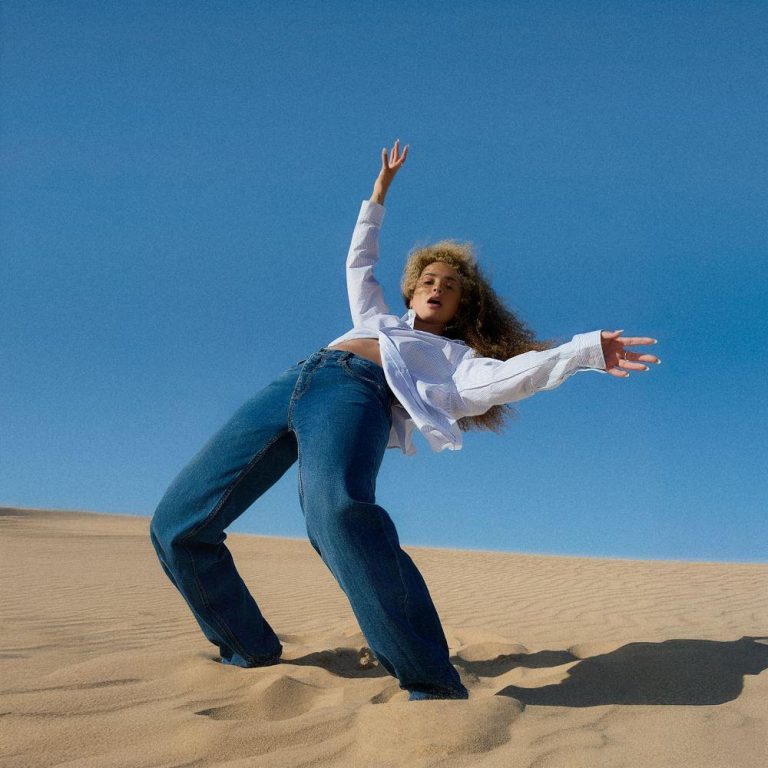

After nearly a decade without an album of her own, Ella Eyre returns with everything, in time sounding like someone who has lived a little, lost a little, and learned how to be honest about both. Her second album doesn’t try to reinvent her. Instead, it reintroduces her properly, as a vocalist with weight, a writer with patience, and an artist no longer chasing the logic of old pop machinery. It opens with the title track and closes with a fragile demo, a quiet framing device that mirrors the album’s real intention: intimacy over spectacle.
The long gap between albums wasn’t cosmetic. Eyre rebuilt herself after vocal surgery, left a major label, and moved toward a more self-directed path, landing with PIAS and taking her time to shape new material. You can hear every bit of that recalibration. Her voice is thicker now, grainier around the edges, and she leans into that texture rather than smoothing it out. The album’s early singles, “head in the ground”, “high on the Internet”, “kintsugi” and “domino szn” laid out her new priorities long before the full record arrived: quieter storytelling, fewer high-gloss tricks, more emotional ballast.
The opener, “everything, in time”, is a gentle declaration of intent. Built on warm drums and flickering guitar, it repositions Eyre as an interpreter of small truths rather than a hitmaker. She keeps that tension alive across the record. “head in the ground”, with Tiggs Da Author, is an elastic, gospel-tinged groove; “kintsugi” picks at the process of repairing yourself without sentimentalising it; “high on the internet” feels like a soft recoil from performative connection. Eyre writes plainly but not simplistically, the specificity of her details carries more weight than any tidy aphorism could.
Not every track hits with the same force. Some of the mid-tempo pop cuts in the centre of the album drift toward the expected; they’re well-built but familiar, the kind of songs that anchor a record more than they define it. At times you sense her holding back when she could push harder into the rougher, more soulful edges she clearly thrives in. Still, those safer moments feel less like filler and more like recalibration, the sound of an artist reacquainting herself with her own voice after years of being pulled in different directions.
The album’s real strengths arrive in the small, human spaces. “little things” is quietly devastating, a song that slips up on you with its candour. “space”, which predates the album, has only grown stronger with context, the brass arrangement giving it a bruised, triumphant quality. And the closer, “rain in heaven – demo”, is the album’s softest, bravest choice: unvarnished, emotionally unguarded, and exactly the kind of ending that reframes everything that came before it. It’s a reminder that vulnerability, delivered simply, can be more powerful than polish.
A wide cast of producers shapes the album, Aston Rudi, Luke Smith, Mike Spencer, Jungleboi among them, which gives the record a shifting sonic palette. Sometimes that works beautifully, letting Eyre drift between neo-soul warmth, R&B melancholy and pop-rock ease. Other times it leaves the album feeling a bit like a curated playlist rather than a single, cohesive statement. But the glue is her voice. Even when the production changes temperature, she remains the emotional constant.
There is a steadiness to her return and a smart decision to foreground craft over bombast. Comparisons to Amy Winehouse surface, as ever, when a British soul singer leans into vintage timbres, but Eyre occupies a different emotional register, less theatrical, more conversational, and far more interested in the small truths of modern life than in myth-making.
What stays with you, ultimately, is her clarity. everything, in time is an album about learning to sit with yourself after disappointment and discovering that growth rarely arrives in grand gestures. It happens quietly, over months and years, in the way you talk to yourself, in the way you decide who deserves your energy, in the way you find steadiness again. Eyre turns those slow revelations into songs that feel lived-in, warm, and human.
It’s not a comeback album engineered for dominance. It’s a reset, and a quietly triumphant one. Ella Eyre has returned not louder, but truer. And that’s the part that lasts.