
By now it’s clear that the Coronavirus pandemic has left lasting scars on the world and its population. Everyone seems keen to pretend that things continue just like normal, like before, but there’s a shift within our behaviours and collective mindsets. Young people get sick in ways we haven’t seen before, and the dead of those long months seem painfully ignored now. It’s not a new normal: it’s a new acceptance. A somnambulist waltz into generational crises, genocided landscapes and our most paranoid nightmares about a cannibalistic elite: the press is silent and the revolution is not coming. Martyrs and liars, all quiet. The apocalypse happened, and just goes on, and nobody bats an eye: it’s the coldest January in 16 years.
In light of this, Injury Reserve’s 2021 album By the Time I Get to Phoenix has proved itself to be a visionary document of this decade. Dark, fractured, angry and thoroughly apocalyptic, the group’s second album marked their full embrace of the experimentation that the self-titled debut only hinted at. It seems strange that so much of it was already conceived prior to the death of Stepa J. Groggs, because its sonic landscape is so deeply reflective of personal tragedy and loss, of inner unrest and deep grief. But its instrumentals came long before, when the trio improvised a DJ set that would pave the way for the fractured experimental post-post-punk – in the end, it was the turmoil that preceded, and possibly nourished the virus.
By the time they got to Berlin, I saw the duo in ruin: Parker Corey had long hair and a thick beard, in dirty clothes and shuffling, while RiTchie shook his dreads to strobe lights, joking about the almost exclusively white audience: “This next song is for the one black brother in the back – we see you!” It didn’t seem like a funeral, more like an homage to a moment that had already vanished: a tribute act of their own unmaking.
By Storm, the new name of what remains, were the logical consequence: a new beginning for the group minus one. Yet there is no new age as company, just a cycle of deformation, a culture that seems unable to spit its inner turmoil forward. The expressionistic, manic drive of Phoenix is gone, so where next?
The duo started experimenting live with the same technique that brought about their previous album, slowly mending improv into songs. Singles came, one by one, documenting a learning process. And while I can’t say that most of these single-cuts impressed me initially upon release, the resulting album, My Ghosts Go Ghost, is a bold and deeply moving work about the fragilities that come with transformation. It’s possible to read it as impressionistic: where Phoenix seemed like the mad recollection of an inner lovecraftian boundary experience, My Ghosts Go Ghost sees RiTchie ruminate on the landscapes in front of him: his pregnant wife, the mutating grind of touring, the empty spots left in Groggs’ absence.
“Things been slow, things been sweet / It’s been us two, it’s finna be three / And when I’m holding you, it’s finna be we / Can I have you all for… me?”, RiTchie asks on the meditative opener. It’s a quiet, ruminative song, led by a folk guitar melody, and accompanied by the pitched giggle of a perceived listener – is it the pregnant partner, or the baby, announcing itself from some place beyond? But then there’s other ghosts who travel into the lyrics, too: “I don’t know how imma share you / You said you’re going and I said, ‘where to?’” There’s a hint here of Groggs’ sudden departure, or of the anxiety that comes after releasing an artwork of cataclysmic power. The song is much gentler than anything Injury Reserve had ever produced, leading to the possibility of interpretation, of multiple emotional processes retained in one lead image. It is, indeed, quietly beautiful.
That seems to be the surprising key of this album: gentleness, fragility, sensuality. Not a response, but maybe the consequence of how violent Phoenix felt. “Dead Weight” could fit on Kid A, with its crystalline guitar chord that repeats endlessly, nervous beat and mechanic vocal filters. The lyrics use the importance of hair as signifier of shared experience, of struggle and grief – a key theme in black culture and art – with RiTchie confronting and audience that tells him to shed it, cut it off, with an almost pleading, tearful confession: “It’s just hair, it’s a clean slate / But I’d feel broken, I’d feel slighted / Feel misguided, I’d feel pain / I’d feel different, something missing / […] They say “Kid, yeah, you’re his twin, shit I mean that in the best way” / If I shed it, they’d forget him /
Nah forget it, no way”. It calls back to “Top Picks for You”, where technology retains an echo of the dead father, seeking him even in his absence. Now, the top picks might be gone, but in the body, the ghost still echoes.
Elsewhere, on the psychdedelic folk of “In My Town”, the musicians themselves become ghosts that drift in and out of towns and people’s lives, but remain homeless. The image of the Shell gift cards is the only thing that repeats, as RiTchie goes from playing college shows to delivering food. But the song belongs to Corey, as it drifts into an instrumental halfway through: pure texture and emotional resonance, as the beats develops at a snail’s pace.
The songs that seem to address Groggs’ absence directly are nakedly sad and feature a poetic density that is hard not to get impacted by. “Zig Zag” speaks of the attempt to dodge the bullets and accidents in life, only to finally succumb and no longer be able to dodge. Death is ultimately part of the journey: “You can go and ask him / So when you speak on me, you speak in past tense / I walked the barren, bare, and passionate / I wear my error until my last breath”. Bluesy and cut by abstract beats, the song feels like a lost coda to Phoenix, an audience applauding as the curtain is raised one final time.
“GGG” (a hidden abbreviation of the album title) has the narrator face his shadow, but comes to the conclusion that the absence of those passed on looms larger and ultimately casts questions on the role of the artist in his own life: who would miss him when he, too, moves on? “I went from dodging my shadows to trying to cast more, sitting, staring at the ceiling / Should I light candles? I checked the handles, I’ll check my basement / Did I do it wrong? Was it the wrong song?” The séance becomes the struggle with life, with creating and, ultimately, with mourning. In those lines, the songs also retain a pivotal assessment of black identity as cosmic – of unavoidability, of tragedy, of generational trauma.
Is My Ghosts Go Ghost a blues album? Not quite. There’s enough modernity here that cuts through the abstract. “And I Dance” is the type of cut Kanye West tried to conjure in recent years, an epic spiritual hymn that embraces religious imagery while embracing the beauty of life. The film-noir aura of “Grapefruit” is close to the experiments of Denzel Curry, with its strange chorus-hook (“Grapefruuiiiiiiit”), haunted piano sample and driving flow. “Double Trio 2” returns to the chaotic expressionism of the album’s predecessor with a crazy feedback loop, spiralling around Groggs’ sudden passing and the group’s struggle to move on. With its origins in tape-experimentation, the track feels both futuristic and nostalgic, as abstract as it is catchy: a high point of the album.
And then there is the strange “Best Interest”, featuring a hectic, distorted violin, constant audible artifacting and, surprise, an appearance by billy woods. Thematically, the song seems to bleed into “Double Trio 2”, with the motif of “moving on” and facing the inability that comes with certain stasis. Almost jazzy, but then denying classification, it’s the sort of forward-thinking rap that made Injury Reserve such an immense force to begin with.
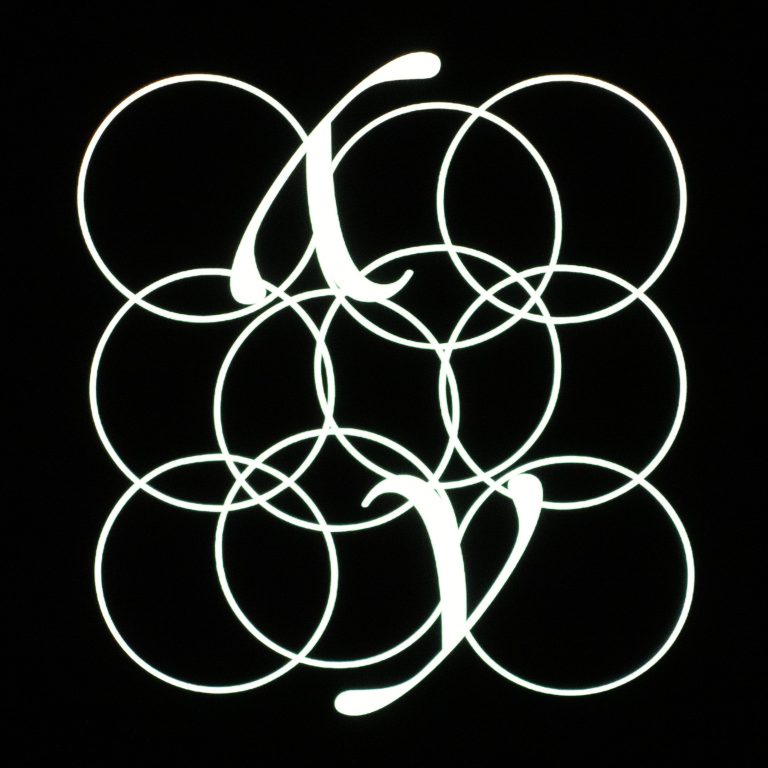
Still, there is an air of the unvarnished, unfocused, uncertain about My Ghosts Go Ghost. “GGG” doesn’t end with the same euphoric momentum of Brian Eno’s guitar storm – it just cuts out, sudden and unannounced, into silence. On streaming, where most consume music nowadays, it will lead back into “Can I Have You For Myself?” – possibly intentionally showing RiTchie now pleading with the shadow to stay, in a space only shared by the two of them. This circular structure could be hinted at with the album artwork, too: an even flow, which doesn’t so much climax as it repeats, re-purposes itself upon each consecutive spin. Where By The Time I Get to Phoenix presented a bright red canvas, My Ghosts Go Ghost retains the in-between, empty bits of canvas, burn-holes maybe even. Its stark contrasts and melancholy work better on each spin, revealing artists who are wrestling with existential situations. There is no solution after the apocalypse, just questions. After the collapse, after the funeral, after the album of their life – what’s left?
84%