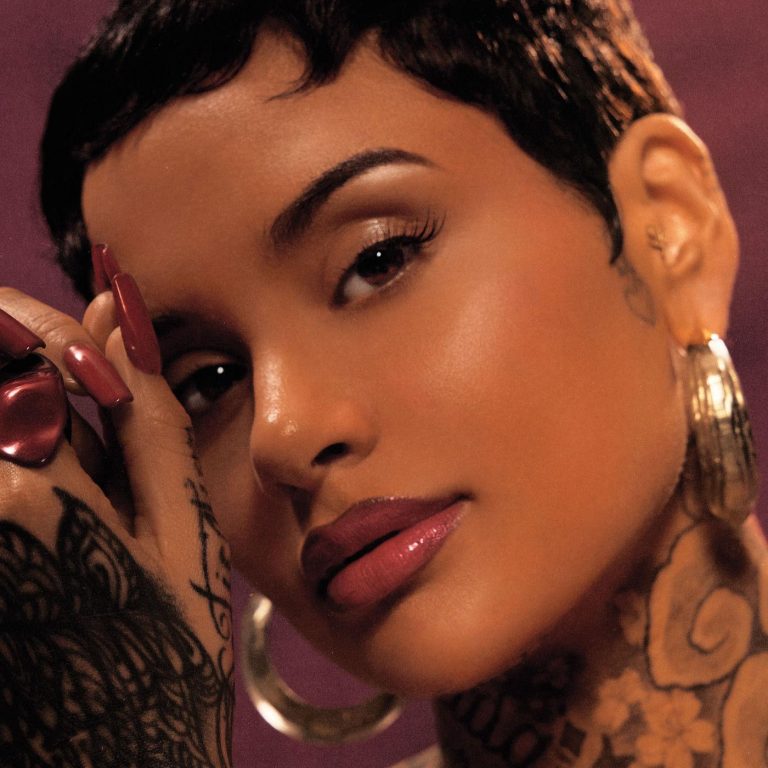

For the better part of a decade, Kehlani Ashley Parrish existed under intense and sustained scrutiny online. Since emerging as a teenage prodigy on a 2014 mixtape, the Oakland singer has endured the kind of public education that breaks most artists. Every relationship, every spiritual shift, and every aesthetic pivot was meticulously cataloged by an audience that demanded both total access and constant reinvention. They were hastily burdened with the impossible task of “saving” modern R&B, even as they were still trying to figure out how to build a lasting foundation for themselves.
Now, arriving on the singer’s 31st birthday, Kehlani finally relieves that pressure. Their fifth studio album signals a clear reset. Following the pandemic-era introspection of It Was Good Until It Wasn’t and the genre experimentation of 2024’s Crash, Kehlani returns to a more familiar sound. Rather than attempting to subvert the established rules of rhythm and blues, they have chosen to honor its grand lineage. The result is a startlingly confident synthesis of their life’s work, proving that true maturation often requires returning to the root.
The lead-up to the self-titled release was anchored by “Folded”, a mid-tempo crossover track that drew strong critical support and widespread attention online. Driven by a minimal, hypnotic guitar loop, the song became Kehlani’s first Top 10 hit on the Billboard Hot 100. More significantly, it secured them two Grammy wins after 10 years of nominations. The success of “Folded” marked a turning point in their career. Instead of chasing another viral hit, Kehlani used the momentum to build a traditional R&B album with clear stylistic ties to the mid-2000s.
The album opens with a spoken “Intro” about a strained emotional state, but the tone shifts quickly to a more confident musical approach. Kehlani sets a measured perspective early on, addressing their romantic past with less defensiveness and a clearer sense of personal responsibility.
Nowhere is this retro-fitted confidence more evident than on “Another Luva”. Featuring Lil Wayne, the track is built on a foundation of brassy bombast and a heavy, percussive bounce that distinctly recalls Amerie’s 2005 smash “All I Have”, bursting out of the speakers with an analog warmth. The production favors live instrumentation over sterile digital trap programming, allowing Kehlani to belt rather than merely whisper. They sound revived.
That energy carries over into a staggering roster of guest features that, on paper, run the risk of crowding the marquee. Yet, Kehlani stands toe-to-toe with the genre’s royalty. “I Need You” pairs them with Brandy, yielding a breathtaking vocal tag-team match across the bridge that highlights both singers’ mastery of complex runs. On “Shoulda Never”, a heavy-hearted duet with Usher, the two artists navigate the wreckage of a failed partnership without resorting to petty grievances.
Even when leaning into hip-hop, the album keeps its focus firmly on a bygone era of polished, radio-ready soul. “No Such Thing” operates as a spiritual sequel to Mya’s lush, string-laden “Fallen,” complete with a brooding, noir-tinged rap reprise by Clipse that provides a welcome jolt of grit. Similarly, “Back and Forth” reunites Kehlani with Missy Elliott under the production helm of The Stereotypes. The track features a subdued, interlocked groove echoing the late 90s Latin-pop crossover appeal of Carlos Santana and The Product G&B’s “Maria Maria”, offering a silky backdrop for a romantic bust-up.
Admittedly, the guest list occasionally weighs the project down. “Sweet Nuthins”, featuring Leon Thomas, suffers from a cluttered mix that distracts from a vocal performance that deserved more space. But whenever the album threatens to capsize under its own ambition, Kehlani rights the ship by isolating their voice. “Still” creeps through the speakers with a serene, creeping production, allowing them to lament past mistakes with striking clarity. “Cruise Control” strips away the heavy features entirely, delivering a bouncy, pop-inflected reminder of the sheer melodic instinct that first brought them out of the Bay Area over 10 years ago.
Kehlani largely moves away from the diffuse, texture-driven style common in the streaming era, opting instead for structured ballads and slow-tempo R&B tracks built around strong hooks. The album addresses identity and sexuality through direct, personal songwriting rather than provocation. “Oooh” is a prime example, functioning as a galactic, slow-tempo soul record heightened by stacked harmonies and sexed-up coos that bloom around their lead vocal.
The album closes with “Unlearn”, a stark, piano-led confessional that could easily scan as cloying in the hands of a lesser vocalist. Instead, Kehlani delivers it with an arresting conviction. They vocalize their selfhood, acknowledging the dualities that have defined their public and private existence. They are no longer trying to outrun the pain or outsmart the critics. They are simply standing in the center of the room, demanding to be heard without filters, without gimmicks, and without apology. By looking backward to the golden era of modern soul, Kehlani has finally secured their future.