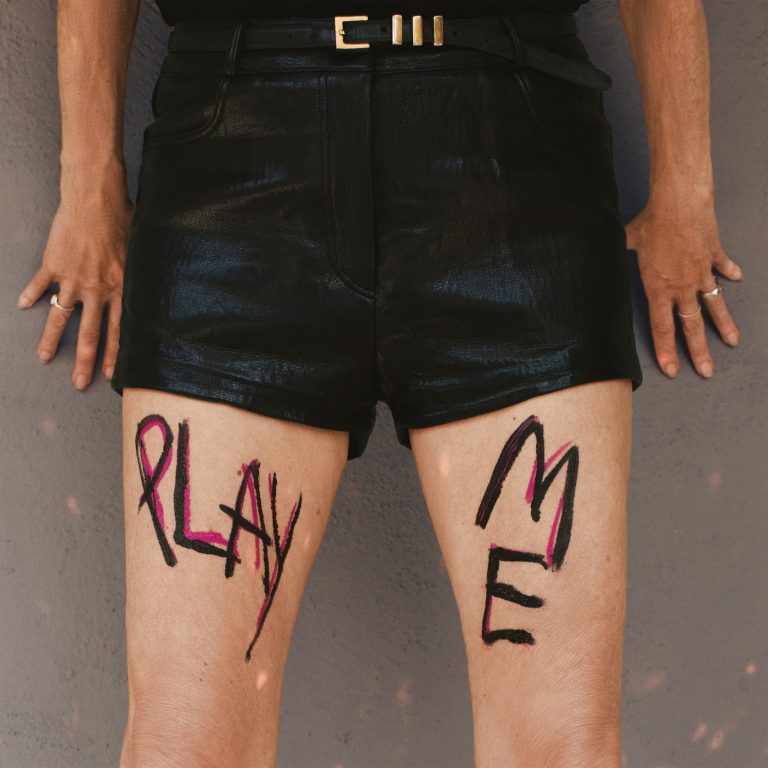

As an artist, Kim Gordon is no stranger to ennui and the weight of the mundane. The theme of the contemporary malaise is central to her solo work, going back to 2019’s No Home Record. Going back further: while her erstwhile band Sonic Youth often veered into wistful depictions of the quotidian, it was Gordon, mostly, who kept the band tethered to a certain zeitgeist fatigue, employing anti-glam imagery and deadpan yet mercurial vocals.
With her last album, The Collective, Gordon explored the boring-turned-diabolical: nothing is happening versus anything could happen at any time. Jagged textures, industrial atmospheres, and barbed images conjured a palpable anxiety or cultural agitation. While Gordon occasionally lapsed into repetitive babel-scapes and numbed-out vocals, on many of the tracks she seemed particularly vulnerable and activistic in tone.
If No Home Record dealt with instability and The Collective worked with dis-ease related to environmental and sociopolitical factors, Gordon’s new album Play Me emerges from a state of bewilderment, a sense of being unable to recognize oneself or the world in which one lives. The 12 tracks on Play Me unfurl as abstract sketches of real-time angst, collages wrapped in thorny roils and gritty yet entrancing textures.
Play Me also includes some of Gordon’s most pop-leaning work. “Girl with a Look” is built around burnished noise segments (what polished steel would sound like if it could sing). Gordon’s melodies are fragmented yet hooky. Lyrically, the piece exemplifies obliqueness, evoking how loneliness and entitlement are often enmeshed. “No Hands” materializes at the intersection of barbiturate no-wave and speedy clamor-pop. “Let go / no hands on the wheel”, Gordon declares, conjuring that scene in Fight Club when Brad Pitt’s Tyler orders Ed Norton’s IKEA Boy to “JUST LET GO!” (which he reluctantly does, resulting in a crazy yet liberating car crash).
“Dirty Tech” features an intriguing amalgam of synthy sounds and beats. Druggy, futuristic, rakish, a mishmash of elegance and sleaze. Lovers and bosses are now robots or AI functions. Desire’s been reduced to programmatic symbology. Gordon assembles catchy melodic elements, her voice moving between a crisp staccato and a sultry urban drawl. Very St. Mark’s Place, what you might hear in a grungy boutique while you browse through a rack of $200 t-shirts. Then again, the track could be the centerpiece in MOMA’s fringe-but-not-that-fringe series. In other words, it’s retro – CBGB, pre-gentrified Avenue D, Basquiat overdosing on Great Jones Street after painting his masterpiece – and chicly au courant, in the way that Television’s Marquee Moon, David Godlis’s street scenes, and PJ Harvey’s Rid of Me still land as edgy, pointing to a lexicon that hasn’t been fully milked or wrung dry of mystery, an outsider-ism that is perennially avant-garde.
“Not Today” is the album’s emotional highpoint. Crunchy waves swirl, juxtaposed with hyper-crystalline refrains. Gordon is at her most languorous, vulnerable yet elusive. “Trees are weeping, grass is wet”, she moans, depicting a watercolor cosmos, everything fluid, interdependent. While there’s often a dingy tint to Gordon’s lyrics, here she dabbles with a more affirming image, the scene unfolding like a fuzzy Monet or blurry Berthe Morisot. It’s a significant track for Gordon, demonstrating her ability to harmonize a grimy overtone with an appreciation for beauty.
On the other hand: “God, he ain’t here”, Gordon repeats on “Busy Bee”, a graffiti-like, tongue-in-cheek take on the contemporary overwhelm. “Subcon” is built around a prickly bass synth that sounds like the drills in Matrix Reloaded run through some sort of “euphonics” filter. Gordon is the self-appointed/computer-generated intermediary translating death-and-displacement imagery for a jaw-dropped mob.
“Nail Biter” turns “lipstick”, “nail polish”, and “teeth whitener” into society’s sacred artifacts (“gotta get some”/“gotta buy some”). Transubstantiation circa the 2020s is plastic surgery and a shot of Botox rather than water becoming wine. A miracle is your product (or personality) going viral rather than your stage-four cancer being healed. The title track fuses show-tune jazz and streaming-platform jargon, as Gordon toys with Spotify playlist titles. The piece drips with mischievous cynicism. “ByeBye25!” (a redux of The Collective’s opener, “Bye Bye”) elevates a list of words banned from federal websites by the Trump administration into a meme-ish manifesto re: oppression, short-sightedness, and the teetering of democracy.
In a 2003 essay, Fanny Howe wrote, “Bewilderment is an enchantment that follows a complete collapse of reference and reconcilability”. Throughout Play Me, Gordon searches for her bearings, though she also seems pretty much okay with being disoriented. Perhaps she is indeed enchanted with not knowing, with being unable to sustain a sense of self or identity. Flux has become her muse. In a time when chaos and unpredictability are the experience de jour, one can push reality away or embrace it. Gordon does the latter. With unflagging allure.
83%