
If shame have dodged the vortical pull of Joy Division, it’s through a connection to more fundamentally punk-leaning bands such as The Clash and The Fall and subsequent grunge-pop-punk acts like Stone Temple Pilots. In this way, they’ve avoided the malaise-y or anemic side of postpunk, which is an auspicious move, as Joy Division pretty much rode that train to the end of the line, where it crashed and exploded in a cloud of grays, blues, and blacks, giving rise to a few phoenixes, and a lot more mockingbirds.
Joy Division (the Beatles of postpunk) grieved and railed against the involuntariness of birth. Ditto their long line of heirs – lyrically and via adopting/reconfiguring sonic gestalts now mined for 40-plus years. That is, much of postpunk has been defined by Thanatos energy. Bands that creatively counter this seductive eddy without diluting their presence – recent Fontaines, D.C., The Murder Capital, and The Youth Play, among others – find more distinct standing in the crowded genre.
shame, too, access a version of Eros; in their case, through galvanic anger and self-inquiry. Though their last album, the Flood-produced Food for Worms, tapped into a weightier sound, often conveying a sense of burden, this is not a band that typically laments being masticated by the system. Rather, shame have remained steadfast in their quest for and commitment to a punk brand of self-actualization.
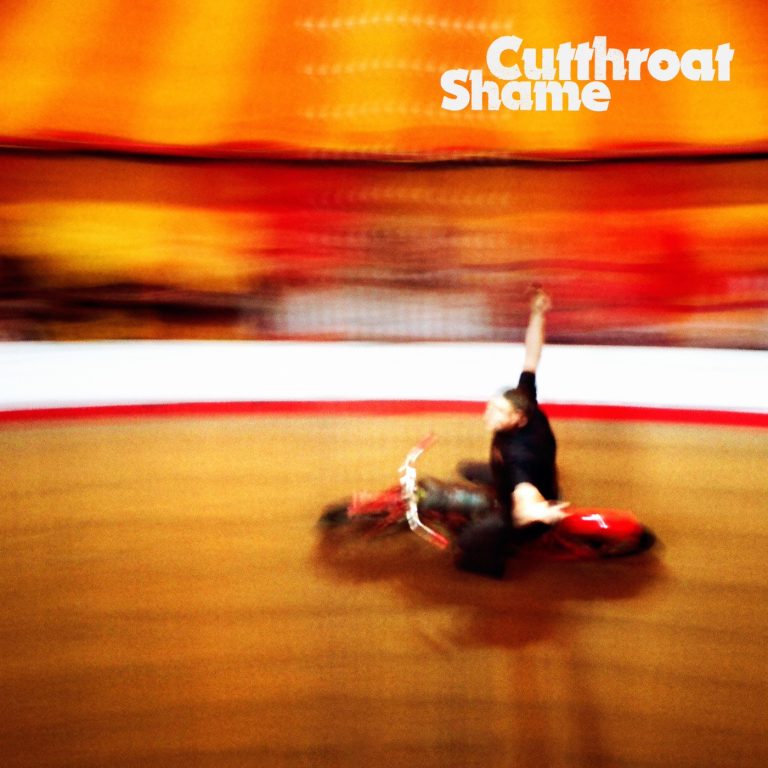
With their new album, Cutthroat, shame return, courtesy of producer John Congleton, to the glarier, twitchier sound captured in earlier work, particularly 2021’s Drunk Tank Pink. The opening title cut, for example, blends mindful swagger and burned-out nonchalance, unfurling as a nervy earworm. On the other hand, a sense of hedonistic fatalism pervades the track: “And why not do what you want to do?”, particularly since “sweaty Roman armies [are] fighting down in the dirt” and you were “born to die”.
It’s this ambivalence, when present – mock-empowerment or satirical glibness versus a dire knowing that the social divides are getting bigger – that fuels the album’s best takes. “Cowards Around” is a tongue-in-cheek/misanthropic screed, Charlie Steen essentially calling everyone a coward, including “people who like [him]”. There’s a wry playfulness here, a tone the Ramones or Rancid might’ve explored if they’d emerged circa the posthumanistic/neo-nationalistic 2010s and 2020s. And yet, the track’s tone is darkish, Steen also lacerating a contemporary society in which heroes no longer exist.
This portrayal of a vapid cosmo-suburbanism is, of course, a postpunk motif. In terms of current treatments, Fontaines, D.C., at least circa Romance, respond via a frazzled idealism; The Murder Capital strive to articulate archetypal patterns that manifest in particular zeitgeists; The Youth Play focus on the way modern life shoves one toward ennui (upping the need for a rich interiority). shame, however, are more partial to an old-school, albeit PC, confrontation MO; i.e., Steen’s lyrics on “Nothing Better”: “Nothing worth teaching / Nothing worth knowing / You never go anywhere worth going”. Steroidal guitars, overdriven synths, and holler-back supporting vocals facilitate urgency, even if a closer listen reveals a nagging thinness. The band bang their instruments; Steen plays the gadfly cum sports-bar Morrison, and yet, the sonic and lyrical overtness is ultimately disengaging.
“Plaster”, too, sounds a little plastic. Though it’s unlikely that the song itself will be discussed in a pop masterclass, the issue is primarily production-related. An overabundance of treble (think sharpness, flickering fluorescence) robs the sound and message of their inherent seriousness, flattening the band’s stand for defiance, rebellion, and social change. Ditto “After Party”, with its intriguing but slippery mix of decadent-soiree vibes (“On all fours wanting more / You can leave the lights on”) and post-commercialistic fragility (“Made of glass, made to break / Fluctuate between what you love and what you hate”).
“Quiet Life”, on the other hand, addresses wanting to embrace a more meditative existence yet knowing that you can’t actually live that way; in other words, who would you be without adrenaline, distraction, and egoic gratifications? Agitation, at least for now, is here to stay. The sonics are more well-rounded; the band sound more credible; their longing, melancholy, and sense of being trapped between cravings and unfulfilling options ring as authentic.
“Screwdriver” reaches for the boisterous, over-the-top bravado that Jack White circa The Raconteurs (and Boarding House Reach) was/is in love with. The more dynamic “Packshot”, meanwhile, gives Steen a chance to display his range, pivoting from narcissistic pronouncements (“If you love me, you love my addictions too”) to codependent panic (“I always call, but you never pick up”). The band does an effective job of veering from reverb-y spaciousness to a more assaultive theatricality.
“You want it all, you need it all”, Steen declares on “Axis of Evil”. An apt closer, the piece captures the way we’re conditioned to want, even as we become aware that wanting (and getting) will never lead us to the promised land. And yet, because we’re so emotionally and neurologically habituated, we can’t make the much-needed change. Welcome to the no man’s land between late-stage capitalism and whatever comes next.
Cutthroat offers some exhilarating moments, including the title track, but is also a problematic release. One: despite Steen’s bluster and the band’s braggadocio, the songcraft this time around frequently lacks the pop-drive apparent on previous work. Two: while Congleton succeeds at ushering the band around ‘the Joy Division gloom zone’ – never a place they hung out anyway – he perhaps leads them too far into the blinding day. Cutthroat’s high-pitched sound (again, think spiky; in photographic terms, overexposed) lacks the gravitas that this band needs. While the sequence brims with their signature I-may-be-fatigued-but-don’t-fuck-with-me attitude, the songs often fail to land, scattering like spores in a gale.