
The claim that there is no innovation in contemporary music is a cynical and bleak perspective. Originating in the last decade, this view seemed tied to the theory that we are witnessing “The End of History”, and just existing in the constant stability and wellness of a neoliberal status quo. Potentially, liberalism couldn’t imagine its own failure, but here we are, a few years into multiple genocides, the rise of far right leaders and the discomfort of flailing economies.
The soundtrack to this broken era comes in Futurismus, a vibrant mixture of post-punk, techno, no-wave and industrial: acidic, political and deeply apocalyptic. When I chronicled the genre two years ago, mere days before October 7th, I could not have foreseen how prophetic some of my observations could become. By now, there is a whole host of up-and-coming groups that embody the style – Chalk, Nerves, Prostitute. This is the new flesh? This is the new sound!
And one night, in Berlin, Model/Actriz prove that this is the music of the Future.
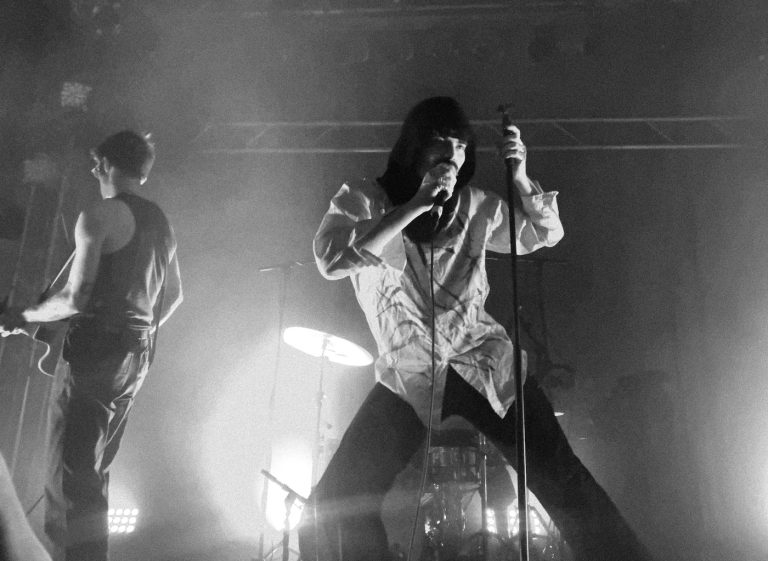
As Cole Haden steps on stage, carrying a handbag and menacingly applying red lipstick, it becomes clear that this will be a very unique performance. Drenched in red lights and stage fog, the group seems transported out of a transgressive film – Cruising, Fire Walk With Me, Fear City. The very second when their unforgiving machine jumps alive, metallic and abrasive, Model/Actriz are locked into a spiral of nightmarish, cavernous punk rock energy. Where opener “Vespers” is still relatively civilised with its humble energy of disco-punk rhythm, follow up “Mosquito” explodes into the room with the ferocity of a razor blade wielding killer. Haden is clearly the focus of attention, leaning forward into the front row as he screeches the chorus: “With a bodycount / Higher than a Mosquito”. There’s an air of danger, but also vulnerability to the vocalist, embodied with his fluid dance moves and smeared lipstick, bedroom eyes and sudden, ghoulish shouts that pierce his lines.
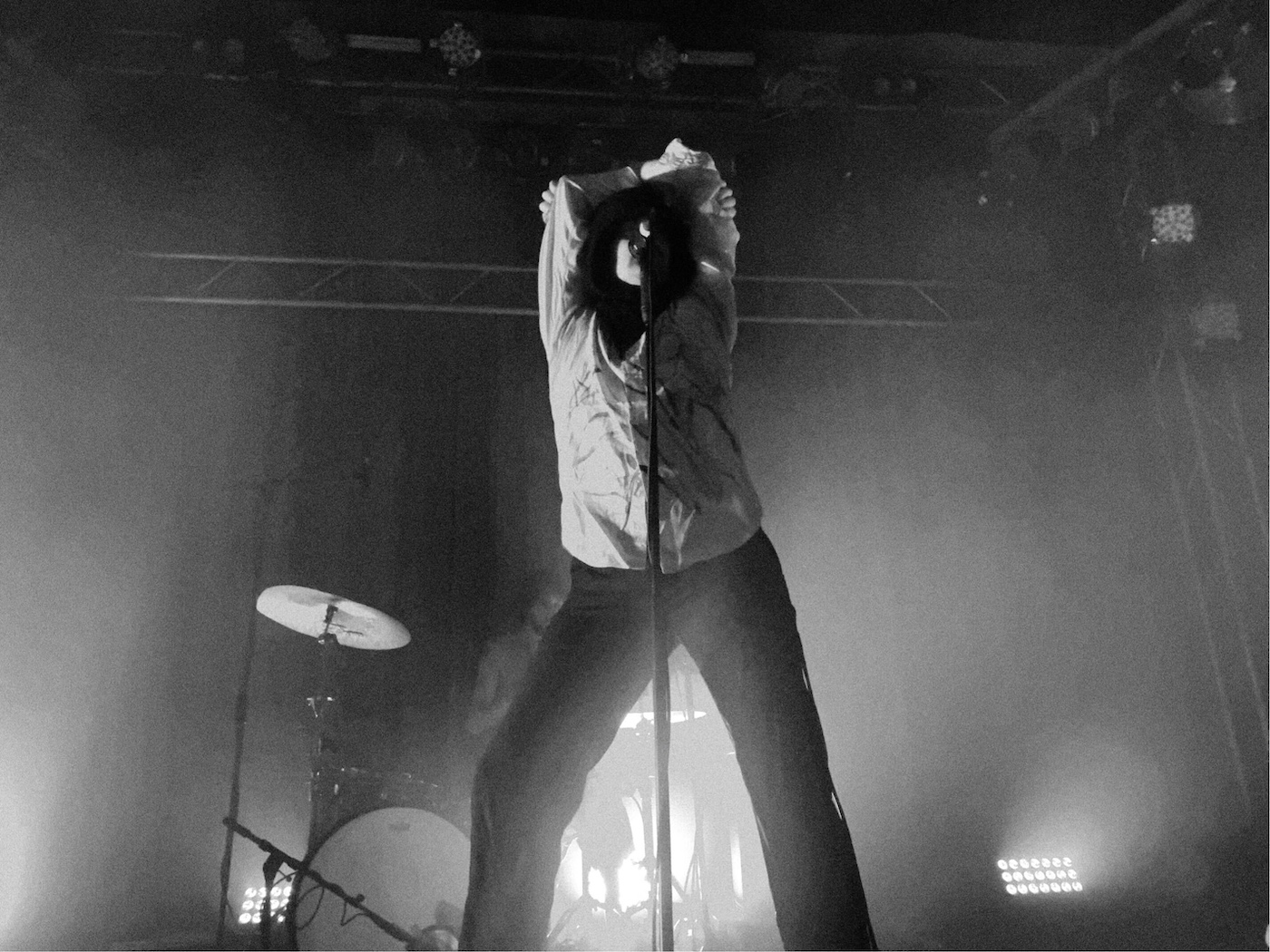
“Amaranth” ups the tension, further building the aura of a New York underground club, ca. 1979 – pregnant with possibilities and the fear the evening could go any which way, dangerous and pleasurable. While Haden commands the audience, a lot of the weight is on the trio of musicians that construct the angular, brutalist sound of the band: drummer Ruben Radlauer slaves away precisely behind the drums, a hunched over, constantly shuddering presence. Bassist Aaron Shapiro, off to the side, is lost in his rhythm, lanky and unassuming, as if from an alien world.
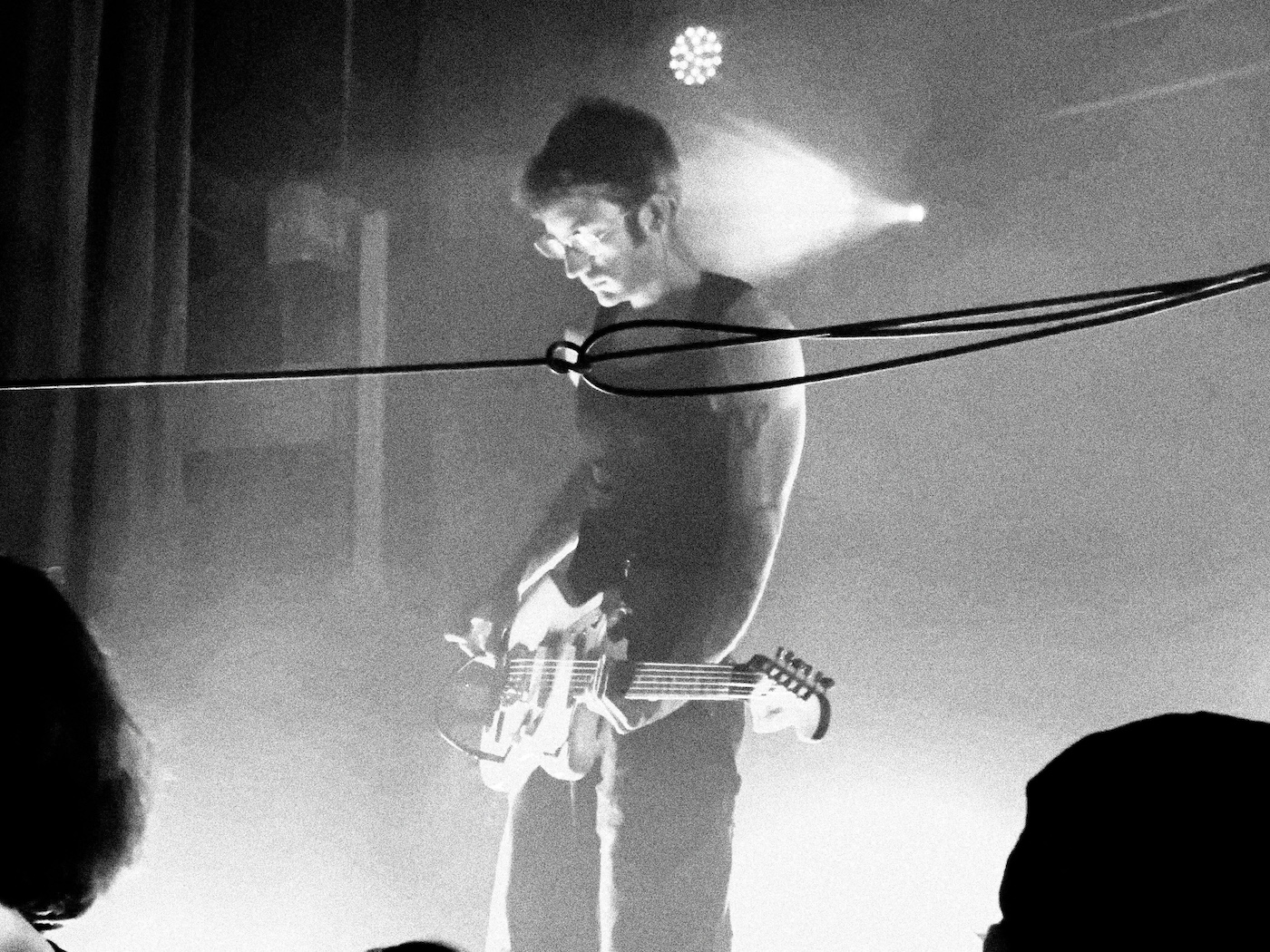
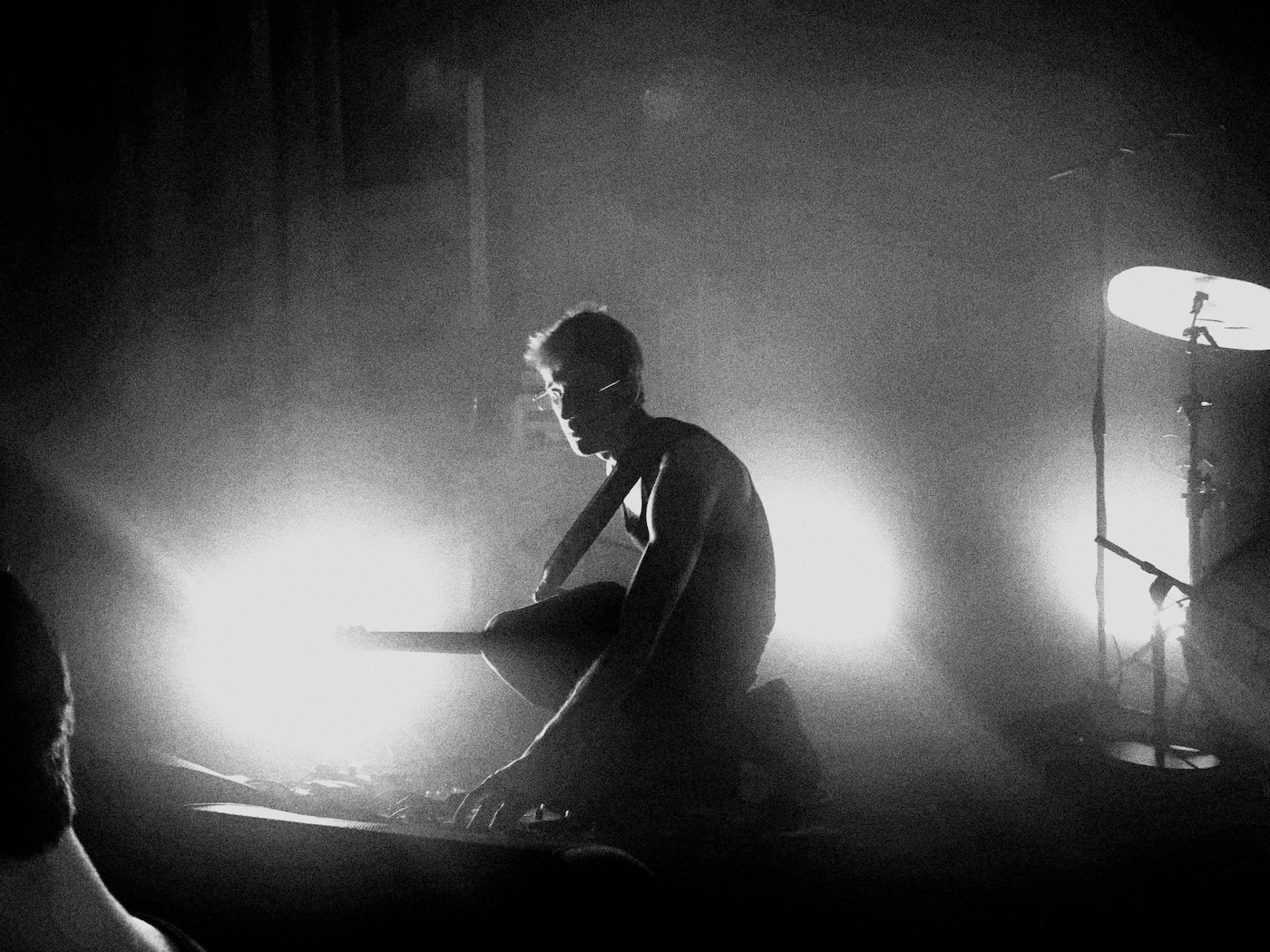
But an especially haunting presence is guitarist Jack Wetmore: in a black “wife-beater” shirt and wearing glasses, he has the titanic presence of a Norm Westberg! Barely moving, stoic and stone faced, he holds his guitar like a weapon, delivering the cranking, stabbing sounds that transform the space into a perverse factory floor. Then, suddenly, during a song’s climax, he will suddenly wail his guitar through the air, as if he was attempting to crush an invisible enemy’s skull. Menacing and with the logic of a Giallo villain, he embodies a tendency which the three musicians are united by: they manage to melt into a unit with their instruments, becoming a musical counterpart of the Cronenbergian Crash.
Before the horror seeps into more attendees, Haden announces, impersonating “Dieter” from “Sprockets”: “Now is the time of the show where I get to know the audience!” An unwitting attendee won’t take Haden’s hand to help him off stage, and is quickly instructed to do so – then Haden rushes through the crowd, gets in people’s faces, other times leaning his forehead against a man’s chest. Three times in total will he jump into the crowd (his only hiccup the frustration with the mixer silencing him: “My microphone has a mute effect, you don’t have to silence me!”), instructing the whole room to sit down, then jump up, all while the band continues their stoic, mechanic rite.
“Doves” makes for an emotional and theatric performance, while the pseudo-arabic riff of “Diva” turns the room into a dark disco, before “Pure Mode” unleashes a violent torrent of energy. Generally, it becomes evident that, while the songs of new album Pirouette are groovy and infectious, it’s the monstrous no-wave and industrial mixture of debut album Dogsbody that translates strikingly perfect into the band’s live show.
After the fantastic quasi-techno of “Audience” (and another dive into the very same by Haden), the band delivers their most climactic, animalistic songs as one-two punch: “Crossing Guard” and “Slate”. Extending the outro section of the former, Haden takes control of the crowd: “We are doing the Cha-Cha now!” Two steps to the right. Clap. Jump! Two steps to the left! The crowd willingly participates, as Haden has fun being the ring-leader of his own show. It’s an incredibly campy, fun, gay moment, contrasting the serious perfectionism of the musicianship and creating a surreal atmosphere – the lynchian effect of the proceedings are so tangible, somebody could likely scrap them off the walls with a spoon! Then, as Haden builds up a final climax, the band cuts into “Slate” and the room explodes, singing along, moshing even more fervently, losing themselves in the crushing finale!
“Departures”, with its melancholic tone and vaguely resembling Radiohead’s rhythmic work, calms things down for a minute, before the band goes off script – notably so, as everyone observing the tracklist remarks. What exactly happens here is widely contested (did they play “Poppy”? “Ring Road”? What is even happening?), but what stands out is that the band add “Acid Rain” to their set! The best song off Pirouette, the heartbreaking ballad suddenly burst apart the tension in the room, nakedly emotional and humane, breaking with the preceding machine-world no-wave and industrial aesthetics.
When the band finally returns to their set-list, Haden jumps into the crowd one final time, for a wild delivery of “Cinderella”, as Haden gets very close with select audience members. The closing “New Face” – a strange, early track off their 2017 EP No – is vibrant, but seems like an intentional last salvo. As the band exits, Wetmore steps to the front of the stage, lifts a keffiyeh, which he swings like a declaration, draping the microphone with it, and the leisurely walks off-stage.
A group that, in their existence, is such a statement – politically, spiritually and emotionally – is rare to witness at their peak, precisely because most of them incinerate at their most potent, most powerful. There are few Sonic Youths, and many like DNA, Scratch Acid or Big Black, which are with us for long, where only a lucky few can recount the legendary experience of having been there, of bearing witness to something so special. Part art performance, part legends of a burgeoning genre, Model/Actriz are innovators, provocateurs, beating hearts of resistance and perseverance!