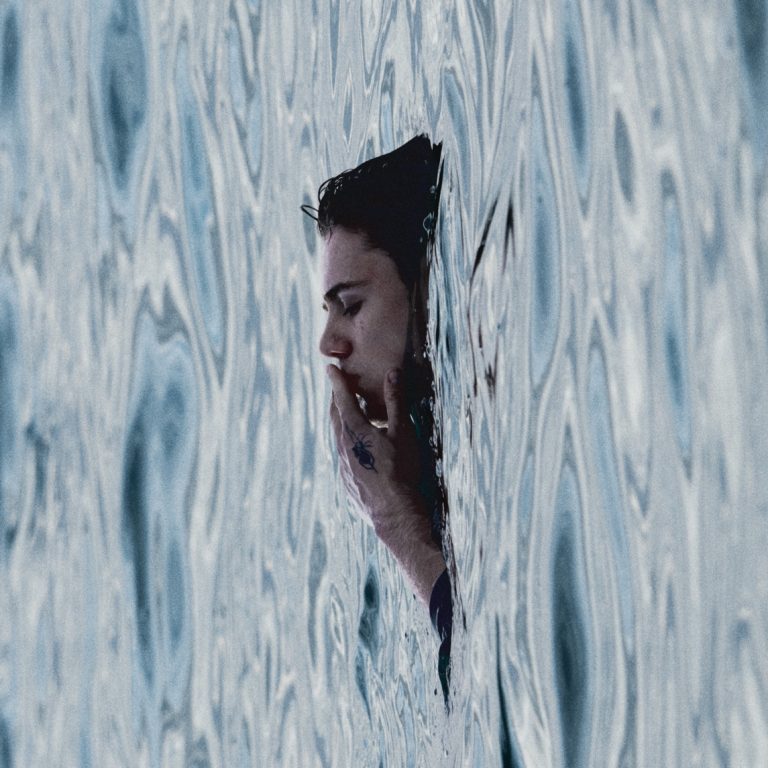

From its title onward, Before I Forget reads like a document of unfinished business, a ledger of emotional residue, thoughts written down before time blurs them into something easier to live with. The Kid LAROI’s second studio album arrives after a previously completed record was quietly scrapped in the aftermath of a very public breakup. What replaces it is a project written in compressed, emotionally intense sessions, tracing a fragile arc from denial toward something resembling acceptance.
That context is inseparable from the music. Before I Forget is not interested in closure, nor does it chase relief. Across its 15 tracks, LARO|I looks backward more than forward, interrogating the small, often unglamorous moments where love begins to unravel, missed signals, private doubts, the slow accumulation of regret. It’s an album shaped by memory rather than narrative momentum, less concerned with resolution than with understanding how things reached this point at all.
Sonically, the record marks a subtle but deliberate evolution. Where LAROI’s earlier work leaned more directly into pop immediacy and rap-adjacent hooks, Before I Forget inhabits a broader R&B and alt-pop space, tinged with late-2000s melancholy and softened edges. The production favours openness: synths drift rather than dominate, beats recede into atmosphere, and silence is often allowed to do its own emotional work. These songs don’t posture or peak dramatically; they sit, brood, and occasionally spiral.
The album opens with “ME + YOU”, a quiet, revealing meditation on shared routines and the shock of their sudden absence. It establishes the tone immediately; intimate but not theatrical, confessional without tipping into melodrama. On “JULY”, LAROI anchors emotional collapse to a specific moment in time, using the calendar itself as a narrative device. The track’s melodic curves carry a sense of lived-in longing, as if the memory still hasn’t fully cooled.
Elsewhere, tracks like “PRIVATE” and “NEVER CAME BACK” expand the emotional vocabulary without breaking the album’s internal logic. The former wrestles with intimacy under public scrutiny, the latter frames absence as something that lingers, heavy and unresolved. These aren’t novel themes, but they’re handled with a seriousness that resists easy sentimentality. LAROI is documenting emotional trauma.
What Before I Forget captures most effectively is vulnerability as texture rather than headline. LAROI seems conflicted, defensive, self-aware, and often unsure of his own conclusions. On “Maybe I’m Wrong”, a soft piano underpins an admission that feels less like a lyric than a private thought voiced too late at night. There’s no attempt to absolve himself fully, only an uneasy acknowledgment of shared fault.
That commitment to emotional ambiguity is both the album’s strength and its risk. Some tracks, particularly mid-tempo cuts like “COME DOWN” and “HER INTERLUDE”, blur into the broader emotional wash, meaning the record occasionally struggles with tonal distinction. The album’s 44-minute runtime can feel heavy in its consistency, its refusal to offer dramatic release.
Yet that repetition also feels intentional. Heartbreak rarely unfolds in neat emotional arcs; it loops, stalls, doubles back on itself. Before I Forget mirrors that mental pattern, drawing its power not from peaks but from sustained reckoning. For a mainstream pop artist, especially one whose earlier success leaned on immediacy and impact, that’s a notable artistic choice.
The production supports this restraint. Contributions from collaborators like Andrew Aged, who brings hushed intimacy to “5:21AM”, and Clara La San, whose presence on “THE MOMENT” briefly lifts the album into warmer territory, add subtle variation without disrupting cohesion. Even the more outward-facing tracks, such as “A COLD PLAY”, feel measured rather than engineered, expressive without tipping into spectacle.
Critical response has reflected the album’s internal tension. Some hear an artist caught too deeply in introspection, circling familiar emotional ground without always finding new footing. Others see growth: a move away from pop immediacy toward something more durable, if less immediately gratifying. That split mirrors the album itself, torn between resonance and repetition, honesty and momentum.
Ultimately, Before I Forget charts how memory, loss, and self-scrutiny intersect in a life lived under public exposure, capturing an artist mid-process rather than at a destination. Its most compelling moments are the ones that resist resolution, where uncertainty is allowed to linger rather than being shaped into narrative closure.
LAROI doesn’t tie these songs into a clean ending, and that feels appropriate. Some stories don’t conclude; they simply stay with you, resurfacing when you least expect them. For an artist still in his early 20s, Before I Forget suggests not stagnation, but a willingness to sit with discomfort, to document it honestly, before time smooths it over.