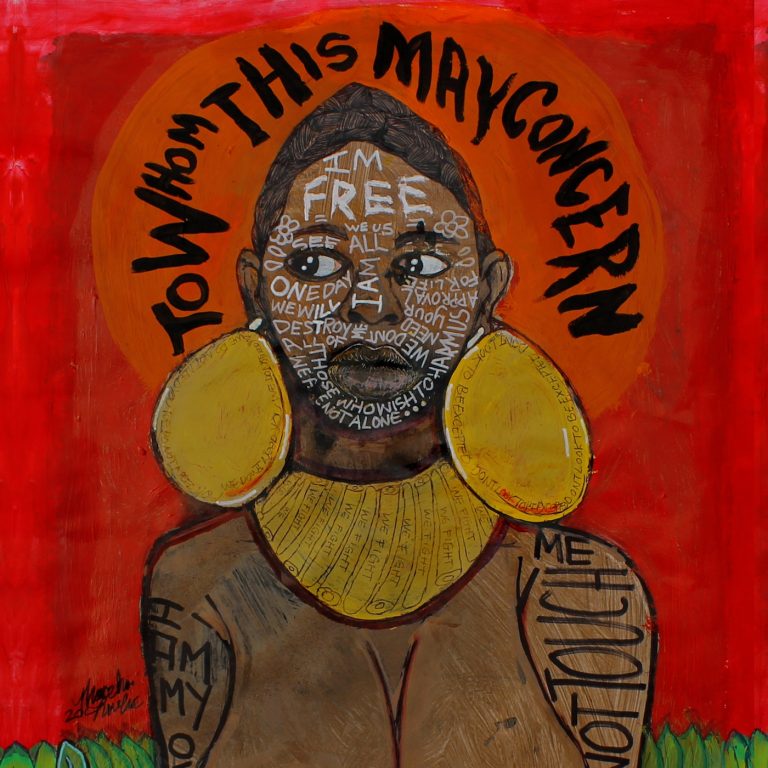

Jill Scott has always understood how to make her voice feel physical. Here on To Whom This May Concern, her first album in 10 years, it sounds lived-in in a deeper way. There’s weight in the lower register, warmth in the phrasing, and that familiar conversational glide she’s mastered since Who Is Jill Scott? Words and Sounds Vol. 1 — but now everything carries more grain, more breath, more pause. She sounds like someone who has spent years observing quietly and is finally choosing which thoughts deserve sound.
What’s striking is how ordinary the emotional theme is, and how precisely she handles it. Long relationships that reshape you in ways you only understand later; the strange calm that comes after disappointment settles into routine; the small dignity of boundaries; the exhaustion of explaining yourself repeatedly. The writing feels close to speech. Sometimes it almost sounds like she’s discovering the line while singing it.
The band follows her lead. Nothing tries to dominate the room. The grooves are warm and steady, sometimes barely shifting, like musicians who know the value of staying out of the way when a voice is telling the truth. Keys glow softly, the bass holds things down without insisting on attention. Percussion often feels brushed. Even when the arrangements open up, they expand sideways instead of upward. To Whom This May Concern feels like a letter written after years of watching the world spin faster and louder while she stayed rooted, listening.
The opening stretch “Dope Shit” settles the tone immediately: warm instrumentation, spacious arrangements, Scott speaking to listeners than performing at them. The record unfolds like correspondence, reflections addressed to lovers, strangers, community, self.
That sense of ease expands on “Be Great”, where Trombone Shorty’s presence adds lift without tipping the song into spectacle. The track carries brightness, it feels grounded, like encouragement spoken from experience.
“Beautiful People” moves with understated confidence, built on groove, an observational warmth. Scott has always been interested in the emotional architecture of everyday interaction, how affection survives exhaustion, how dignity persists in public life. The track glides, trusting repetition to carry meaning. Then “Offdaback” stretches rhythm further, her voice elastic against the groove, bending phrasing in ways that feel instinctive. “Norf Side,” with Tierra Whack, shifts the texture again, playful and rooted with distinct voices moving comfortably within the same atmosphere.
The album tightens emotionally around “Disclaimer,” which lands plainly, almost conversationally blunt. Elsewhere, she leans into intimacy without polishing away friction. On slower ballads, her phrasing stretches deliberately, sometimes arriving just behind the beat, as if she’s testing whether emotion can settle before language does. That elasticity has always been central to her vocal identity, spoken-word cadence folded into melody, narrative folded into breath. Taking us back to the 80s, that directness drifts into the reflective calm of “Pay U on Tuesday”, where the pacing slows and Scott lets the emotional weight sit quietly inside the arrangement.
When collaborators appear, they function less as features and more as tonal contrasts. Rap verses puncture the album’s warmth with sharper textures, grounding Scott’s reflective mood in contemporary social reality.
Mid-album highlights dwell in interiority; “Pressha” circles around memory and aging with quiet astonishment, recognition of time’s accumulation. That contained energy makes the attitude of “BPOTY,” featuring Too $hort, feel intentionally abrasive by comparison, his rougher presence cutting against the album’s otherwise warm tonal palette.
Her voice remains the album’s central instrument in “Me 4”; it hasn’t been sculpted into sleek perfection, thankfully. “The Math” is beautifully reflective, observational, measuring experience. She still sings like someone who prioritises meaning over ornament, letting phrases land with uneven weight when emotion demands it. “A Universe” opens the sound outward, airy and suspended. That sense of expansion settles again with “Liftin’ Me Up,” which returns to steadiness.
The production mirrors that philosophy. Nothing crowds the vocal. Arrangements leave air between instruments, bass lines that walk, keys that colour, percussion that suggests movement without forcing it.
The record trusts listeners to inhabit space. “Ode to Nikki” carries reverence without heaviness, reflective but gentle. “Don’t Play” sharpens things briefly, clipped, firm and somewhat self-possessed.
“To B Honest”, with JID, injects restless motion, its kinetic energy cutting through the album’s otherwise measured pacing. It feels like a brief surge of momentum before the record begins its quiet descent.
The closing stretch unfolds like the end of a long conversation. “Right Here Right Now” stays present, unforced. “Àṣẹ” brings a spiritual gravity that feels rooted. And “Sincerely Do” closes the album softly with acceptance settling into place.
This closing stretch feels intentionally unresolved. The album taps into reflection. The title makes sense that way: an address without a fixed recipient. Lyrically, Scott continues the work she has always done: documenting emotional life as social history. Relationships appear not as isolated experiences but as extensions of community, class, geography, and time. Love is never just personal; it’s environmental.
That perspective connects the album to her earliest work while revealing subtle evolution. Where her early records often captured immediacy, falling, yearning, discovering, this one reflects duration. What does love look like after repetition? What does selfhood feel like after public visibility, after survival, after silence between releases?
To Whom This May Concern does not attempt to redefine Jill Scott’s artistic identity. It deepens it. The record listens more than it announces, observes more than it persuades. In a musical theme that rewards velocity, Scott offers duration, attention sustained long enough for meaning to settle.