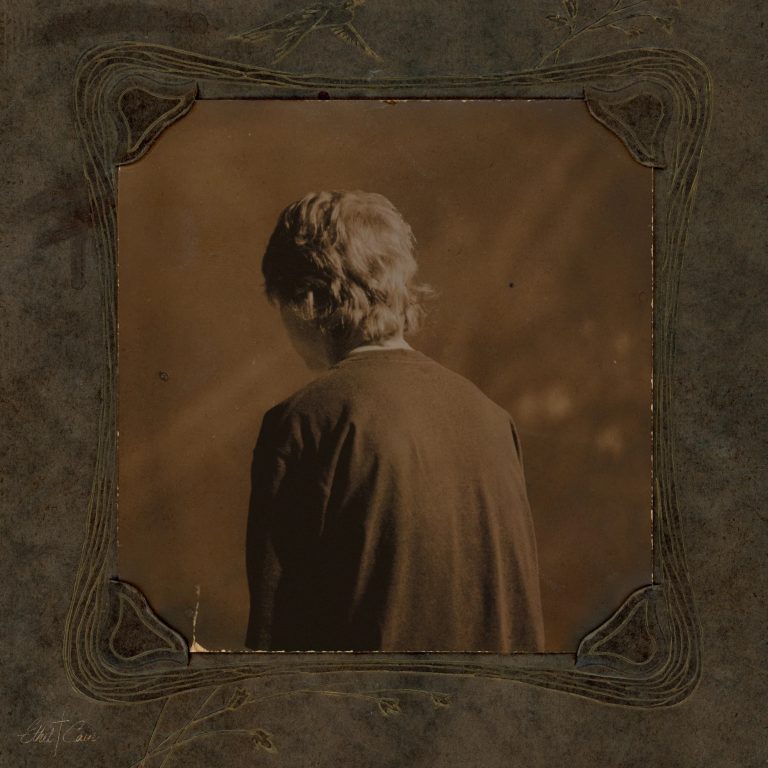

Memories are fascinating. We base most of our life on the perception of what occurred behind the present moment. Because our perspective is subjective, our memory is not so much what actually occurred, but our subjective reading of it. Even as somebody who has been noted for having good memory, I all too often start correcting myself when I am allowed to revisit recordings of an occurrence. Studies have shown that memories are deeply impacted by how we choose to retell the moments – in short, we will accept any reality we choose, or others choose for us. Yes, that’s the stuff of psy-ops and brainwashing governments have facilitated in subtle but persistent ways for decades.
That’s an interesting topic itself, but when it comes to the impact of memories, then I’m more fascinated with the notion of nostalgia and its implications. Defined as a yearning for an elysian past, the term often characterises art pieces that convey a deep harmony coupled with uncanny melancholy, due to the loss of this unison. Often, the resulting gravitas is borderline spiritual and suggests an inherent longing for innocence, a perceived Eden – but that place never existed so much as it was our inner peace that conveyed it.
This is deeply relatable. Yet if I retold a specific childhood memory, the glow would be gone – and did it ever really exist quite like I characterise it now? Did yours? Doubt creeps in. Soon, any Mephistophelic figure can creep in and promise to bring back this glow – an ideology, a religion, an identity, a policy, just one more step, it’s almost there! Yes: our memories are traps that say more about us than about our world, outside of you and I.
Maybe that’s why it was so hard for me to embrace Ethel Cain‘s work, prior to the brilliant Perverts. I misread Cain’s work as a kaleidoscopic pastiche of her contemporaries and millennial southern gothic tropes; JT Leroy via Lana Del Rey. Perverts upended this misreading, presenting an occult, transgressive, horrifying work that is a sibling to Nine Inch Nails’ snuff mythology of the Broken Movie – a hellish journey that makes the listener directly complicit. This allowed me to re-assess Cain’s debut album Preacher’s Daughter – a symbolist journey through the landscape of the American mythos, it uses a deeply unreliable narrator to imagine genre as a trojan horse for the digestion of dreamers. More Dennis Hopper than Norman fucking Rockwell.
With Willoughby Tucker, I’ll Always Love You, Cain now presents the addendum to the first chapter of her perceived trilogy. Call it “the B-sides”, or prequel, or parallel story – Willoughby Tucker is the history of lost innocence and death, caked in the magical realism Hayden Anhedonia cloaks herself in. The details are hazy and the metaphors dense, as characters shift in and out of focus. Many of these songs have been performed live for years, their demos leaked online and lyrics widely dissected. However, they borrow the tone of the lurid Perverts, presenting a more confident and less artificial vision than Preacher’s Daughter.
This becomes immediately clear with the heartbreaking opener “Janie”, whose minimalist punch carries the same elegance of “Purple Rain” and “Nothing Compares to You”. Cain’s world-weary intonation embodies loss perfectly, as she croons “I know she’s your girl / But she was my girl first / She was my girl first”, with the phantom pain of heartbreak seeping into every note, elevating it to the status of a solemn, ghostly hymn: “You keep changing / But I will stay the same”.
It’s unclear who the protagonist of the songs is, or who they perceive, without fully diving into Cain’s pre-conceived lore. “Fuck Me Eyes” imagines a “bad motherfucker” girl that all the boys fall in love with, an ideal of womanhood, lined up with a mythical mother figure who lost her beauty to drugs and life (“She really told me all / She’s not good at raising children / But she’s good at raising hell”). Is this Ethel being perceived from the outside, or Hayden herself ruminating on her own femininity through the lens of a trans-woman, and how there is a unique dialogue in that experience? With the glamour of 80s Springsteen and an incredible vocal performance, the song almost transforms into dream pop, but catches the landing as radio single (its main point of reference is, apparently, the music of Kim Carnes).
The solemn epic “Nettles” focuses on Tucker, as he lies dying in a hospital bed. Hayden has pointed out how this is merely Ethel’s fantasy, her fear of dramatic, traumatic loss, that aligns itself with the brutal realities the characters face in their everyday life. Thus, when she sings “The doctors gave you until the end of the night / But not ’til daylight”, this can be read as grim assessment: you can make it through trauma, but never see another hopeful dawn approach. Through that, Ethel likens herself to the titular nettles, a deeply toxic person whose actions will lead to destruction: “Lay me down where the trees bend low / Put me down where the greenery stings / I can hear them singin’ / “To love me is to suffer me, and I believe it”.
We all have had these people in our lives, these nettles whose very gaze turns daylight into poetry, red wine drenched nights rendered into eternity. Here they come, the memories, bleeding in. But Cain understands this dynamic as forlorn romanticism, which is broken by reality: “When I lay with you in that auld lang room / Wishin’ I was the way you say that you are / You’ll go fight a war, I’ll go missing / I warned you, for me, it’s not that hard”. These are characters nostalgic for the moment they still inhabit, because they understand that once the night is over, they will disappear, as their existence is solely defined by their love for each other, by the youth in their veins, by the drugs in their system. The gentle, violin led folk rendition fits this narrative, aligning itself with a history that reaches back through centuries.
This mythical idea of Willoughby is more intricately explored in “Dust Bowl”, the possibly most important (and most anticipated) song of the record. A sludgy slowcore anthem, it imagines the boy as “Natural blood-stained blonde / With the holes in his sneakers / And his eyes all over me”. Eros and Thanatos become united as he and Ethel have sex in front of a drive-in slasher flick, leading to a vortex of blood and breasts, drugs and doom. Even when the two are dating, Ethel “rode home crying / Thinking of you fucking other girls” – she has already pre-meditated the end to their story, ending the song with the line “His eyes all over me” slowly transforming into the mantra of “Over, over…”.
“A Knock at the Door” feels like a remnant of Perverts, all Grouper-esque ambience, as Cain drifts into anxiety, overtaken by sinister prophecies of death. The song marks the halfway point of the album, as it drifts into a nocturnal, gothic tapestry. I had not mentioned the two instrumentals – “Willoughby’s Theme” and “Willoughby’s Interlude”, both inherently cinematic pieces that actually feel like a soundtrack, because they are better contextualised in light of these latter pieces.
While those two songs are elegant and powerful, using roaring guitars and synth beds to induce the state Ethel finds herself in while in Willoughby’s presence, they need the oneiric intensity of “Radio Towers”. Returning to the architectonic mysticism of Perverts, the track is a reworking of the outtake “Kudzu”, providing a hallucinogenic force that drags the listener into a twilight world, where radio signals are equal to heart monitors. This effectively suggests that the musical signals that transport Ethel and Willoughby are their heartbeat, casting their two albums as netherworlds of sorts. This is sure to open Pandora’s box, but the potential of reading these characters as modern versions of Orpheus and Eurydice is incredibly compelling, once more transforming the make-up of the mythos.
The track segues into the epic “Tempest”, a brutally quiet 10 minute sludge-metal track, where the perspective seemingly switches to Willoughby, as he confronts Ethel. It is not pretty: the character is certain of being abandoned, embracing nihilism like a shroud: “I’ll hurt myself if I want / I don’t care / Do you swing from your neck / With the hope someone cares?”. There’s one line here that is especially harrowing: “”I can lead you to bed / But I can’t make you sleep / I’ve heard it before / From someone who leaves”. Ethel has created the image of a person who is so broken that she can merely provide sex and physical closure, but no peace of mind or healing. Which, to Willoughby, is already an admission of defeat and the preparation of abandonment, a self-righteous and aggressive act. Waltzing forward, the song is especially heartbreaking because it reveals how this nostalgia that the two characters feel is inherently linked to their inability to allow themselves to grow alongside each other: their love is their need to re-enact familiar, familial trauma. Willoughby earlier mentions how his father’s Vietnam trauma is to blame for him being unable to realise his dream of becoming a writer – but the irony here is that writing is the one artistic form that requires truly no further expenses beyond pen and paper. These two are caught up in a story they already conceived as perfect tragedy.
Maybe that’s why “Waco, Texas”, the incredible 15-minute long closer, becomes such an immensely cathartic climax for the album. Mirroring “Amber Waves” off Perverts, the song describes a moment of stasis, where time is frozen. Willoughby is both with Ethel, but already gone, as her perspective is intruded by the same fatalism that gives Willoughby the very glow that allowed Ethel to fall in love with him: “I’ve been picking names for our children / You’ve been wondering how you’re gonna feed them / Love is not enough in this world / But I still believe in Nebraska dreaming / Cause I’d rather die / Than be anything but your girl”. There’s an interesting parallel here to Preacher’s Daughter‘s closing tracks “Sun Bleached Flies” and “Strangers”: Ethel is, symbolically, already frozen in time, a “freezer bride” that is cannibalised: “The air in your room never moves / Live and die by TV no one’s watching / Do you hate me? / When this is over / Maybe then we’ll get some sleep”.
It’s interesting to note that all three of Hayden Anhedonia’s albums end with this moment of suspension – of time, of physical change, of living death. Still, this also puts into focus that all of Preacher’s Daughter could just as well be the symbolist reconfiguration of Ethel’s relationship to Willoughby – the dream that a wild, unruly stranger will come to pick her up and carry her away, finally freeing her from the passing of time, from the brutality of an ordinary, loveless marriage, proving his bestial love by eating her body. But these are still only shadows of the very narrative that her and Willoughby already pre-conceived as self-fulfilling prophecy.
This all is a lot to take in. The sheer density and cross-pollination within Willoughby is immense and at times exceeds the breadth of Preacher’s Daughter. Where the latter was sort of a travelogue through the very idea of the American mythos, with Ethel as stand-in for Lady Liberty, Hayden’s third album is, purposefully, venturing into the dark backbone of reality – it’s the Fire Walk With Me to Twin Peaks, further exploring the psychological depths of characters and providing compelling counter-weights. The fact that it directly addresses its protagonists as unreliable narrators, who flirt with fatalism and addiction, equally leads one to ponder how much of Hayden’s lore is, itself, part play-acting, part daydream of her characters. And then there is the musical quality of the album, which veers closer into the murky, dark underworld that Perverts introduced than to the glam of Preacher’s Daughter. In a way, it deconstructs the image of Ethel Cain, the character, by showcasing that her origin is the realistic equivalent to the horror film terminus as cannibalised frozen corpse.
But then there’s another layer, which is more solemn and less romantic. While Preacher’s Daughter was all about dreams and desire, Willoughby is about the grit that exists outside of the individual perspective. We humanise the people we love, because, well, they are everything we want them to be, because they lead us to what we desire. But the thing we desire is the nostalgia for a place our memories have betrayed. Willoughby has potential, but his trauma drives him to re-enact the path of his father, excusing his lack of artistic inspiration through drug addiction. Ethel sees in him a reflection of her own inability to feel loved and recognised, and uses him to manifest an Ophelia complex, being more in love with his potential to traumatise her than the person beyond his artifice. Both are harrowingly attracted to this nostalgia for trauma, which, ultimately, is enshrined within the American existence, passed down from generations of slavery, civil war and native genocide – they embody an nation that is doomed to consume itself in the quest for an empire whose iconic subliminality is self-constructed, and deeply entwined with self annihilation.
Or maybe I am wrong. Maybe my memories of these songs, their lyrics and intoxicating warmth is already clouding my sanity. Maybe this album is just about those moments we can’t forget: two teenagers, in the darkness of a drive-in theatre, fucking naked in a car, as blood splashes across the silver screen. Maybe, this will be the lasting echo of their life: the one moment which they will chase, again and again, until the end.
86%