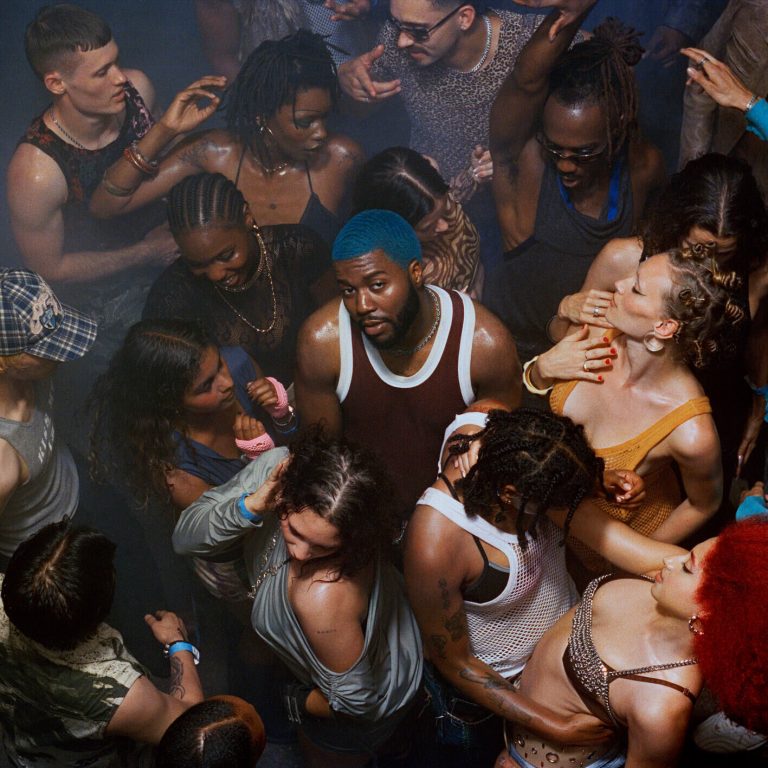

Khalid has always made music for twilight spaces — songs for drives when the world is winding down, for the quiet before the ache hits. But on after the sun goes down, his fourth studio album, that twilight takes on new meaning. It’s an album about ownership: of self, of sound, of story. It finds Khalid reshaping vulnerability into something both delicate and defiant, a kind of pop therapy session for anyone learning to live more honestly in public.
In the years since his debut American Teen, Khalid’s evolution has been shaped as much by exposure as by experience. He’s grown up inside the machine, his face and feelings stretched across charts, feeds and gossip sites. When his sexuality was publicly outed in 2024, what might have broken another artist instead became his turning point. after the sun goes down is his first project since that revelation, and it carries the texture of liberation, messy, luminous, and necessary. In interviews, he’s framed it as “taking [his] power back,” and you can hear that restoration throughout.
Where 2021’s Scenic Drive leaned toward the smoky intimacy of neo-soul, and 2023’s Sincere folded itself into moody introspection, this record opens its windows wide. Khalid called on a dream team of collaborators, Ilya, Darkchild, Tove Lo, and Julia Michaels, but the album’s personality is unmistakably his. The glossy polish of early-2000s R&B is here, but so is the quiet confidence of someone no longer hiding. It’s pop dressed transparently; vulnerability smuggled into neon light.
The album opens with “medicine”, a slow-burn confessional that sets the tone: heartbreak wrapped in sheen. Khalid’s voice, smooth as ever, trembles slightly at the edges, a reminder that healing doesn’t arrive fully formed. Then comes “in plain sight”, one of the album’s standouts, where euphoric synths mask something heavier. The accompanying video places him inside a literal glass box, a metaphor too neat to miss, exposure and freedom folded into the same act.
On “out of body”, he lets the rhythm lead, falsetto gliding through a haze of late-night pop, the kind that feels both intimate and universal. “momentary lovers” deepens that intimacy, lines like “you’re my type, fly dark and handsome” are more than flirtation; they’re statements of identity, the thrill of naming desire out loud. These are love songs, yes, but they double as reclamations. After years of coded writing, Khalid finally sounds like someone singing directly, not cautiously.
Elsewhere, the mood brightens. “tank top” and “instant” shimmer with a kind of carefree pop euphoria, co-written with Tove Lo, balancing the emotional weight that sits at the album’s core. The production, sleek but warm, nods to the polished radio pop of Janet Jackson and Britney Spears, yet it’s not pure nostalgia. Instead, Khalid repurposes those textures for his own narrative, using the familiar glow of pop history to light a new path forward.
Yet, after the sun goes down isn’t without weaker moments. Some tracks stretch longer than they need to, and the sequencing occasionally dips, with emotional highs tapering off too quickly. But even in its occasional unevenness, the record feels deeply human, a map of someone rebuilding, not performing perfection.
Much of that rebuilding happens through the lens of identity. For the first time, Khalid’s lyrics speak plainly about attraction, confusion, joy, and shame. His honesty doesn’t feel like spectacle; it feels like exhalation. When he sings about love now, it’s not in abstraction. It’s real, embodied, unhidden. There’s power in that — the quiet, radical kind that turns pop music into testimony.
If his earlier albums positioned Khalid as pop’s wistful observer, after the sun goes down makes him its participant. The title itself feels prophetic: after the day’s glare, after the storm of opinion and speculation, comes a night of his own making. The songs here move with the pulse of someone who’s finally stopped asking for permission to exist.
In a year where pop music has leaned into maximalism and chaos, Khalid’s restraint is striking. He doesn’t chase volume; he seeks clarity. And when he finds it, in the shimmer of a chorus, in a whispered bridge, in a lyric that lands like a confession, the result feels transcendent. after the sun goes down may not be his most experimental work, but it might be his most necessary. It captures the relief of finally stepping into one’s own skin, the quiet triumph of living truthfully even when the world still watches. For Khalid, this is more than an album — it’s an arrival long in the making, the sound of someone learning to love the night not for its shadows, but for its honesty.