
Jazz’s historicized reputation has long haunted its reception from newcomers, both stylistically and critically. In recent years, however, fusion-driven musicians propelling dedicated scenes have collectively breathed some fresh life into a genre that, for some non-fans, may appear dusty.
One of the better-known examples is the New London Jazz scene. After foundations were laid in the late 2010s by labels such as Brownswood (the carrier of Tuff Times Never Last), the city’s resultant output has blossomed throughout this decade, producing names such as Yazz Ahmed, Sons of Kemet, Nala Sinephro, and Yussef Deyes.
Initially formed after meeting through an arts trip to Kenya, Kokoroko’s musical foundations are driven by a related, shared urge to connect fans in the African diaspora to forms of popular music originating on the continent – which were themselves often influenced by diasporic styles of black music. The fainter echoes of highlife heard across Tuff Times Never Last culminate in an uplifting, sunny sound, evidence of repeated sonic exchange subsumed into newfangled ideas.
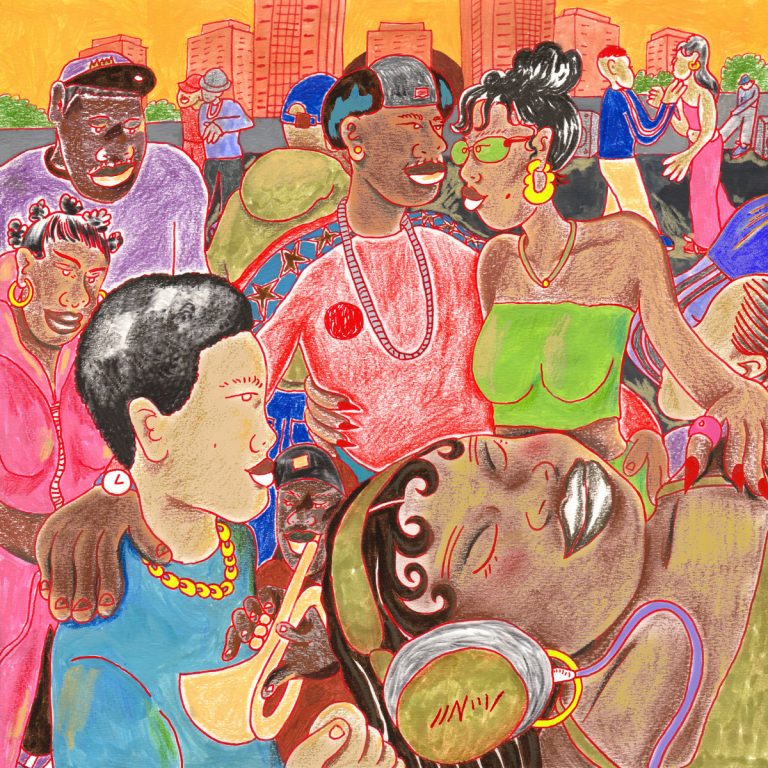
While this tone may seemingly contrast with the title’s surface-level meaning, percussionist Onome Edgeworth notes the effect of reminiscence on events’ emotional resonance: “Although we’re reflecting on joy and celebration, you realize a lot of that beauty comes out of challenges and difficulties. Even in memory, the times that were tough tend to sweeten up.” Unsurprisingly, the septet’s grooves here find themselves suited to swaying dances and easy-going head-nodding alike, a musical realization of the aforementioned disposition.
For instance, the lovely “Sweetie” is among multiple pieces centered on romance; the group’s sound is fittingly lush, utilizing just enough horns to avoid overt weightiness. Their vocal performances – alongside a slate of well-utilized guests at the center of the tracklist – are similarly warm while harmonizing or flying solo. Instrumentals take on complimentary responsibilities, achieving an exquisite, tight blend on “Three Piece Suit” or voice-like, slightly weary emotive phrasing during the beginning of “Over / Reprise”; having played the instrument for a decade, I find myself personally delighted by the pair of trombone solos on “Never Lost” and “Together We Are” respectively.
The latter track serves as an exemplar of Kokoroko’s genre-fusing abilities. Although this impetus is itself a long-standing jazz tradition, the band manages to evoke rooted yet timeless landscapes less thoroughly explored by other practitioners; this song draws on digital percussive elements resembling downtempo electronica from the 90s. A saxophone traverses above additional, choral-like backing, producing an overall effect which, in its retro-futuristic anachronisms, stunningly blends the cross-temporal remembrances discussed by Edgeworth. Elsewhere, the smooth, Rhodes-esque keys of “Closer To Me” evoke Return to Forever before treading their own path. While the funkiness of “Da Du Duh” feels a bit reductively tied to other jazzy pop articulations from this era, its moments of tension keep the listener well-attuned.
If Tuff Times Never Last lacks anything, it would be that sort of friction, however brief. Regardless, the breezy sequencing makes for an overtly pleasant experience released at an ideal time of year, where the zenith of summer shows little sign of yielding its humid, enveloping effect. Whether it be for a lazy day under the shade or a muggy evening of shared, muted physicality, Tuff Times Never Last welcomingly meets you in the moment.